In June 2026, TikTok and Starbucks announced that baristas in the Green Apron Creators program would start earning a cut of ad revenue for the videos they make behind the espresso bar. TikTok called it the platform’s first custom Creator Network built for a single brand. Six weeks later, on August 5, TikTok announced a far bigger partnership with The Walt Disney Company, opening up Marvel, Star Wars, Pixar and FX footage to fan creators and piping their videos into Disney+.
The Starbucks deal pays baristas. The Disney Creator Ambassador Program, as announced, pays nobody.
That gap is the whole story, and it’s the part most of the coverage skipped. The program is a jointly run Disney and TikTok initiative that gives selected creators licensed access to Disney’s film and TV library in exchange for rewards, visibility, event access and career development, with no cash compensation confirmed by either company as of publication. If you make fan edits for a living, that sentence is the entire business decision.
Last updated: September 2026
Quick answers
What is the Disney Creator Ambassador Program? It’s a tiered program run jointly by Disney and TikTok that gives selected creators licensed access to footage from hundreds of Disney, Marvel, Star Wars, Pixar and FX titles. Participating creators’ short-form videos appear on both TikTok and in the Verts feed on Disney+.
Does it pay creators? No cash payment has been confirmed. Disney’s August 5, 2026 announcement lists “special rewards,” increased visibility, exclusive event access and career development pathways. It does not mention a revenue share, licensing fee or royalty, and Disney declined to add detail beyond the release when Inc. asked.
How do you join? Applications aren’t open yet. The program pilots in the United States in the coming months, and creators opt in through TikTok rather than applying to Disney directly.
What is the Disney Creator Ambassador Program?
The Disney Creator Ambassador Program is a tiered, jointly run Disney and TikTok initiative that grants selected creators licensed access to Disney’s film and TV library in exchange for rewards, visibility, exclusive events and career development pathways. Disney announced it on August 5, 2026 alongside a broader content-sharing deal with TikTok.
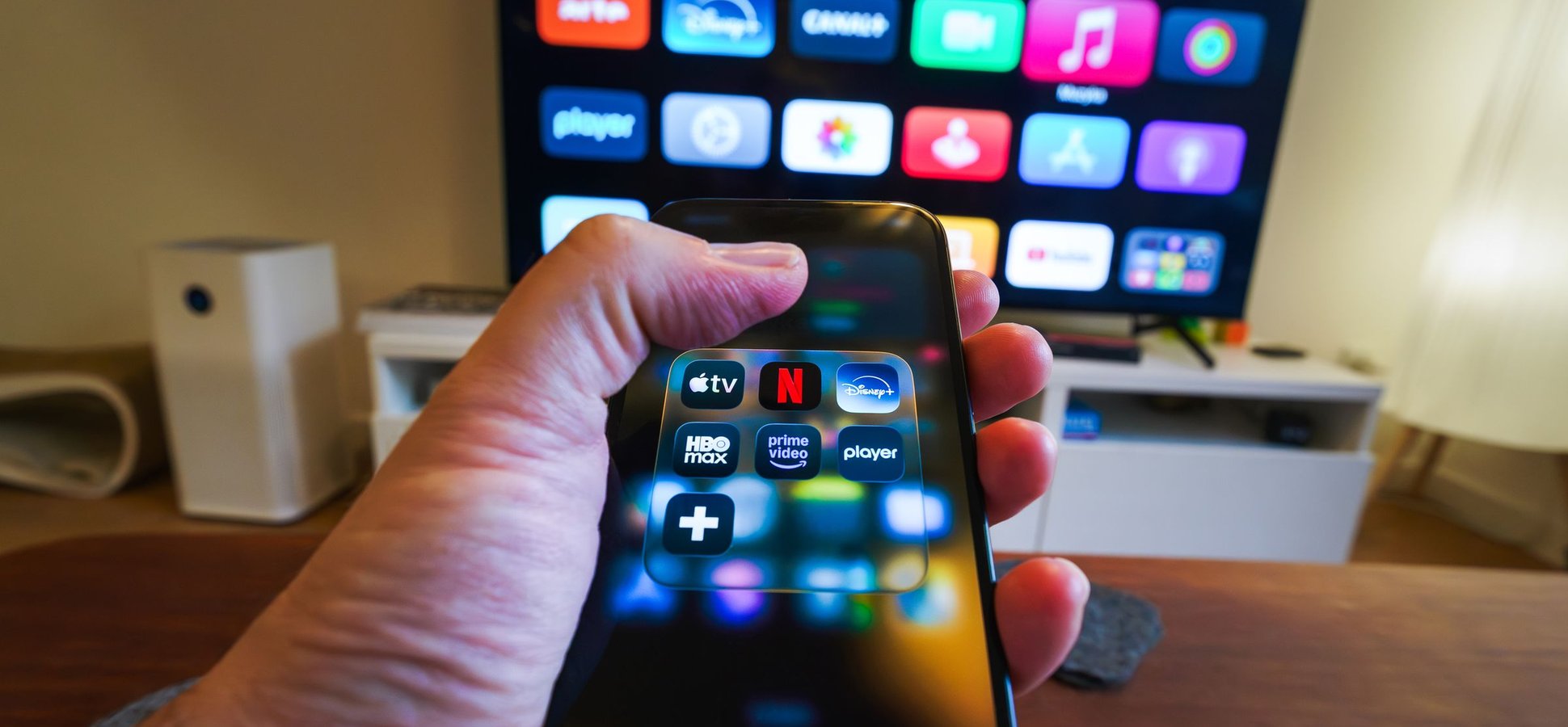
The mechanics are simpler than the branding suggests. TikTok gives its creators access to assets tied to hundreds of films and series across Disney’s catalog. Creators who opt in make short-form videos with that material. Those videos live on TikTok and get pulled into Verts, the vertical feed inside Disney+.
The franchises named in Disney’s announcement are Pixar, Marvel, Star Wars and FX, with “and more” doing some work at the end of that list. Asad Ayaz, Disney’s Chief Marketing and Brand Officer, framed it around fandom: “The best storytellers are fans first.” Dawn Yang, TikTok’s Global Head of Entertainment, described it as bringing “the authentic creator expression of the TikTok community to Disney+.”
Reuters noted that this is the first time native TikTok content will be displayed on an outside platform. That’s the genuinely new part. Peacock and Tubi have both commissioned TikTokers to make original programming, but those were work-for-hire arrangements with contracts. This is a standing pipeline.
The scale argument is in the numbers Disney chose to publish. Citing internal data, the company said fans shared an average of 6.5 million film and TV-related posts on TikTok every day last year. Disney isn’t trying to commission that volume. It’s trying to license it.
What is Verts on Disney+?
Verts is the vertical short-form video feed inside the Disney+ mobile app, launched to US subscribers on March 12, 2026. Until the TikTok deal, it contained only clips and scenes pulled from Disney’s own catalog.
That limitation is why almost nobody used it. Fast Company’s Caroline Parrish described the first version bluntly: Disney “engineered an app interface to rival TikTok and Reels, with one major difference: It serves only trailers for Disney and Hulu shows.” A recommendation feed inside a subscription app, recommending things from that same app, to people who already pay for it.
Disney’s own March launch post telegraphed the fix seven months ahead of time, promising “opportunities in the future to add content from creators that reflects our fandoms.” The TikTok deal is that promise landing.
Verts also isn’t a side project. Netflix shipped a vertical feed in May 2025, Prime Video followed in May 2026, and HBO Max added a shorts feed on July 28, 2026. Every major streamer is now building a TikTok-shaped surface inside its own app, and all of them face the same supply problem: a feed needs an unreasonable amount of content, and studio marketing departments can’t produce at feed speed.
Fan creators can. That’s the trade Disney is proposing.
Does the Disney Creator Ambassador Program pay creators?
No cash payment has been confirmed by either company. Disney’s announcement describes “special rewards,” increased visibility, access to exclusive events and career development pathways. It contains no reference to a revenue share, a licensing fee, a flat rate or a royalty, and when Inc. contacted Disney for comment, a representative pointed back to the press release.
Lia Haberman, a creator economy consultant who has run creator workshops for Disney Creator Lab, gave Inc. the sharpest read on the arrangement: “They are essentially an unpaid labor force.” She expects the incentive to decay. “Eventually that may become an issue once fans have worked their way through all the assets and there’s no clout or exclusive nature to the content they’re able to produce.”
Here’s the part that makes the math worse, and that none of the coverage has connected. Disney is steering creators toward the single worst-paying category on TikTok.
TikTok’s Creator Rewards Program pays on qualified views at an RPM that creator-reported data puts between roughly $0.40 and $1.00 per 1,000 views. That spread is not random. It tracks audience market and content niche. Finance creators sit near the top of the range, close to $1,000 per million qualified views. Entertainment creators sit near the bottom, closer to $400. Fan edits of Marvel trailers are entertainment content by definition.
So a creator who reorients their account around Disney IP is choosing to produce more of their lowest-RPM content, for a partner that has confirmed no additional payment, in exchange for placement in a feed with no published payout structure of its own. Exposure has to do a lot of work to close that gap. It’s the same arithmetic that makes headline creator valuations misleading, the kind we broke down in IShowSpeed’s net worth and the math nobody shows.
Worth being precise about what creators gain, because it isn’t nothing. Before this deal, a Pixar fan edit was either copyright-struck and removed or left up and demonetized. Licensed access converts a category of content that was previously unmonetizable into content that at least earns standard Creator Rewards RPM without takedown risk. That’s a real change. It’s just considerably smaller than “Disney is paying creators.”
Why TikTok paid Starbucks baristas but not Disney fans
The clearest evidence that a paid structure was possible is that TikTok built one two months earlier for a smaller partner. In June 2026, Starbucks expanded its Green Apron Creators program, launched in 2024, into what TikTok called its first custom Creator Network for a brand. Selected baristas receive creative briefs, produce content for Starbucks, and take a direct cut of ad revenue when Starbucks promotes their posts.
Same platform. Same year. Two completely different deals.
The difference comes down to who holds the scarce asset. Starbucks needed specific people, its own employees, in its own stores, and had to compensate them as labor. Disney needs footage-adjacent content at volume, and the people who make it were already making it for free. Haberman’s framing of the Starbucks arrangement applies to both: TikTok is “operationalizing the supply chain” and “formalizing the content production pipeline.”
Disney also isn’t negotiating from weakness. Its streaming business posted direct-to-consumer SVOD operating income of $712 million in fiscal Q3 2026, more than double the $329 million it earned a year earlier, at a 12.9% margin on streaming revenue that rose 11% to $5.5 billion, according to the company’s Q3 FY2026 earnings filing. This is a profitable division choosing not to pay for an input, not a struggling one that can’t.
There’s also a failed deal in the background. In December 2025, Disney announced a $1 billion investment in OpenAI alongside a three-year licensing arrangement that would have let people generate Disney character videos in Sora. OpenAI announced the Sora shutdown in March 2026 and the arrangement collapsed. Disney was willing to put a billion dollars behind a synthetic route to the same content. The human version costs nothing.
| Program | Cash to creators | Who qualifies | Creator obligation | Best for |
|---|---|---|---|---|
| Disney Creator Ambassador Program | None confirmed | Selected TikTok creators who opt in, US pilot first | Make videos using licensed Disney assets | Fan-edit accounts already built on Disney IP |
| Starbucks Green Apron Creators | Direct cut of ad revenue | Existing Green Apron baristas only | Produce to Starbucks creative briefs | Employees monetizing workplace content |
| TikTok Creator Rewards | Roughly $0.40 to $1.00 RPM | Open to eligible creators, longer-form video | None beyond platform rules | Baseline view monetization on any niche |
| Peacock and Tubi creator originals | Paid production contracts | Individually selected creators | Deliver commissioned long-form series | Creators moving into traditional production |
How it could collide with your existing brand deals
The most expensive risk in this program isn’t the missing payout. It’s an exclusivity or category conflict you agree to before reading the terms, because studio IP partnerships are exactly the kind of deal a competing entertainment brand will care about.
Neither Disney nor TikTok has published participation terms yet, so nothing here is confirmed. But four questions determine whether opting in is cheap or expensive for your business, and every one of them should be answered before you click accept.
Does participation create category exclusivity? If the ambassador tier restricts you from working with Warner Bros. Discovery, NBCUniversal, Netflix or Paramount, you’ve traded a paid channel for an unpaid one. Entertainment brand deals are frequently structured with category exclusivity, and a creator whose sponsorship pipeline runs through studio marketing teams has real revenue at stake.
Who owns the resulting video? A license to use Disney footage is not the same as ownership of the finished edit, a distinction that decides who keeps the value in almost every IP partnership, as in Ice Spice’s Revlon fragrance deal. Ask whether Disney takes a license to your video, whether that license is perpetual, whether it extends to advertising use, and whether you can still monetize the same video elsewhere.
Can Disney promote your video as an ad? The Starbucks program is explicit that approved posts can become paid TikTok ads, with revenue shared. If Disney has similar rights without the revenue share, your content becomes Disney+ marketing at no cost to Disney.
What happens to your existing catalog? If you’ve built an account on fan edits made before the program, find out whether joining changes their status. A creator with three years of Marvel content has more to lose from a retroactive term than from a bad forward-looking one.
None of this is a reason to refuse on principle. It’s a reason to read the agreement like a contract rather than a feature announcement, which is how most creators will encounter it.
How do you join the Disney TikTok creator program?
Applications are not open. Disney said the agreement will pilot in the United States “in the coming months,” with other markets to follow, and neither company has published eligibility criteria, an application form or a launch date.
What’s known about the structure: creators opt in through TikTok, not by applying to Disney. TikTok is the party providing asset access, and Disney’s release describes the ambassador tier as something creators are selected into rather than something they sign up for. Expect the pattern TikTok has used before, where a general opt-in gives access to the asset library and a smaller ambassador group is invited based on performance.
Three things worth doing now if you intend to participate:
- Build the fan-edit body of work before selection starts. Every tiered creator program GJ has looked at, from Kai Cenat’s Streamer University to platform ambassador tiers, selects on existing output rather than stated intent.
- Keep your revenue diversified while you wait. The creators least exposed to an unpaid program are the ones with income from products, subscriptions or off-platform audiences, which is the core lesson from how creators actually make money in 2026.
- Audit your current sponsorship contracts for entertainment-category exclusivity now, so you’re not reading them under time pressure when the pilot opens.
Should you opt in?
Opt in if fan content is already your top-of-funnel and you’re currently getting copyright-struck for it. Think hard if your income depends on brand partnerships with entertainment companies that compete with Disney.
The clearest yes is a creator who already posts Marvel or Star Wars edits, loses videos to takedowns, and monetizes through their own audience rather than studio sponsorships. For that person the program removes a tax they’re already paying and adds distribution inside Disney+ at no incremental cost. Exposure isn’t a payout, but it isn’t worthless when the alternative is deletion.
The clearest no is a creator whose revenue comes from paid entertainment brand deals. Signing an exclusivity term to make unpaid content for the largest player in the category is a bad trade at any exposure level, and the risk is concentrated in exactly the accounts that look most attractive to Disney.
The uncomfortable middle is everyone else: mid-sized accounts where fan content is one pillar among several. For them the answer depends entirely on terms nobody has published yet, which is a reasonable argument for waiting out the pilot rather than joining it. Early cohorts in creator programs get the least favorable terms and the weakest negotiating position, a pattern visible everywhere from platform funds to creator monetization platforms like Passes.
The larger point for anyone building a creator business: this is what the industry looks like when fan labor becomes a formal input. Disney is the first major studio to license its catalog to fans at scale, and if the pilot works, Warner Bros. Discovery and NBCUniversal will run the same play within a year. The terms set in this first program become the default. Creators who read them carefully now have more influence over that default than they will later, which is the same dynamic that produced creator burnout as a structural business problem rather than an individual one.
Disney has built a content pipeline that runs on volunteers and priced it at zero. Whether that holds depends on how many creators decide exposure is enough, and on how quickly the ones with real audiences, from TikTok’s highest earners down, notice that the people building actual media companies stopped working for exposure years ago.