In April 2022, Jessica Simpson put her house up as collateral to buy back a company that carried her own name. Her fashion line had crossed $1 billion in retail sales back in 2014. The problem was who owned it. Simpson had sold 62% of the Jessica Simpson Collection to Sequential Brands in 2015 for $117 million, and when Sequential filed for Chapter 11 bankruptcy in 2021, the brand she built was suddenly an asset to be auctioned. She won it back with a $65 million bid, financed by liquidating her stock portfolio and borrowing against her home.
That story is the whole game in one sentence. Fame gets you a billion dollars in sales. Ownership decides whether you keep any of it. In 2014, the year the Collection topped $1 billion, Simpson personally earned about $13 million, roughly 1.3% of the gross, because a licensing structure sent the rest to partners.
Reality TV stars with the biggest business empires in 2026 are the ones who learned that lesson early. A reality TV star business empire is a portfolio of consumer brands, media, and licensing built on the audience a person accumulated on television, where the founder holds meaningful equity rather than a name-licensing fee. The stars who kept their equity became moguls. The ones who rented out their names got a paycheck and a cautionary tale.
Last updated: July 2026
Quick answers
Which reality star has the biggest business empire? Kim Kardashian. Her shapewear brand SKIMS reached a $5 billion valuation in November 2025 and is approaching $1 billion in annual net sales, larger than any other reality-star-founded company by valuation.
How did Bethenny Frankel make her money? Frankel built Skinnygirl into a low-calorie cocktail brand while on The Real Housewives of New York, then sold it to spirits giant Beam in 2011 in a deal widely reported around $120 million, keeping the Skinnygirl name for other products.
Is SKIMS bigger than Kylie Cosmetics? Yes, by valuation. SKIMS was valued at $5 billion in 2025. Kylie Cosmetics was valued at $1.2 billion when Coty bought a 51% stake for $600 million in 2019.
Which reality TV star has the biggest business empire?
Kim Kardashian runs the largest reality-star business empire in 2026, and it isn’t close. SKIMS, the shapewear and apparel company she co-founded in 2019, raised $225 million in November 2025 in a round led by Goldman Sachs Alternatives that valued the company at $5 billion, according to Fortune. The brand was closing in on $1 billion in annual net sales at the time, up from about $750 million in 2023 and $500 million in 2022.
The growth curve is the tell. SKIMS was worth $4 billion in July 2023 after a $270 million Series C led by Wellington Management, per CNBC. Adding a billion dollars of enterprise value in roughly two years is venture-scale performance for a company most people first heard about through Keeping Up With the Kardashians.
Kardashian holds the largest single stake in SKIMS, estimated near 35%, which Forbes credits as the main driver of her $1.7 billion net worth. That number matters more than the reality-show origin story. She isn’t wealthy because she was famous. She’s wealthy because she owns a third of a company approaching billion-dollar revenue. For a different celebrity-brand playbook that leaned on the same audience-first logic, see how Cardi B built the Grow-Good beauty business.

The reality-to-mogul playbook
Every reality star who converted fame into a durable business ran the same four-move sequence: audience, product, ownership, exit. Miss any one move and the empire stalls. The stars in this article separate cleanly by how well they executed each step.
Audience. Reality TV is a distribution machine disguised as entertainment. Kim Kardashian, Bethenny Frankel, and Lisa Vanderpump each spent years on camera building parasocial trust, the kind of relationship that makes a viewer buy the first product on launch day. That trust is the moat competitors can’t buy with ad spend. Related reading: Hannah Harper.
Product. The winners picked categories with real margin and repeat purchase: shapewear, cosmetics, spirits, hospitality. Kylie Jenner chose lip kits, a product with 70%-plus gross margins and a built-in reorder cycle. Frankel chose ready-to-drink cocktails, a category the big liquor houses were desperate to enter.
Ownership. This is where fortunes split. Founders who held equity captured the upside. Founders who licensed their name for a royalty captured a fraction of it. Jessica Simpson’s 12.5% residual stake in a billion-dollar brand is the warning label.
Exit. The best exits kept optionality. When Frankel sold Skinnygirl to Beam, she kept the rights to use the Skinnygirl name on foods, snacks, and apparel, so one exit seeded a second business.
How much is Kylie Jenner worth in 2026?
Kylie Jenner is worth roughly $700 million in 2026, down from the disputed billionaire status Forbes assigned and then retracted in 2020. The core of that fortune came from one transaction. In November 2019, Coty Inc. acquired 51% of Kylie Cosmetics for $600 million, valuing the whole company at $1.2 billion. Coty’s own SEC 8-K filing confirms the majority-stake purchase, and CNN Business reported the terms the same day.
Jenner didn’t pocket the full $600 million. After capital-gains taxes estimated at 35% to 40%, she netted around $340 million in cash while keeping a 44% stake and her role as creative lead. That structure is the opposite of the Jessica Simpson problem. Jenner sold control but kept a large minority position, so she still benefits when the brand grows under Coty’s global distribution.
The billionaire retraction is instructive for founders who obsess over headline valuations. Forbes reversed Jenner’s billionaire label after concluding her team had overstated Kylie Cosmetics revenue. The valuation was partly a story. The $340 million she banked was real. GreyJournal has covered this same gap between announced net worth and bankable wealth in its breakdown of how Hailey Bieber built Rhode, another founder who funded her brand herself before taking outside money.
How did Bethenny Frankel make her money?
Bethenny Frankel made her money by turning a supporting role on The Real Housewives of New York into a spirits brand and selling it near the top. She launched Skinnygirl Margarita as a low-calorie ready-to-drink cocktail, then sold the alcohol business to Beam Global in 2011. The Hollywood Reporter reported the deal around $120 million, though confidentiality terms and earn-out clauses make the exact figure hard to pin down. Financial analysts estimate Frankel personally cleared $60 million to $70 million after taxes and incentives.
The genius was in the terms, not the topline. Frankel sold Beam the alcohol category only. She kept the Skinnygirl trademark for everything else, then extended it into snacks, supplements, shapewear, and cookware. One television role produced a brand. One well-structured exit produced a licensing engine that still runs. Her net worth sits around $80 million in 2026.
Frankel’s move is the cleanest example of the exit-with-optionality principle. Compare it to founders who sell the whole company and a non-compete, then watch from the sidelines. If you want the counter-examples, GreyJournal catalogued several in its look at why regrettable celebrity businesses failed to rise.
Paris Hilton turned a punchline into 11:11 Media
Paris Hilton rebuilt her public image into an operating company called 11:11 Media, which she co-founded in 2021 and runs as CEO. The company spans film, television, audio, music, books, consumer products, and digital, and Axios reported it was on track for about $50 million in revenue in 2024 with strong margins. Hilton’s net worth sits between $300 million and $400 million in 2026.
Hilton’s arc matters because her fame started as mockery. The Simple Life cast her as a vapid heiress. Two decades later, she controls a media and licensing business built on a 60-million-person audience she never stopped cultivating. She owns 11:11 Media outright with her business partner rather than licensing her name to operators, which is the same ownership discipline that separated Kim Kardashian from Jessica Simpson.
The pattern repeats across the highest earners. Reality fame is a launchpad, not a destination. The stars who understood that fame is a form of cheap distribution, and that distribution is only valuable if you own the thing being distributed, are the ones with nine-figure balance sheets. Related reading: KATSEYE.
Does the category you pick decide the size of the empire?
The category a reality star picks caps how big the business can get, and the two dominant paths look nothing alike. One path is asset-light consumer products: shapewear, cosmetics, spirits, the kind of thing that scales through manufacturing and distribution without a payroll of thousands. The other is hospitality, which scales through physical locations and headcount. Both build real wealth. They just have different ceilings.
Lisa Vanderpump is the clearest hospitality example. She had already built and owned 26 restaurants in London with her husband Ken Todd before she ever joined The Real Housewives of Beverly Hills in 2010. She used the show as a marketing engine for venues like Sur, Pump, and TomTom in West Hollywood, then spun a spinoff series, Vanderpump Rules, out of the staff at one of them. Her net worth sits near $90 million in 2026, and in 2026 she partnered with Caesars to convert The Cromwell in Las Vegas into the first Vanderpump Hotel.
Notice the ceiling difference. Vanderpump’s $90 million hospitality empire is a genuine achievement built over decades, and it’s still a fraction of the $1.7 billion Kim Kardashian holds from a single equity stake in a product company. Restaurants throw off cash but rarely command venture valuations. A shapewear brand approaching $1 billion in sales can raise at $5 billion. Founders choosing where to point their audience should know that the category sets the maximum outcome before the first dollar comes in. If you want to see how the smartest operators treat television itself as a business school, GreyJournal rounded up three shows that actually teach founder thinking.
Reality-star empires ranked by what they actually own
Net-worth listicles rank these founders by a single guessed number. That misses the point. What follows ranks them by the business underneath the number: the flagship company, the valuation or exit, and how much equity the founder kept.
| Founder | Flagship business | Valuation / exit | Ownership held | Model |
|---|---|---|---|---|
| Kim Kardashian | SKIMS (shapewear, apparel) | $5B valuation, 2025 | ~35% equity | Owned brand, venture-funded |
| Kylie Jenner | Kylie Cosmetics | $1.2B valuation, $600M sale | 44% after Coty deal | Majority sale, kept minority |
| Paris Hilton | 11:11 Media | ~$50M revenue, 2024 | Co-founder, private | Owned holding company |
| Bethenny Frankel | Skinnygirl | ~$120M exit, 2011 | Kept name rights | Sold category, licensed rest |
| Jessica Simpson | Jessica Simpson Collection | $1B+ sales, sold 62% for $117M | 12.5%, later bought back | Licensing, lost control |
| Lisa Vanderpump | Vanderpump restaurants, hotel | ~$90M net worth, 2026 | Owner-operator | Owned hospitality, licensing |
Read the ownership column top to bottom. It tracks almost perfectly with who ended up a mogul and who ended up in a bankruptcy auction fighting for their own name.
Why ownership beats net worth
Ownership beats net worth because net worth is an estimate and equity is a claim. Jessica Simpson’s brand generated more than $1 billion in retail sales in 2014, yet a licensing structure meant she personally earned about $13 million that year. She had the fame, the sales, and the household name. What she lacked was a controlling stake, so the value flowed to Sequential Brands and its lenders instead of to her.
The story didn’t stay a loss. When Sequential Brands filed for Chapter 11 in August 2021, the Jessica Simpson Collection was still doing roughly $500 million in gross retail sales, per CNBC. Simpson bid $65 million to reclaim it, putting up her home as collateral. It was expensive, and it was the correct move. She now owns the brand outright and captures the full margin instead of a royalty sliver.
That’s the citable lesson for anyone building on personal fame: the founder who owns 35% of a $5 billion company is worth more than the founder who owns 1.3% of a billion-dollar revenue stream. Fame sets the ceiling. Ownership sets what you take home.
What founders can steal from the playbook
You don’t need a reality show to run this playbook. The mechanics work for any founder with an audience, and the specific moves are copyable starting tomorrow.
Treat your audience as distribution, not applause. A newsletter list, a YouTube channel, or a TikTok following is the same asset Kim Kardashian had, just smaller. The value shows up only when you point it at a product you own.
Pick a product with margin and repeat purchase. Kylie Jenner’s lip kits and Bethenny Frankel’s cocktails both had high margins and natural reorder cycles. A one-time $30 sale to a fan is a transaction. A $30 product they rebuy monthly is a business.
Guard your equity like Kim, not like Jessica. When outside capital or a licensing partner shows up, the term that matters most is how much of the company you still own afterward. Raising money or selling a stake can be smart, as Jenner proved by keeping 44%. Licensing your name for a flat royalty while someone else owns the brand is how you end up buying it back with your house.
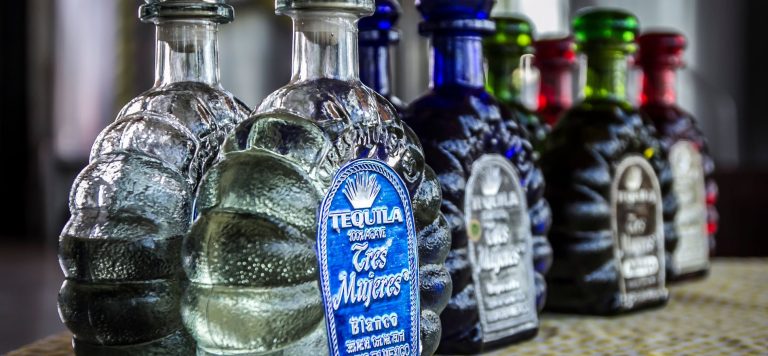
Structure exits to keep optionality. Frankel sold one category and kept the name for everything else. When you sell, ask what rights you keep, not just what check you cash. For more on how celebrity founders think about brand extensions, GreyJournal’s look at celebrity tequila brands shows how quickly a name license can become the entire deal, for better or worse.
The reality stars who built real empires weren’t lucky. They understood that television handed them a distribution channel most founders spend millions to build, and they refused to waste it renting out their names. If a reader takes one action from this, make it the ownership question. Before signing anything, ask what percentage of the thing you built you’ll still own when the ink dries.