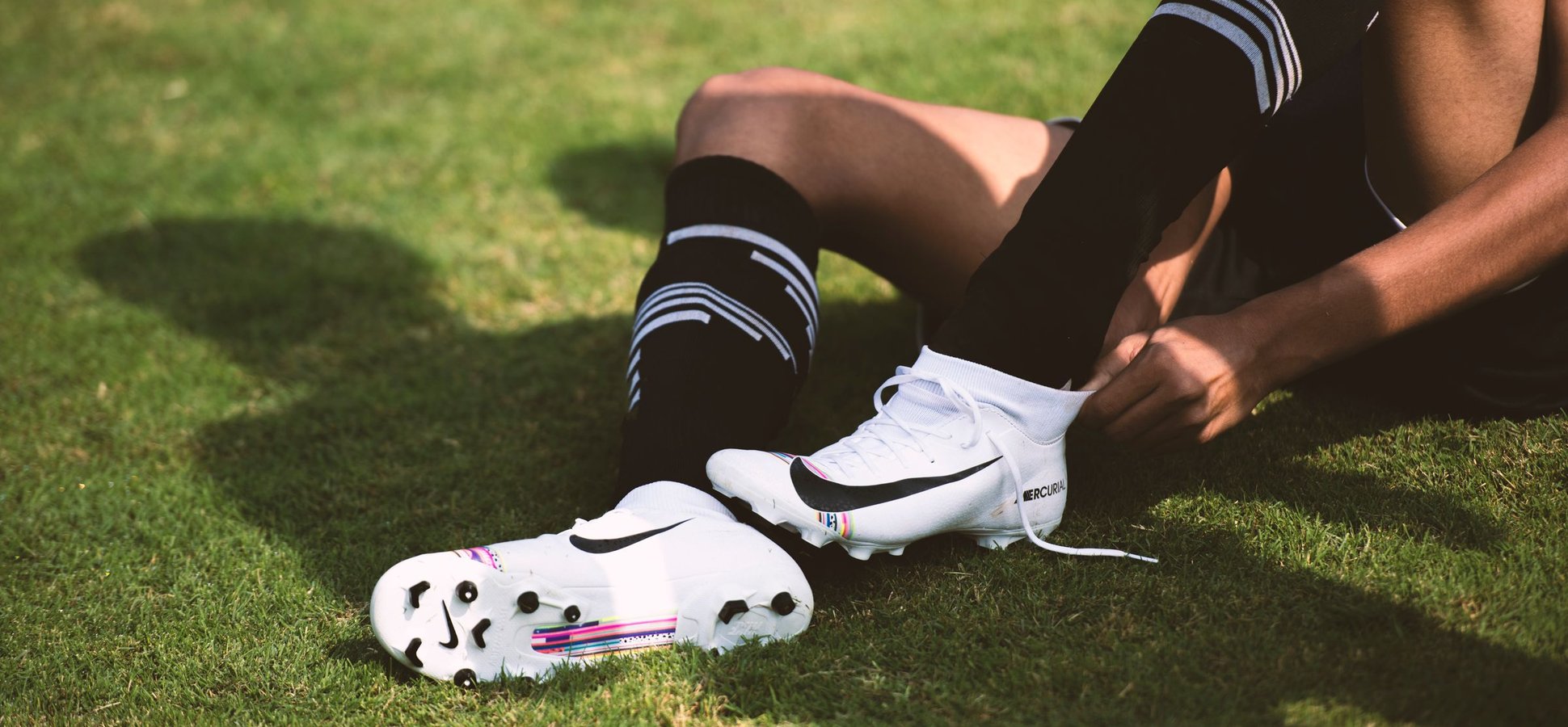
Nike signed Kylian Mbappé when he was eight years old. Twenty years later, in September 2026, the company offered him a 10-year renewal worth more than €20 million a year, according to The Irish Times. That is roughly €200 million of contractually guaranteed money, the kind of offer agents spend careers trying to land.
He turned it down. On September 18, Mbappé signed with On, the Swiss running brand best known for cushioned road shoes and a logo that until recently had nothing to do with football. The deal pays him in cash and equity, and it hands him control of a product category On does not yet sell. Thierry Henry had already been installed as On’s first director of football, quietly, before the announcement.
Mbappé took a smaller guarantee for a piece of the company. That trade, repeated across hundreds of smaller deals since 2020, is reshaping how brand partnerships get priced. And the logic behind it applies far below the level of a World Cup winner.
An equity endorsement deal gives an athlete an ownership stake in a brand instead of, or alongside, a cash sponsorship fee, trading a guaranteed payout for a claim on the company’s future value.
Last updated: October 2026
Quick answers
What is an equity endorsement deal?
An equity endorsement deal pays an athlete partly or entirely in ownership of the brand rather than a flat sponsorship fee. The athlete gives up guaranteed income for shares that pay out only if the company grows or sells. Most deals combine a reduced cash retainer with a vesting equity grant.
Why do athletes take equity instead of cash?
Because the upside is uncapped and the cash is not. Roger Federer’s reported 3% of On was worth about $330 million at the company’s 2021 listing, more than any sneaker retainer would have paid him. Equity also buys product and strategy input that a fee-based endorsement never includes.
Is Mbappé’s On deal an equity deal?
Yes. On’s September 2026 agreement with Mbappé includes equity alongside cash, and gives him a role shaping the company’s new football division. He signed it after rejecting a Nike renewal reported at more than €20 million a year for 10 years.
What is an equity endorsement deal?
An equity endorsement deal replaces some or all of an athlete’s sponsorship fee with ownership in the brand. Instead of a brand paying $2 million a year to put a logo on a jersey, it pays $500,000 and grants shares, options, or warrants that vest over the term of the partnership.
The structure isn’t new. Mike Repole used it to build Vitaminwater and Smartwater in the early 2000s, then again at BODYARMOR. What changed is who uses it and how often. Endeavor built a dedicated unit, Talent Ventures, to structure these deals, and it put together Maria Sharapova’s partnership with Therabody and Alex Rodriguez’s with Presidente. Jimmy Butler came into Rhone as an investor and business partner rather than a paid face. Patrick Mahomes became an equity partner at BioSteel Sports Nutrition in August 2020.
The defining feature is shared exposure, and it cuts in both directions. The athlete only gets paid well if the brand does well, which is exactly why brands like it and exactly why athletes should read the paperwork twice.
One distinction matters before going further. An equity endorsement deal isn’t the same as an athlete writing a check as an investor. In an endorsement structure, the shares are compensation for promotional services, which changes the tax treatment, the vesting conditions, and what happens if the athlete stops performing. GREY Journal has covered the investor version of this in the CHAMP Fund and athlete co-ownership, and the two models get confused constantly.
Why are athletes choosing equity over cash right now?
Athletes are choosing equity because the ceiling on a cash endorsement is fixed and the ceiling on ownership is not. Federer’s On stake is the proof that changed the market’s mind. He joined the Swiss brand in 2019 as a “co-entrepreneur” with a reported 3% stake, which was worth roughly $330 million when On listed on the NYSE in 2021 and is now reported at close to €500 million. No tennis sponsorship in history paid that.
The second reason is audience ownership. Mbappé has 136 million Instagram followers. Real Madrid, the club paying his salary, has 181 million. A player with that reach is no longer a billboard renting out space, and a brand that treats him like one is underpricing the asset. Daniel-Yaw Miller, who founded the sports business outlet SportsVerse, put the imbalance plainly to Andscape: at Nike or Adidas, “even a top guy like Mbappé will be one in a stable.”
Third, the scale of the money has outgrown what cash can meaningfully change. Mbappé earned about $70 million on the field in 2026. Another €20 million a year from a shoe company is a rounding adjustment to a fortune he already has. A percentage point of a €20 billion sportswear company is a different category of outcome, and it is the only version of the deal that could still change his net worth by an order of magnitude.
Fourth, and least discussed, equity buys a seat. Hassan Bhuiyan, who hosts the My First Kicks Podcast, described the On arrangement to Andscape as a structural difference rather than a financial one: “On is giving him a seat at the table. Mbappé is doing a whole division.” That is a product mandate, not a photo shoot. Athletes who want to build something after retirement are now using endorsement negotiations to get operating experience while they are still playing, the same instinct behind Steph Curry’s Thirty Ink and Cole Palmer’s ice brand.
How an equity endorsement deal is actually structured
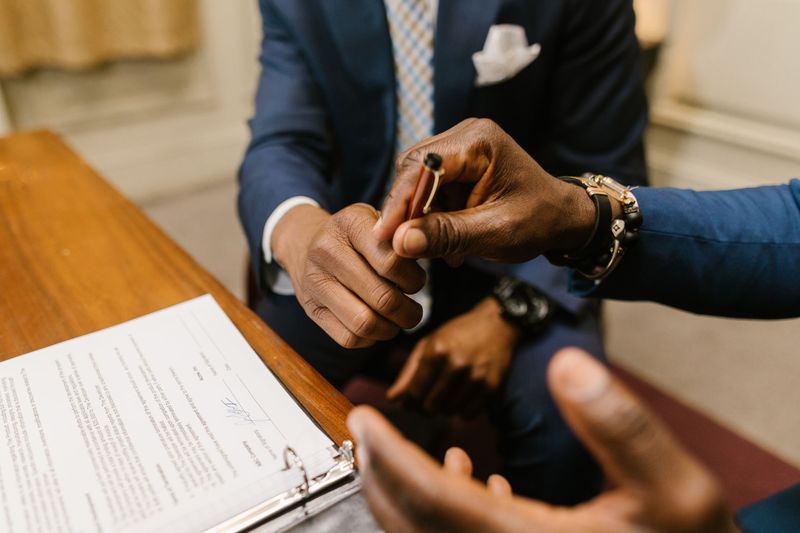
An equity endorsement deal almost always runs on three contracts signed together, not one. Katie Grimstone, an associate at the law firm Bird & Bird, laid out the stack in May 2026: a sponsorship agreement covering promotional obligations, an investment agreement covering the share grant itself, and a shareholders’ agreement covering the athlete’s rights as an owner.
Each one carries a different failure mode. Collapse them into a single document and the athlete usually loses the owner protections first.
The negotiation points that decide whether the deal is worth anything, per Grimstone’s breakdown, come down to seven items: conduct triggers that can claw shares back, performance obligations tied to appearances or results, who owns the intellectual property created during the partnership, anti-dilution rights, the vesting schedule, buyback terms, and exit provisions. Anti-dilution is the one most often skipped. A 2% stake that isn’t protected can become 0.4% after three funding rounds, and the athlete will have delivered every promotional obligation to get there.
The instrument matters too. Common stock in a private company is illiquid and may stay that way for a decade. Options carry a strike price, which means a flat outcome pays nothing. Warrants and restricted shares each have their own tax timing. Morgan Stanley’s advisory team warns on both ends of that, noting that at private companies “there may be restrictions on when and how you’re able to sell your shares,” and that the federal tax treatment can land in ordinary income, alternative minimum tax, or capital gains depending on the instrument and the holding period.
Cash, equity, hybrid, and royalty deals compared
The hybrid structure wins most of the time, and it is what Mbappé signed. A reduced cash floor covers the athlete’s downside while the equity grant carries the upside, which is why almost no serious deal is all-or-nothing in either direction anymore.
| Deal type | What the athlete gets | Downside risk | Upside ceiling | Best for |
|---|---|---|---|---|
| Cash fee | Fixed annual payment, paid regardless of results | None beyond non-renewal | Capped at the contract value | Short career windows, athletes without other income |
| Pure equity | Shares, options, or warrants and no retainer | Total. Can pay zero, as FTX did | Unlimited | Wealthy athletes backing pre-revenue brands they help build |
| Hybrid (cash plus equity) | Reduced fee plus a vesting stake | Limited to the discount taken on cash | High, scaled to the stake | Most deals, including Mbappé and On |
| Royalty or revenue share | A percentage of sales on a signature line | Low, but pays nothing if the product flops | Moderate. Tracks sales, not company value | Signature product lines inside large, stable brands |
The royalty column explains why equity keeps winning at challenger brands. A revenue share on a signature shoe pays out of this year’s sales. Equity pays out of what the whole company becomes, which is the number that moved for Federer.
What is the risk for the athlete?
The risk is that the shares are worth nothing and the cash the athlete gave up is gone. Tom Brady took roughly $55 million of his FTX compensation in company stock. When the exchange collapsed in November 2022, he reportedly lost about $30 million of that, according to ESPN. A cash deal for the same promotional work would have paid, cleared, and been untouchable.
Illiquidity is the second problem, and it is the one athletes underestimate. A private-company stake cannot be sold when a player needs money, and athletic careers end abruptly. Morgan Stanley’s guidance names a concrete ceiling that applies to anyone paid in shares: some financial professionals advise keeping no more than 25% of net worth in any single stock. An athlete with three equity endorsements in the same consumer category has usually blown past that without noticing.
Tax timing is the third. Equity received as compensation can trigger a liability before there is any cash to pay it, because the grant itself can be taxable as ordinary income at fair market value. Athletes have sold other assets to cover tax on shares they could not sell.
The fourth risk is the one the contracts are built to handle. Conduct clauses in an equity endorsement deal often let the company repurchase the shares cheaply if the athlete’s reputation damages the brand, which means a single bad news cycle can cost the entire stake rather than just the sponsorship. Grimstone’s list of buyback and conduct triggers exists for that reason.

Why would a brand give away equity instead of writing a check?
Because the brand doesn’t have the check. Mike Repole said it directly to Sportico about his earliest deals: “Back then we didn’t have the cash to offer partners, so we offered equity.” That constraint turned into a strategy. On August 5, 2020, BODYARMOR handed equity to seven athletes at once, including Christian McCaffrey, Trae Young, Sabrina Ionescu, CeeDee Lamb, Kemba Walker, Drew Lock, and Ronald Acuña Jr. Fifteen months later, Coca-Cola bought the remaining stake in BODYARMOR for $5.6 billion, its largest brand acquisition ever.
Equity also buys something cash cannot: attention that behaves like an owner’s. An athlete with a stake posts without being asked, pushes product feedback to the design team, and recruits other athletes. LeBron James’s stake in Beats Electronics, per Bird & Bird’s analysis, returned well above what a conventional endorsement fee would have paid him after Apple acquired the company in 2014 for $3 billion. Apple got a headphone brand with genuine athlete credibility attached.
On is the current example of the strategy working at scale. The company reported full-year 2025 net sales of CHF 3,014.0 million, up 30.0% year over year, with a 62.8% gross profit margin, according to On’s own results release filed alongside its 2025 Form 20-F in March 2026. The Federer partnership helped build that from a company doing a fraction of it in 2019. Giving away 3% to get there was the cheapest marketing On ever bought, and the Mbappé deal is the same bet placed on football.
Nike, meanwhile, had the cash and still lost the player. That is the part brand teams should sit with. Vince Sirianni, who manages Endeavor’s Talent Ventures, told Sportico the pipeline was accelerating well before this: “We’re seeing a ton of deal flow, far more than we did earlier in 2020, and it’s only continuing to accelerate.”
What founders can copy from athlete equity deals
Founders can run the same structure at a thousandth of the scale, and most already have the instrument sitting unused in their cap table. Equity-for-services works for advisors, creators, and early partners for the same reason it works for athletes: it converts a bill you can’t pay into a partner who wants the same outcome you do.
Five things to copy, in order of how often they get skipped.
Size the grant against a real benchmark. The Founder Institute’s FAST agreement, the closest thing to a market standard for advisor equity, puts typical advisor grants between 0.25% and 1% depending on stage and involvement. A creator or athlete partner delivering ongoing promotion sits in that band, not at the 5% number people invent in a first conversation.
Vest on delivery, not on time. BODYARMOR’s athletes had promotional obligations attached to their shares. Tie vesting to specific deliverables, a set number of posts, an appearance count, a product collaboration shipped, so a partner who goes quiet does not keep accruing ownership.
Write the three agreements separately. The sponsorship terms, the share grant, and the shareholder rights do different jobs and get renegotiated on different clocks. Founders who bury share terms inside a marketing agreement discover the problem during diligence, two years later.
Keep the buyback. A repurchase right at a defined price protects the cap table if the partnership ends badly or the partner’s reputation turns into a liability. It is standard in athlete deals for exactly that reason, and it is the clause that makes a bigger grant safe to offer.
Offer the reduced-cash hybrid, not pure equity. A partner who takes zero cash is usually a partner who doesn’t need you and won’t prioritize you. A small retainer plus a stake signals that the work is real, and it is the shape almost every successful deal in this piece took.
The founder-side version of Mbappé’s calculation is simple. Work out what the partnership is worth in cash, offer a meaningful fraction of it, and put the rest in equity with vesting tied to what you actually need delivered. Equity endorsement deals aren’t a discount on marketing. They are a way to pay a partner more than you can afford today, out of value you have not created yet, and they only work if the partner genuinely moves the number.
For founders thinking about how to split ownership before any of this comes up, GREY Journal’s guide to splitting equity without breaking the company covers the groundwork. The athlete market also keeps producing live case studies worth tracking, from Breanna Stewart’s ownership playbook to CardVault’s store expansion, and the earnings context in the highest-paid athletes ranking explains the rest. At the top of this market, athletes now take equity instead of cash because cash stopped being the number that changes anything.