

Jeff Green is a financial advisor on a mission to make a meaningful difference in people’s lives. As the founder of Green Financial Group and a Registered Principal with Raymond James Financial Services, Inc. Jeff’s primary goal is to help his clients achieve financial security and prosperity. With over a decade of experience in prestigious investment firms like Morgan Stanley and Banc of America Investment Services, Jeff has cultivated a deep understanding of the intricacies of retirement planning and wealth management, which he utilizes to guide individuals and families toward a brighter financial future.
Driven by an honest desire to prioritize his client’s needs, Jeff established Green Financial Group in 2008 to offer personalized financial advisory services free from the constraints of corporate agendas. Inspired by his upbringing as the son of a Wall Street bond trader, Jeff saw firsthand the transformative impact of strategic financial planning. Beyond his professional endeavors, Jeff’s commitment to mentorship and community engagement shines through as he actively supports aspiring financial professionals and coaches youth in his community.
Jeff’s path has been shaped by years of learning and growing in the world of retirement planning and wealth management, where he gained invaluable experience. But Jeff’s journey goes beyond his work history. He’s deeply committed to giving back to his community through mentorship and engagement, driven by a heartfelt desire to positively impact the lives of those around him.
Get ready to be inspired as we uncover Jeff’s story—a fascinating journey characterized by his unwavering integrity, remarkable expertise, and commitment to help to secure the financial futures of those he serves.
Jeff, can you share a pivotal moment from your time serving in the Army that has significantly influenced your approach to financial advising?
I served in the United States Army Airborne Infantry for three years. After completing basic training, infantry training and jump school, my first deployment was to Camp Casey, South Korea. During that year, I patrolled the American sector of the demilitarized zone (DMZ) between North and South Korea. And after being stationed back stateside for a brief period, my unit was the first to by deployed to Panama for Operation Just Cause in 1989. The lessons I learned from these experiences has shaped everything about me, including my approach to business, entrepreneurship, being a Financial Advisor and my role as a father.
One of those lessons I learned serving as team leader of a 3-man team in the unforgiving, dense jungle of the Darien Gap that separates Columbia and Panama. We were tasked with a Listening Post, Observation Post (LPOP) op that would end up changing the way I view the challenges that life throws your way. Our objective was to observe how the Panamanian Defense Forces (PDF) were making their way through that particular part of the jungle and getting danger close to our supply positions. The purpose of this LPOP was not to engage the enemy, only observe, as the real fighting had not yet begun.
After making our way about 3 clicks through the tangled mass of vegetation, poisonous snakes, and formidable bodies of water, we posted up security for the night. Our Night Optical Devices (NODS) were rendered almost useless, as they needed just a bit of moonlight to operate effectively and the lack of a moon that night combined with the jungle canopy, limited our vision to about 2 feet in front of our faces. Nonetheless, we had a mission to do and dealing with the elements was just part of the job.
My watch started around 2 am and I sat motionless in the middle of this jungle, waiting and anticipating movement from within, while my other two teammates caught up on their much-needed sleep.
That’s when it all began.
The unmistakable sound of footsteps echoing through the jungle. I had difficulty at first determining the direction those footsteps were heading. But as they got closer, there was no denying they were headed directly for my position.
There were many mistakes made that night. I am responsible for all of them. The most egregious of which was that my teammates, asleep as they were, were positioned too far away from me. I would have had to either yell at them to wake them up or move over to them to wake them up. Either way, I would have given away my position and the only real strategic advantage I had, the element of surprise.
So, I sat and waited. By my estimate, there were 3, maybe 4 men. I was calculating my options, my odds of survival. If they discovered me, I could perhaps get 2 of them, before one or more of them zeroed in on my muzzle flash and took me out. My teammates would have woken up and responded in the effective manner they were trained to do, but God only knows how that would have turned out.
The crunching of the jungle floor was getting louder and louder and closer and closer. There was no denying they were headed directly for my position. Were they going to step on me? My heart was beating so hard and so loud that I thought they would surely hear it, only adding to the tragic predicament that I had led my team to.
It’s a funny thing knowing you’re likely to die in the next few minutes, as I believed was my fate at that time. The kinds of things that go through your head are difficult to explain. And at the same time I was laser focused on the situation at hand. My training was taking over.
The footsteps had gotten almost right on top of me. Only a matter of moments now. And that’s when I saw them.
A family of 4 spider monkeys making their way through the jungle at night. My heart sank with relief about as low as it could possibly go. I realized I was drenched in sweat from the anticipation and the adrenaline release was palpable. I lived to see another day.
Those monkeys never saw me and I never told my teammates what happened that night. This really isn’t even a story I’ve shared that often. But it has taught me a lot.
What I carry with me from this, even to this day, is that things are not always as bad as they seem. We need to learn to let the situation develop and staying the course can prevent us from making very bad choices, especially when we don’t need to. This is a big part of how I approach investing and the way I counsel clients as we evaluate and navigate their financial lives.
Reflecting on your transition from the military to finance, what were the most unexpected challenges you faced, and how did you overcome them?
My biggest challenge wasn’t going from the military to finance or the corporate world. That part was fairly straightforward. The rigor, routine, discipline, and leadership lessons I had embraced during my military days served me well in my career. What was the most challenging thing was assimilating back to civilian life. It was the everyday small things that felt the hardest. And it was having to overcome the guilt that many of my brothers were still serving in the Army, and I wasn’t able to be there with them. I had to find a new purpose on my path as a college student and ultimately as a financial advisor.
You’ve managed to maintain a low profile regarding your military service while contributing to veteran-focused charities. How do you balance personal humility with the need to advocate for causes you believe in?
I’m not looking for any recognition in how I support veterans. I don’t need to get anything out of that other than to know I’ve done my best to give back. I feel humbled to have achieved a certain level of success that allows me to be able to provide financial donations to veteran-focused groups. When I can, I also really enjoy interacting more directly with the folks these organizations serve, such as going on camping and fishing trips with veterans who struggle with PTSD. There are organizations and individuals out there who serve as phenomenal advocates for these individuals, but I prefer to provide my support behind the scenes and out of any spotlight because that’s not what it’s about.
As someone who has adopted rescue dogs, how do you think personal commitments to animal welfare reflect on one’s professional ethos?
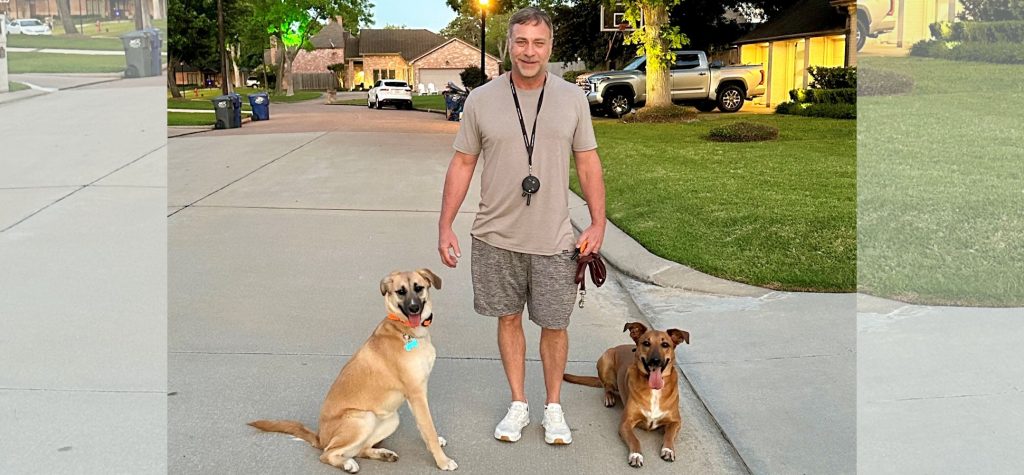
I definitely see a strong connection between caring for animals and the way I approach my work. I currently have two dogs – Abby and Sadie – whom I had originally fostered, just to give them a safe home for a few weeks while the group worked to find them new owners. I immediately fell in love with both of them and formally adopted them. Rescue dogs like mine typically come from bad situations. They tend to have some baggage and behavioral quirks. They can be shy or mistrustful. But by giving them a second chance and committing to giving them the best life possible, you can rebuild that trust. You have to be patient, learn how to interact with them best, and work through those challenges together. These same concepts show up every day in my role as a financial advisor where I’m focused on understanding my clients’ past experiences with finances, any anxieties they may have, and their financial goals for the future. I think my experience with rescues has also made me a better listener, a more patient counselor, and someone who can navigate challenges with a calm and steady hand. While I don’t have all the time in the world (or the space in my house) to continue to adopt these dogs, I am proud to support several organizations here in Houston that work hard to advocate for them.
Looking back at your decision to break away from big institutions, what personal convictions led you to pursue a more client-centered approach in finance?
Unfortunately, I think a lot of companies and individuals in our industry forget that clients are real people and so they don’t prioritize them or treat them that well. I spent more than a decade at two major Wall Street firms. I loved what I was doing and felt like I was good at it. However, there were many times when decisions were made at the highest level that felt like they only benefitted the company and its stock price and didn’t actually have the client’s best interests in mind. That really bothered me. I felt like I could do a better job of serving clients on my own, treating them more like family rather than just some account number on a piece of paper.
Can you discuss a failure or setback that you’ve experienced personally or professionally, and what you learned from it?
Even two decades into my career, I still really feel it any time a potential client chooses another firm over mine. When you believe in something as much as I believe in my team and our approach to investing and client service, it’s hard to feel like someone else doesn’t see that same perspective. I used to let it eat me up wondering what we could have done better. Instead of letting negativity take over in those circumstances, I learned to implement systems in place to follow up with a potential client to learn more about their decision-making process, huddle up with my team afterward to have any tough conversations necessary, and overall just learn to take rejection in stride. Business is tough, no matter what industry you are in, so I think seeing any rejection as an opportunity for improvement is one of the best things you can do for yourself.
What does work-life balance mean to you, and how do you implement it in your life amidst the pressures of running a financial firm?
Work-life balance is everything. I believe in order to be a successful entrepreneur and business leader, you have to continually focus on your mind, body, and spirit. To keep your mind in its optimal state, you have to feed it a good mental diet, doing things like reading positive things, ensuring your relationships and emotional state are in a good place, and finding new ways to grow. You have to pay attention to your body’s needs as well, ensuring you’re eating well, sleeping enough, and making the time to exercise. Your spirit is important too, which could mean spending time out in nature or focusing on your religion. To do these things though, you have to find ways to step away from the office and the demands of decision-making. Routine is really important to me so I try to make time in my “daily game plan” for a bit of each of these things every day (or at least every week). I encourage my team to do all of this as well and we keep each other accountable to these commitments for ourselves. Involving others, especially in the workplace, to help make sure you’re setting time aside for yourself when you can seems to be one of the biggest game changers.
Green Financial Group has a unique position in the market by focusing on personalized financial advice. How do you ensure this philosophy permeates every aspect of your business operations?
When you work with Green Financial Group, you’re not just getting me or Lauren or any single financial advisor – you are getting the best that every person on this team has to offer. And everyone on our team makes a point to get to know our clients well. So whether they’re calling in or walking through the door, everyone pretty much knows what’s going on with their accounts and in their lives. That means every client gets multiple pairs of eyes on their financial plans, on their investing strategy, and being able to serve them with ease. It’s different than if you were just working with one person where you only have their single point of view on things. And it’s also different from going to a bigger place where you may feel like just a number and the people who answer the phones probably don’t always know your names, let alone your grand kids’ names, or where you just traveled on your most recent vacation. We do.
The truth is that relationships between clients and their financial advisors are very, very personal. We know things about our clients that they wouldn’t want to share with anyone else. So we focus on the “matchmaking” aspect when we’re talking to potential new clients to ensure we’re finding folks we can genuinely connect with, which in turn helps us provide the highest level of service. We also prioritize listening above all else. We rely heavily on mind mapping, which is a collaborative visual technique that involves a lot of listening and helps us organize our clients’ financial world in a way that is easy to understand. Throughout our relationship with our clients, we see ourselves as the CFOs of their financial lives – but they are still the CEOs. We give our strategic recommendations but ultimately, they’re the boss. So to make sure we’re giving them the most tailored advice for their unique situations, we have to make sure we’re listening to them and asking questions constantly.
With your firm’s emphasis on supporting the Houston community and veteran causes, how do you measure the impact of your contributions?
It’s interesting to talk about this because coming from my line of work, where it’s all about numbers, returns, and objectively quantifiable data. I don’t feel the same way at all about giving back. I don’t think there is necessarily a way to measure the impact of our contributions to our community and the specific causes we support. Not everything we do to support the community even comes in the form of a check that will end up on our monthly billing statement. You can’t always quantify these things. It’s not about saying “Well if I give this, this is exactly what I’m going to get in return.” All I know is that I am honored to be able to support many impactful organizations in my community and feel confident that through them, I get to be a small part in making a difference. That’s enough for me.
I’ll give you an example. About 8 months ago we met with a client who retired from the corporate world and now volunteers her time teaching underprivileged kids. She was talking about how she pays for much of the school supplies out of her pocket. So as she was leaving, I gave her $100 and said to please use this for the kids. Well, she came in for another meeting just recently and couldn’t wait to tell me the impact that $100 had. There was a boy at her school whose family couldn’t afford new shoes. He was wearing worn-out shoes that were 2 sizes too small. He couldn’t run around on the playground with the other kids because his feet hurt too much. So she used part of the money to buy him new shoes and socks. When she described the smile on this kid’s face when he got those shoes, my heart just filled with joy. She told me I had changed that kid’s life.
In an industry often criticized for its lack of diversity, how is Green Financial Group addressing this issue, both within your team and in your client base?
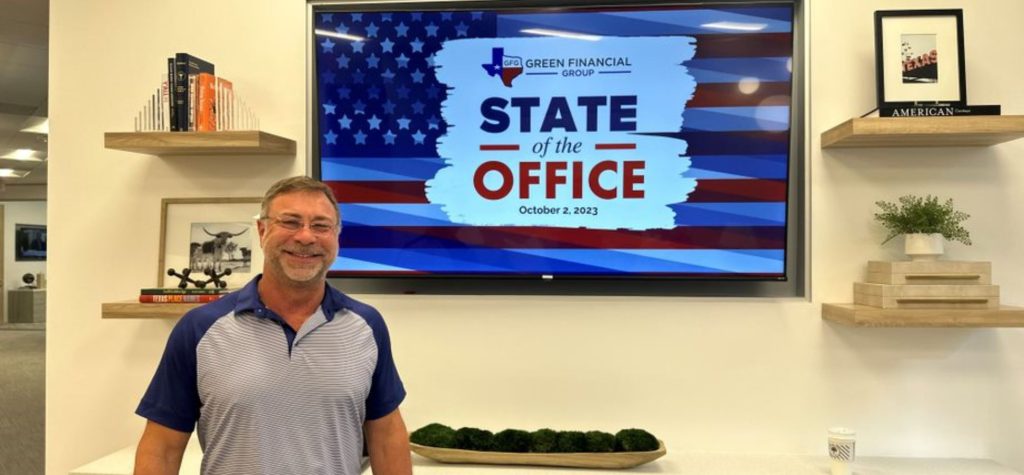
We have a strong team here at Green Financial Group. They’re all highly skilled and dedicated professionals, but frankly, with a team of five, three of whom are women, we still have room for improvement in reflecting the diversity of the community we serve. Therefore, when we are hiring for a new role, we actively work with a recruiter who helps ensure that we attract talent from a wider range of backgrounds, including more underrepresented groups.
For me though, it’s not just about hiring diverse talent, it’s about creating an inclusive environment where everyone feels valued and their voice is heard, no matter their gender, race, background, etc. We include everyone on the team in important discussions and decisions and actively solicit feedback regularly to ensure we’re fostering a culture of respect, collaboration, and trust.
Regarding our clients, we understand the importance of cultural competency in financial advising and are committed to continuously educating ourselves to better serve any of our clients from diverse backgrounds.
The financial advisory landscape is increasingly competitive. What innovative strategies has Green Financial Group implemented to stay ahead?
There’s certainly a lot of competition out there, but at Green Financial Group, we’ve taken a few approaches to stay relevant that kind of go along with an African proverb I’ve always liked: “If you want to go fast, go alone if you want to go far, go together.” I’m not afraid to say I don’t know what I don’t know, so I surround myself with the best and brightest people and technologies to ensure our clients are getting an incredible experience.
We all know this industry is constantly changing with new tools and new strategies. So, we invest in staying on top of those advancements. We’re talking about the latest software, and data analytics to personalize portfolios, even looking at what AI might bring to the table in the future. Last year, we changed how we manage money, inviting new experts to the table, which has been very impactful for our business. We also invest in external consultants and specialists on various aspects of our business, from client operations to business operations to marketing.
I am also honored to be a part of a Mastermind Group where successful financial advisors from across the country come together to help each other build out successful financial practices. We share ideas, brainstorm strategies, and hold each other accountable to our goals. It’s like having a built-in board of directors, except they’re also your biggest supporters. It’s a powerful testament to the idea that surrounding yourself with the right people can truly propel you forward because the insights I gain here absolutely keep us competitive.
But the real strategy for staying innovative is having the right team in place. And let me tell you, building a great team isn’t just about hiring smart people who are invested in their work. It’s about creating a culture where everyone feels valued, and where their ideas are welcomed, heard, and implemented. We invest in training, drive home that open communication is key, and make sure everyone has a healthy work-life balance. A happy team translates to exceptional service for our clients, and that’s what sets us apart.
How has your leadership style evolved as Green Financial Group has grown, and how do you foster a culture of integrity and accountability?
I’d say that early on in my journey as an entrepreneur, I was a little more inflexible and militaristic than I am now. I had a specific routine. I did things a specific way. And that’s the way I wanted everyone else I worked with to do them as well. But as I’ve matured in my career (and developed a little more gray hair on my head), I have realized that that type of rigidity isn’t the best path to take when you’re on a collaborative team. Today I’d say I listen a lot better to the people on my team. I’m not afraid to say I don’t know what I don’t know. I ask my team for input and advice. I work with consultants. I listen. I learn. That’s another lesson I bring over from my military days: “Always listen to the man on the ground.” The person who’s sitting in the highest seat isn’t always able to see the full picture. You have to trust your team – and I trust mine implicitly.
At Green Financial Group, we have five core values that we live by. These aren’t just catchphrases; they are fundamental beliefs that drive everything we do. First, you have to “Bring The Energy.” We drive hard here, it’s fast-paced, and we demand excellence while we’re doing it. At the same time, we’re going to “Keep It Real.” We are real people who are honest and trustworthy. What you see is what you get around here. We get the job done. We’re also a team of “Problem Solvers” who aren’t afraid of a challenge. And we “Take Ownership” of everything that we do. We’re team players, we collaborate, we take responsibility and we blame no one. If we make a mistake, we own it, period. And we do all that with a “Work Hard, Play Hard” mentality to ensure we’re celebrating our successes along the way. Our commitment to each of these values shapes our company culture, inspiring our team members to approach challenges with passion, tackle projects with gusto, and celebrate achievements with an infectious spirit.
The financial sector is often in the spotlight for ethical concerns. How does your firm navigate these challenges, and can you provide an example of a difficult ethical decision you’ve faced?
We pride ourselves on being ethical. To us, that means we’re always doing the right thing, even when no one’s looking. There are plenty of challenges that can arise in this industry but we believe that as long as we are doing right by the client, that’s the best thing we can be doing to do right by ourselves as well. For example, we recently realized that we had accidentally overcharged a client for two months due to a simple data entry error. Some folks might have just fixed it and moved on, not notifying the client of the error.
But that would never sit right with us, so we notified the client and had to work on a quite complex method to get him paid back for the extra funds we accidentally received. That decision was incredibly straightforward. But other ethical decisions we’ve encountered have gotten more complex and we’ve had to seriously weigh all options. When it comes to that, I bring together our entire team and we discuss it as a group. Not only does that help ensure we’ve got many perspectives helping to solve a single problem, but it also helps continually teach us lessons about maintaining our integrity.
How does Green Financial Group contribute to financial literacy in the community, and why do you believe it’s important?
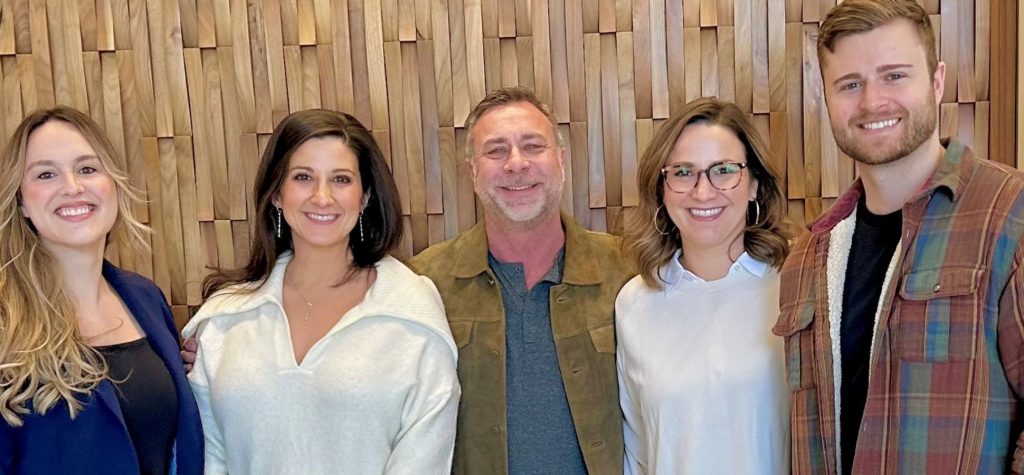
There are two groups in particular that Green Financial Group focuses on helping to support financial education so they feel more empowered: Young Adults and Women in Transition.
I have three sons who are all either in college or have recently graduated. Shockingly, none of them knew how to write a check when they finished high school. It opened my eyes to how much practical financial education young adults today are missing.
So we are working on building financial education programs specifically designed for high schoolers, college kids, and young adults. We want them to get the real-world skills they need such as budgeting basics, understanding credit, etc. It sets them up for success down the road, and frankly, it just makes good sense.
Lauren Smith, another financial advisor here at Green Financial Group and our resident CERTIFIED FINANCIAL PLANNER® professional, also has a huge heart for supporting women who may be going through big life transitions like divorce or widowhood. She shares blogs, videos, and webinars that are all tailored to topics that help women in this particular stage of their lives feel more educated and more empowered when it comes to finances.
Finally, Jeff, for those interested in learning more about your work and Green Financial Group, where can they find more information, and what upcoming initiatives or projects would you like to highlight?
You can find out more about us and our services at www.greenfinancialgrp.com. We are currently working on building out a new website and will have some new exciting video content – so stay tuned for that! We also hang out a lot on social media – especially LinkedIn – and share financial tips, our latest videos and blogs, and what’s going on within the office through that platform. For those who are going to read this article, please feel free to connect with me there.
We want to express our sincere appreciation to Jeff Green for opening up about his incredible journey with us. His commitment to financial guidance and mentorship sets a shining example for both colleagues and clients. We warmly invite our readers to join the conversation and share their thoughts on Jeff’s remarkable accomplishments. Your engagement not only fosters a sense of community but also highlights the importance of effective financial planning in empowering individuals and families.
Opinions expressed in the attached article are those of the author and are not necessarily those of Raymond James. All opinions are as of this date and are subject to change without notice. Raymond James is not affiliated with and does not endorse the opinions or services of any mentioned business or organization. Investing involves risk and you may incur a profit or loss regardless of strategy selected.
Certified Financial Planner Board of Standards, Inc. (CFP Board) owns the certification marks CFP®, CERTIFIED FINANCIAL PLANNER™, and CFP® (with plaque design) in the United States, which it authorizes use of by individuals who successfully complete CFP Board’s initial and ongoing certification requirements.
Securities are offered through RAYMOND JAMES FINANCIAL SERVICES, INC., Member FINRA / SIPC Investment Advisory services offered through Raymond James Financial Services Advisors, Inc. Green Financial Group is not a registered broker/dealer and is independent of Raymond James Financial Services.
1400 Post Oak Blvd Ste 150 , Houston, TX, 77056-6009 |713-244-3030


