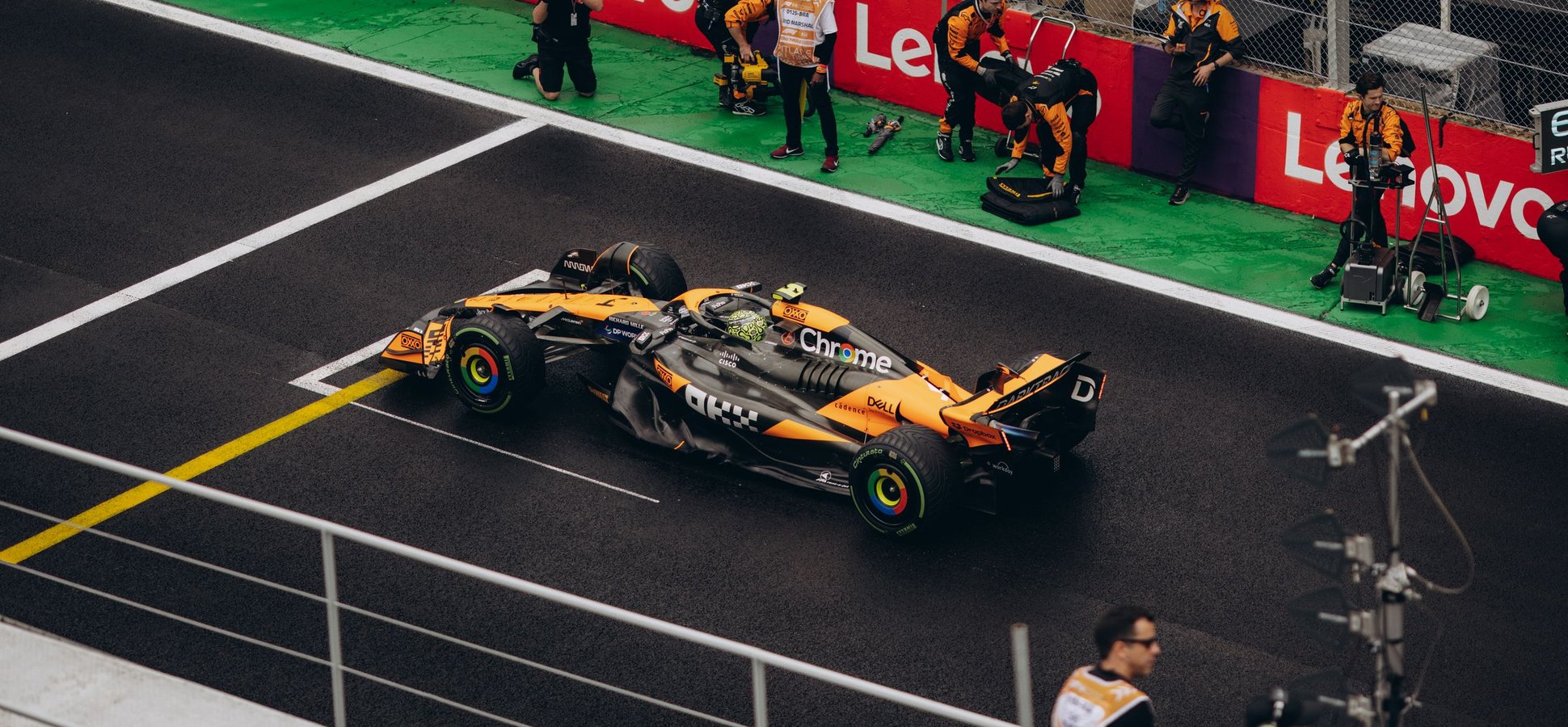
On October 15, 2026, the most-reported of this year’s F1 drivers’ business investments showed up as a short note on Seat Unique’s own blog: Lando Norris had bought into the company. The British platform sells premium tickets and hospitality packages, it had just closed a £20 million round led by Nickleby Capital with Pentland Ventures and Hearst Ventures alongside, and the newly crowned world champion was in it. The release did not say how much he put in. It did not say what percentage he got.
Six weeks earlier, Norris had done something that got far less coverage. He handed majority control of Quadrant, the content company he co-founded and spent five years building, to Veloce Media Group, kept a stake above 20%, and agreed to keep licensing his own name back to the business he used to run.
One of those is an investment. The other is an exit. Press coverage treated them as the same story about a racing driver with a side hustle, and that blur is exactly what makes this topic useless to anyone trying to learn from it.
F1 drivers’ business investments in 2026 fall into four structures: licensing deals that rent out a name, ambassador stakes paid in equity instead of cash, minority cheques written into other people’s funding rounds, and operating companies the driver actually runs. The returns, the risk and the time cost are different in each one, and the gap between them is the only part worth copying.
Last updated: October 2026
Quick answers
What business does Lando Norris own? Norris co-founded the content company Quadrant and the junior single-seater team LN4 Fusion, and he holds minority stakes in Seat Unique and the F1 Arcade venue chain. Veloce Media Group bought majority control of Quadrant, leaving Norris with more than 20% and a name licensing deal.
Does Charles Leclerc have an ice cream brand? Yes. Leclerc co-owns LEC with Grom founders Federico Grom and Guido Martinetti plus Nicolas Todt. The brand turned over €2.35 million in 2025 and now sells through Esselunga and Carrefour in Italy, Monoprix and Franprix in France, and Manor and Lidl in Switzerland.
Which F1 drivers have businesses off the track? Norris, Leclerc, Max Verstappen, Lewis Hamilton, Pierre Gasly, Oliver Bearman and Fernando Alonso all hold business interests outside their race contracts, spanning ticketing, ice cream, GT racing teams, trading card retail, a MotoGP team stake, a supplements brand and a driver management agency.
The four structures behind F1 drivers’ business investments
Every F1 driver business investment announced in the past two years fits one of four legal shapes, and the shape determines everything. Licensing rents out a name for a fee. Ambassador equity swaps promotional work for shares. A minority investment buys a slice of someone else’s company. An operating company means the driver signs the leases and eats the losses.
Founders read these headlines and take away the wrong lesson, which is usually “start a brand.” The useful lesson is that the four structures sit on a spectrum of capital required against control gained, and most people pick the wrong end of it.
| Structure | Driver example | Capital required | Control gained | Best for |
|---|---|---|---|---|
| Name licensing | Max Verstappen with Fanatics | None | Approval rights only | Audience owners with no spare hours |
| Ambassador equity | Oliver Bearman at IM8 Health | None, paid in shares | No operational say | People trading promotion for upside |
| Minority investment | Lando Norris in Seat Unique | Cash, undisclosed | A seat at the table at best | Cash-rich operators without bandwidth |
| Operating company | Charles Leclerc with LEC | Cash plus years of attention | Everything, losses included | People who want a second real job |
What business does Lando Norris own?
Norris holds four business positions, and only two of them are companies he built. He co-founded Quadrant in 2020 and LN4 Fusion in September 2026, and he bought minority stakes in Seat Unique and the F1 Arcade venue chain, which raised £30 million from a group of backers that also included Logan Sargeant.
The Seat Unique announcement is the one worth reading closely, because of what it leaves out. Norris’s cheque size is undisclosed. His stake is undisclosed. What the company does disclose is its own scale: more than 140 rightsholder partnerships added over twelve months, the P1 Travel acquisition, and a group tracking toward £175 million of sales this year against a £350 million target inside three years.
Quadrant is the instructive one. Accounts filed at Companies House and reported by City AM show the company carried negative equity of £405,221 in 2023 before climbing to positive total equity of £152,365 in 2024. Five years of a world champion’s name, attention and audience produced a balance sheet smaller than a London deposit. Then he sold control to Veloce and kept licensing his name back.
Quadrant reached 6.9 million social followers and more than a million YouTube subscribers before Veloce took majority control, which tells you audience and equity value are not the same thing. Founders who assume reach converts automatically into enterprise value should sit with that number for a minute. It is the same gap we covered in athlete-owned media companies.
Does Charles Leclerc have an ice cream brand?
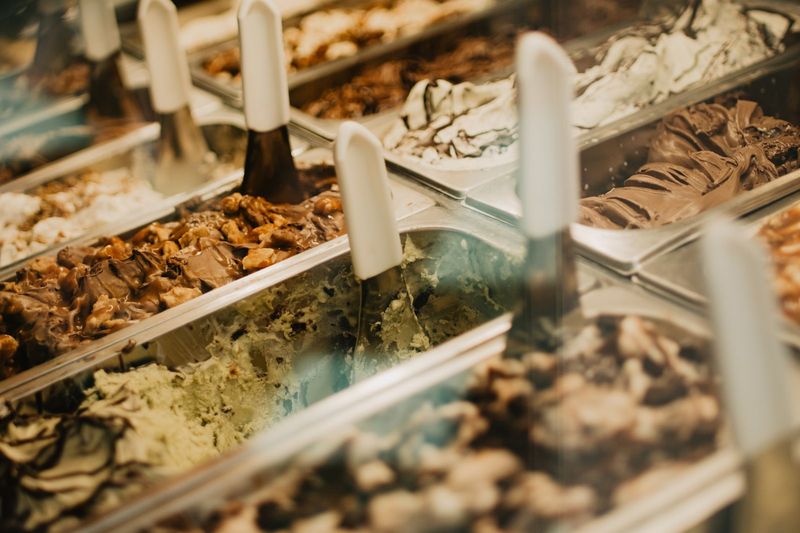
Leclerc co-owns LEC, a protein-forward ice cream brand launched in 2024 with Grom co-founders Federico Grom and Guido Martinetti and manager Nicolas Todt. It is the closest thing on this list to a conventional consumer startup, and it has the financials to prove it.
LEC turned over €2.35 million in 2025, up from €1.7 million in 2024, with a 2026 budget of €3 million and a 2027 target near €4 million, according to Il Sole 24 Ore. Distribution now runs through Esselunga, Conad, Despar and Carrefour in Italy, Monoprix and Franprix in France, Manor and Lidl in Switzerland, and Gopuff for online delivery in the UK.
Here is the uncomfortable comparison. Leclerc’s reported net worth sits around $125 million, and his ice cream company clears roughly €2.35 million of revenue, which is not profit. The operating business is a rounding error against the racing contract. He kept it anyway, and in 2024 he told reporters it would not distract him from driving.
That is the real signal for founders. The venture is not there to replace the main income. It is there because consumer brands compound slowly and quietly while the main career is still funding everything, which is the same pattern behind why celebrity restaurants fail when owners expect them to carry the household.
What is Verstappen.com Racing?
Verstappen.com Racing is Max Verstappen’s own GT racing team, founded in 2022, which will contest the 2026 GT World Challenge Europe season with Mercedes-AMG machinery after running Aston Martin and Ferrari equipment previously. The team announced the Mercedes-AMG switch alongside signings including Jules Gounon and Daniel Juncadella.
Alongside the team sits the quieter money. In December 2025, Verstappen.com signed a multi-year deal with Fanatics to run the official Max Verstappen online store. He does not operate the warehouse, the returns desk or the customer service queue. Fanatics does. Verstappen supplies the name and takes a cut.
Team ownership and licensing are opposite bets placed by the same person. The GT team is capital-hungry, reputationally exposed and run on Verstappen’s terms. The Fanatics deal costs him nothing and controls nothing. Running both is a hedge, and it is a reasonable one for anyone whose brand is the asset.
What is Lewis Hamilton’s Card Culture?
Card Culture is a joint venture between Lewis Hamilton Ventures and the American hobby retailer Dave & Adam’s Card World, with its first flagship store opened on Roßmarkt 15 in Frankfurt in July 2026. It sells Topps, Panini, Upper Deck and Pokémon product, and the partners have outlined expansion across Europe, the Middle East and Asia over five years, with West London and Sydney under consideration.
The joint venture structure is the detail founders should notice. Hamilton did not build a retailer. He attached his brand and capital to one that already has buying relationships, inventory systems and a Netherlands distribution hub, and he took ownership rather than a licensing fee. That is a middle path between the Verstappen approach and the Leclerc approach.
Hamilton runs the broadest portfolio of any current driver: Card Culture, the lifestyle label +44 which ran a pop-up at Marina Bay Sands during the Singapore Grand Prix, and Dawn Apollo Studios, which signed a multi-year production agreement with Skydance Sports. The Sunday Times Rich List puts his fortune at about £435 million, roughly $586 million.
Breadth is a function of career stage. Hamilton is building the post-driving business now, while the attention is still free. Founders planning an exit should read that timing literally, the way we described it in why athletes take equity instead of cash.
Which F1 drivers have businesses off the track?
Beyond the four headline names, three more current drivers hold real business positions. Pierre Gasly bought into Red Bull KTM Tech3 in January 2026, Oliver Bearman became an equity partner in IM8 Health in February 2026, and Fernando Alonso runs the driver management agency A14 Management.
Gasly’s deal is the most structurally interesting. The Race reported that he joined an ownership group containing Guenther Steiner and Richard Coleman with IKON Capital, Bolt Ventures under David Blitzer, and Paul Wachter’s Main Street Advisors. Tech3 called him the first active F1 driver to invest in a MotoGP team. He also part-owns the French third-tier club FC Versailles.
Look at who he invested beside. Blitzer co-owns the Philadelphia 76ers and the New Jersey Devils. Wachter is a partner at Fenway Sports Group. Gasly did not pick a sector, he picked a cap table, and that distinction matters more than the asset. Sports team stakes behave like the valuations we tracked in WNBA franchise valuations: illiquid, slow, and repriced by who else is on the register.
Alonso’s A14 Management sells a different thing entirely. The agency manages Gabriel Bortoleto, Will Power, Sebastian Montoya, Pepe Martí, Dino Beganovic and, since September 2026, the Chilean driver Nico Pino. Alonso monetises judgment and access, not a product, which is the lowest-capital business on this entire list.
Why ambassador equity is the best deal on this list
Ambassador equity produced the best returns here, and it required no capital at all. Bearman joined IM8 Health in February 2026 as a shareholder and global ambassador, taking shares rather than an appearance fee for work he would have been paid cash to do anyway.
The timing was close to perfect. Prenetics, IM8’s Nasdaq-listed parent, reported Q2 2026 IM8 revenue of $45.0 million on August 18, 2026, up roughly 359% year over year, its sixth consecutive record quarter, and raised full-year guidance to $220 million to $230 million. Bearman’s reported net worth is around $1 million, the smallest on the grid. His equity position is attached to the fastest-growing company any current driver is involved with.
Compare the structures honestly. Leclerc put years into a brand clearing €2.35 million. Bearman signed a promotional contract and took shares in a business adding tens of millions of dollars per quarter. The founder lesson is not that supplements beat ice cream. It is that the person who converts their existing promotional work into equity captures the growth rate of someone else’s company, a trade we unpacked in athlete equity in prediction markets.
The obvious caveat applies. Equity in a growing company is still paper, and the Travis Kelce and SwiftArc Ventures case is a reminder that an athlete’s name on a cap table says nothing about what sits underneath it.
The diversification story is wrong
None of these drivers diversified. Every venture listed here sits inside the audience the driver already owns, and that is the opposite of what the word means in portfolio terms.
Run the list. Ticketing and hospitality sell to motorsport fans. A junior racing team sells to motorsport. A GT team is motorsport. A merchandise store, a trading card chain, a lifestyle label and a production studio all sell to the same people who already follow the driver. Even LEC, the ice cream brand, launched into an Italian market where Leclerc’s Ferrari association does most of the marketing.
The only genuine outliers are Gasly’s stake in FC Versailles and Bearman’s supplements position, and both still trade on sports credibility. The pattern is not diversification. It is audience extension, and the two carry completely different risk profiles. Diversification protects you when your core business falls over. Audience extension collapses with it.
That is the contrarian point worth keeping. A driver who loses his seat loses the asset that sells the tickets, the cards and the ice cream at the same time. Founders running audience-adjacent side businesses have the same concentration problem and usually describe it as a portfolio, which is also the risk in celebrity investment in health startups.
What founders can copy from this
Three moves transfer cleanly from the F1 paddock to a normal business, and one does not. The transferable ones are converting promotional work into equity, licensing a name instead of operating a company, and buying into a cap table for the co-investors rather than the asset.
The move that does not transfer is building an operating company alongside a demanding full-time career. Quadrant took five years to reach £152,365 of total equity with a world champion attached, and it ended in a sale of majority control. If a championship-winning name and 6.9 million followers produce that, a founder with a day job should price the odds accordingly.
Here is what to do with this tomorrow. Take the next promotional ask you receive, whether that is a podcast appearance, a webinar or an advisory conversation, and ask for shares instead of a fee. That is the Bearman structure, it costs nothing to propose, and the downside is the cash you would have been paid. For a sense of what those packages look like when they are negotiated well, compare the terms in Angel Reese’s business ventures.
The drivers worth studying in 2026 are not the ones with the biggest ventures. They are the ones who understood which structure they were signing. F1 drivers’ business investments look like a single story about wealth, and they are really four different bets with four different cost bases.