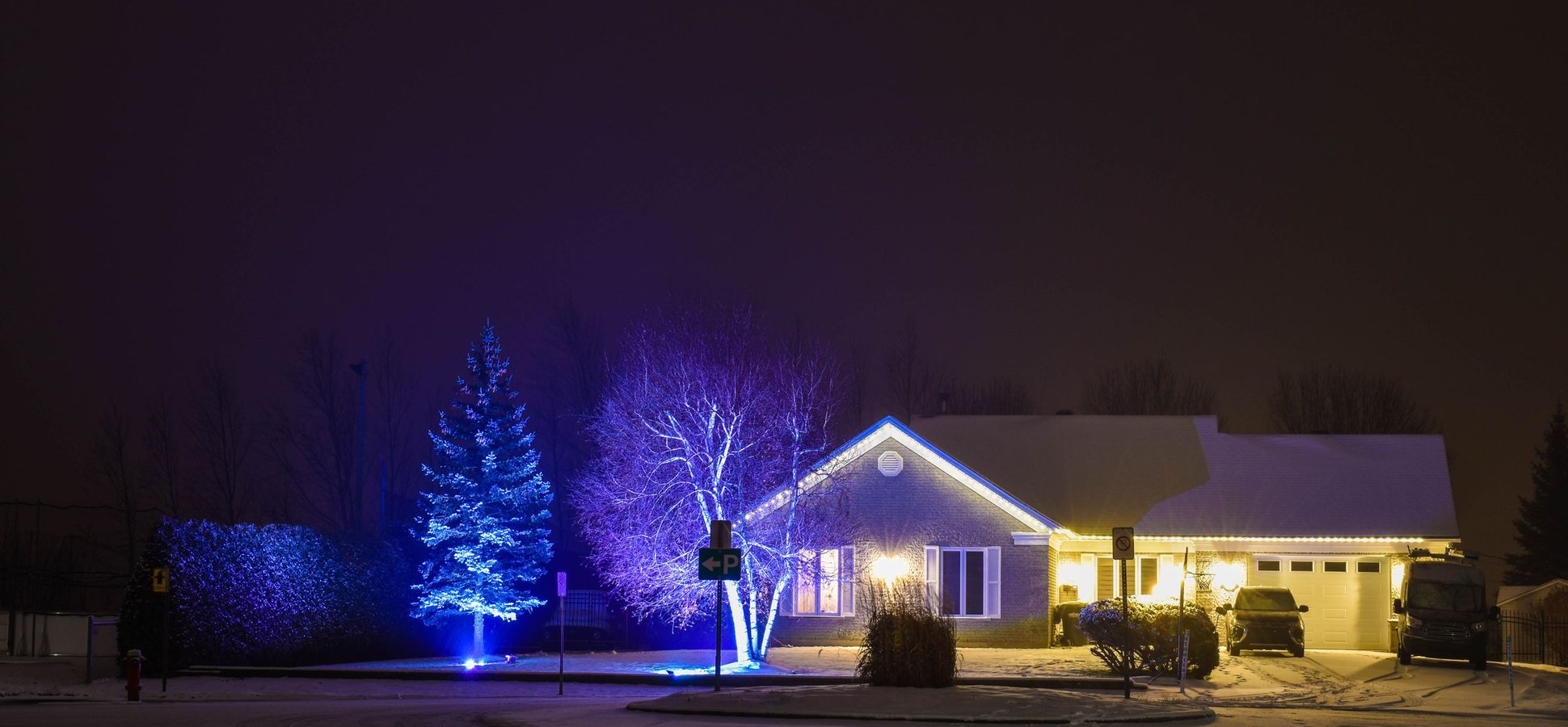
Two numbers tell you almost everything about the Christmas light installation business. Here’s the first. Dave Moerman runs Revive Services, a home services company in British Columbia, and when Jobber asked him about holiday lighting for its contractor academy, he gave a figure most first year installers would never say out loud: “Our minimum is $495, and our average job size for holiday lights is anywhere around a thousand bucks.”
Here’s the second. Angi puts professional Christmas light installation at $443 for an average job in 2026, with most homeowners landing between $220 and $683.
Those two numbers describe the same service on the same kind of house. They’re 2.3x apart.
That gap is where new Christmas light businesses go to die. Not on startup cost, which is small. Not on demand, which spikes on schedule every November. They die because the first page a new installer reads was written for homeowners hunting a deal, and the installer builds an entire price list off it. By mid-December they’ve hung twenty houses, grossed $9,000, and spent six weekends on a ladder for something close to minimum wage.
A Christmas light installation business is a seasonal home services operation that designs, hangs, maintains and removes holiday lighting on homes and commercial buildings, running roughly six weeks of installs from early November through mid-December plus a takedown window in January. The startup math is the easy part. The pricing math decides whether you own a business or an expensive hobby.
Last updated: November 2026
Quick answers
How much does it cost to start a Christmas light installation business? Between $1,245 and $4,105, with most solo operators landing near $2,400. That covers business registration, a seasonal liability policy, a 28 to 32 foot extension ladder, fall protection, clips, cords, timers and a starter run of commercial grade LED lights. Buying a work truck is a separate decision.
How much do Christmas light installers charge per house? Installers who supply the lights charge $7 to $12 per linear foot in 2026. Labor only work on customer owned lights runs $2 to $5 per foot. A 150 to 250 foot two story roofline prices between $1,200 and $2,000 on the contractor supplied model.
Is a Christmas light installation business profitable? Yes, on margin. Net margins of 25% to 45% are normal, and a typical $1,200 job nets around $535 after materials, install labor, January takedown, fuel and insurance. Profitability is rarely the constraint. The six week install window is.
How much does it cost to start a Christmas light installation business?
Starting a Christmas light installation business costs $1,245 to $4,105, and about $2,400 for the build most solo operators actually land on. That assumes you already drive something with a roof rack or a bed. Buying a work truck is what pushes published estimates past $5,000, and it’s the single reason those estimates disagree so wildly.
Look at the spread. Jobber itemizes a launch at $1,940 to $2,715 and excludes a vehicle. StartUp 101 says $5,000 to $15,000 and notes a vehicle would be extra. ZenBusiness says $5,000 to $30,000, then lists a $5,000 to $30,000 vehicle as one of its line items without adding the rest up. Three ranges, one variable.
Here’s the build, priced line by line, with a column that actually sums.
| Line item | Budget | Typical | Loaded | Can you skip it? |
|---|---|---|---|---|
| Business registration or LLC | $50 | $250 | $500 | No, state fees vary |
| General liability, seasonal policy | $400 | $600 | $800 | Never |
| Extension ladder, 28 to 32 ft | $250 | $325 | $400 | No |
| Ladder standoffs and stabilizers | $50 | $65 | $80 | No, gutters bend |
| Fall protection harness and rope | $100 | $150 | $200 | Never |
| C7 and C9 clips, bulk | $100 | $150 | $200 | No |
| Outdoor rated extension cords | $50 | $75 | $100 | No |
| Timers and smart plugs | $45 | $60 | $75 | Yes, but customers ask |
| Hand tools and tool belt | $50 | $75 | $100 | No |
| DIY site and business cards | $150 | $150 | $150 | Yes, briefly |
| Starter commercial LED inventory | $0 | $500 | $1,500 | Only if customers supply |
| Total | $1,245 | $2,400 | $4,105 | Vehicle not included |
Two line items deserve more attention than they usually get. Ladder standoffs cost $65 and stop you from resting 30 feet of aluminum on a customer’s gutter, which is how first year installers generate their first damage claim. And the $500 LED inventory isn’t a cost so much as an asset, because commercial grade C9 strands survive three to five seasons if you store them dry and coiled.
Software is close to free at this scale. LightQuoter is free to start and runs $79 a month in season. Wave and QuickBooks Self Employed handle the books. Jobber’s launch checklist budgets $400 for home service software, which is reasonable in year two and premature in year one.
The startup number here sits in the same territory as other low capital seasonal plays Grey Journal has costed out, like the $1,500 HYROX gym launch, and nowhere near the $350,000 a four court padel facility needs.
The pricing data trap that sinks first year installers
The first pricing number most new installers find is the wrong one for their business. Angi and HomeAdvisor publish per foot rates aimed at homeowners comparing quotes. SupaHandi and Strandr publish per foot rates aimed at contractors running a profit and loss statement. The two sets differ by a factor of three, and no page on the first results page puts them side by side.
| Source | Written for | Per linear foot | Typical job | What it leaves out |
|---|---|---|---|---|
| Angi, 2026 | Homeowners | $2 to $5 | $443 average | Whether the price includes the lights |
| HomeAdvisor, 2025 | Homeowners | $2.50 to $7 | $444 average | States the gap: add $0.50 to $2 per foot if the pro supplies lights |
| SupaHandi, 2026 | Contractors | $5 to $12, commonly $7 to $9 | $1,200 to $2,000, two story | Assumes the installer always supplies lights |
| Strandr, 2026 | Contractors | $8 to $35 by tier | $400 to $800 basic, $1,200 to $2,500 premium | Its own FAQ says $800 to $1,500, contradicting the body |
HomeAdvisor is the one source that explains the gap. Its guidance says that if the homeowner doesn’t own the lights, you add $0.50 to $2 per foot. That single line reconciles the whole table. The consumer figures and the contractor figures aren’t describing different markets. They’re describing different scopes.
Run it on a 200 foot roofline. Labor only, at $3 a foot on lights the customer already owns, grosses $600. The same roofline at $8 a foot with your own commercial grade strands grosses $1,600, and roughly $120 of that is inventory you’ll redeploy for another three seasons. Same ladder. Same five hours. One of those is a business.
The per foot rate you can charge depends almost entirely on one decision: who owns the lights. Make that call before you build a price sheet, not after.
How much do Christmas light installers charge per house?
Christmas light installers charge $7 to $12 per linear foot in 2026 when they supply the lights, and $2 to $5 per foot for labor only on customer owned strands. A standard two story roofline of 150 to 250 feet prices between $1,200 and $2,000 on the contractor supplied model, according to SupaHandi’s 2026 operator guide.
Angi’s homeowner data sorts houses by roofline length, and the tiers are useful even if its dollar figures are built on the labor only scope. Small single story homes carry 100 to 150 feet. Two story homes run 150 to 250. Large three story homes hit 250 to 400. Estates go past 400. Measure the gutter line, not the square footage.
Where operators really separate is the minimum. LightQuoter suggests a $150 to $300 install minimum. Moerman holds $495 at Revive Services. SupaHandi reports that experienced operators commonly set a $1,000 minimum and target a $1,500 to $2,000 average ticket. The spread between a $150 floor and a $1,000 floor is the difference between a weekend hobby and a route.
Add ons carry the margin. SupaHandi prices a wrapped tree or large shrub at $75 to $250 each, wreaths and garland at $40 to $150, and a wrapped column at $40 to $100. Takedown runs $75 to $200, or roughly $150 flat. Those line items take minutes and cost almost nothing in materials, which is why quoting a bare roofline and nothing else leaves money on the lawn.
Commercial work prices differently again. Strandr puts commercial and HOA contracts at $12 to $28 per foot with job sizes from $2,500 to $15,000. A single strip mall or HOA entrance can equal eight residential jobs, and property managers rebook on contract rather than vibes.
Is a Christmas light installation business profitable?
Yes, on margin. Strandr reports net margins of 20% to 35% for well run operations and StartUp 101 puts the range at 25% to 45%, which is healthy for a home service with no storefront. Margin isn’t the constraint. The calendar is.
Most published margin figures quietly omit takedown, which adds two to three hours of labor per house in January and turns a 55% job into a 45% job. Here’s the same $1,200 two story install with January included.
| Line | Amount | Basis |
|---|---|---|
| Revenue | $1,200 | 200 ft at $6 per foot, lights supplied |
| Light inventory, amortized | $120 | Strands reused across four seasons |
| Clips, cords, bulb replacement | $90 | Consumed on the job |
| Install labor | $280 | 2 people, 5 hours, $28 per hour |
| January takedown labor | $112 | 2 people, 2 hours, $28 per hour |
| Fuel and vehicle | $40 | Two trips |
| Insurance and software | $23 | Season cost spread over 45 jobs |
| Net | $535 | 44.6% net margin |
If you swing the ladder yourself, that $392 of labor is your wage and the business keeps $535 on top of it. Content farms blur those two numbers constantly. Keep them separate or you’ll mistake your own sweat for profit, the same accounting error that makes reselling toys look better than $14 an hour.
Now the ceiling. The install window runs roughly six weeks, early November to mid December, and weather deletes days from it. A solo operator with one ladder does one to two houses a day. Call it 35 working days at 1.3 houses a day, which is about 45 jobs. At a $1,000 average ticket your gross ceiling is roughly $45,000.
Demand is not your problem. Daylight is.
That ceiling explains the published season figures. LightQuoter claims a solo installer books $30,000 to $80,000, which fits at the low end and requires a very high average ticket at the high end. Strandr’s $75,000 to $250,000 range assumes 50 to 100 installs, which means a crew and a second ladder, not a person. Both numbers are vendor published, and both companies sell software to installers, so treat them as directional.
Seasonal spending itself keeps growing. The National Retail Federation forecast $1.013 trillion in November and December retail spending for 2026, up 4.2% over 2025, and its October survey of 8,094 consumers found affordability shaping how households allocate it. That’s a retail figure, not a services one, so it tells you the season is intact and nothing at all about how many homeowners on your street will pay $1,200. Only pre selling tells you that.
Break even arrives at job five, not job fifty
At a $2,400 launch and $535 net on a typical two story job, the fifth house clears your entire startup cost. Everything after that runs against a ladder you already own.
This is why the capital question is the least interesting one. Five jobs is a weekend of doorknocking. Forty five jobs is a route, and the gap between those two numbers is pure sales, not equipment.
Route density is the variable operators underrate. Ten houses on one street beat forty houses scattered across a county, because drive time is labor you can’t bill. Price a tight cluster at a discount if that’s what it takes to own the block, then photograph the whole street lit at dusk and show it to the next cul de sac.
Repeat business is where the model compounds. LightQuoter claims 60% to 80% of customers rebook year after year, a vendor number worth discounting but directionally right for a service that gets stored, measured and re hung identically each season. Your year two cost of acquisition on those houses is a text message.
The failure mode mirrors what Grey Journal found in indie hacker revenue data: a small group clears real money, a long tail books three jobs and quits. The difference is almost never the product.
If you’re launching with a partner, settle the split before the first install, not in January when one of you has done 30 roofs and the other has done six. Grey Journal’s reporting on cofounder breakups applies to a two person light crew exactly as it does to a software startup.
Do you need a license to install Christmas lights for money?
In most US states you don’t need a trade license to hang temporary holiday lighting that plugs into an existing exterior outlet, but you do need a business registration, which runs $50 to $500 depending on your state. Permanent lighting that gets hardwired into the structure is different, and that work generally crosses into licensed electrical territory. Check your state and city before you quote a permanent system.
Insurance is the line you never skip. A seasonal general liability policy costs $400 to $800 a year through carriers like Next Insurance or Simply Business, making it one of the cheapest items on the startup table and the only one that’s existential.
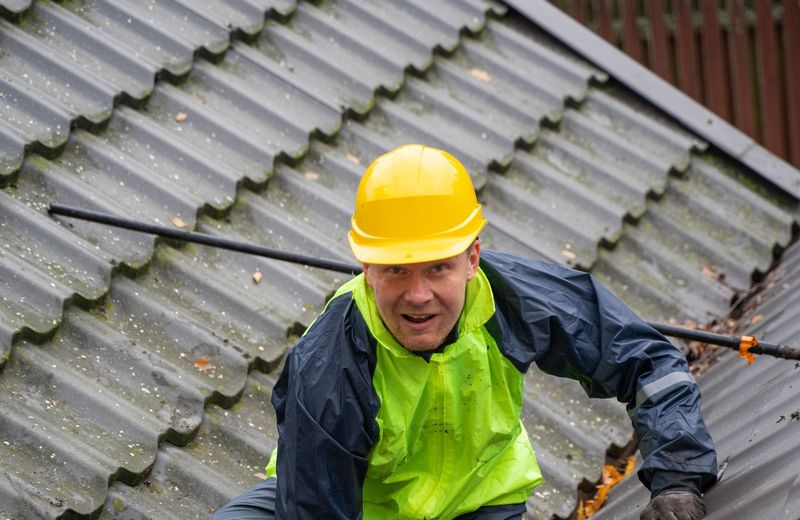
The reason is in the federal data. The Bureau of Labor Statistics counted 844 fatal falls, slips and trips at work in 2024, down 4.6% from 885 in 2023, and reported that 10.8% of those involved a fall from over 30 feet, in its Census of Fatal Occupational Injuries released February 19, 2026. Construction and extraction workers alone accounted for 370 of them. You’ll spend six weeks near the top of a 28 foot ladder in November weather, on property you don’t own.
Here’s a gap worth closing. None of the four most visible startup guides, ZenBusiness, Jobber, LightQuoter or StartUp 101, states a coverage limit anywhere in its insurance section. They all name a premium and stop. Ask your carrier what per occurrence and aggregate limits the commercial property managers and HOA boards in your market require, because they will ask for a certificate of insurance before they let you touch a roof, and a policy written too thin loses you the contracts that actually pay.
Add workers compensation the moment you hire anyone, even a friend for one Saturday. ZenBusiness puts that at roughly $800 to $2,000 a year. On entity structure, an LLC is enough for almost every first year operator, and the S corp election rarely pays for itself at this revenue, a pattern Grey Journal has run the numbers on before.
A go or no go test before you spend a dollar
Five questions decide whether this season is worth your November. Answer them honestly before you buy a ladder.
1. Can you pre sell five jobs in October? Quote at your real price, not a discount. If five neighbors won’t commit, the problem is your price or your market, and you’ve learned it for free instead of for $2,400.
2. Do you already have a truck or SUV? If you’d need to buy one, your launch isn’t $2,400. It’s $8,000 and up, and the fifth job no longer clears it. The thirtieth does.
3. Is your territory dense enough? Count two story homes within a 15 minute drive. Route density, not metro population, sets how many houses you can touch in a day.
4. Will you supply the lights? Say no and you’re selling labor at $2 to $5 a foot, which is weekend income. Say yes and you need $500 upfront plus dry storage for eleven months a year.
5. Can you work at 28 feet in cold rain? Be honest. If heights are a genuine problem, subcontract the roofline and keep the trees, wreaths, columns and ground work, which carry better margin per minute anyway.
Seasonal businesses reward operators who did the arithmetic in advance, which is the same thing Grey Journal found in haunted house economics and holiday pop up market vendor revenue. Six weeks is not enough time to learn pricing on the job.
A Christmas light installation business rewards the operator who priced off the contractor sheet and pre sold five houses in October. It punishes the one who read a homeowner cost guide in November and bought a ladder on the way home.