
The Atlanta Dream spent the better part of last week arguing about a building. Their home court, Gateway Center Arena in College Park, seats 3,500 people. That number explains more about WNBA franchise valuations in 2026 than any box score does. The WNBA Finals start October 17, and the Dream are in them. Playing a championship game in a venue that small meant leaving roughly 13,000 ticket buyers outside the door for each home game.
It took a schedule shuffle with the Atlanta Hawks, who agreed to push their own home opener to 8:30 p.m. on October 24, to free up State Farm Arena and its 17,000 seats. Game 3 moved up a day to October 21 to dodge a concert booking. The Dream got their building.
Their opponent had no such problem. The Golden State Valkyries play at Chase Center, sell out all 22 home dates, and crossed $100 million in annual revenue in their second year of existence. Forbes values the Dream at $250 million and the Valkyries at $780 million. Sportico says the Valkyries are worth $850 million. CNBC says $1 billion.
Two teams, one league, one championship series, and a valuation gap of roughly 4x between them. The gap has almost nothing to do with basketball.
A WNBA franchise valuation is an estimate of what a team would sell for in a control transaction, built from its revenue, the economics of the building it plays in, and the prices recent buyers have actually paid for comparable teams. That last clause is doing more work than most people realize, and it explains why three respected outlets can look at the same franchise in the same year and land $220 million apart.
Last updated: October 2026
Quick answers
What is the most valuable WNBA team in 2026?
The Golden State Valkyries. Forbes values the franchise at $780 million, Sportico at $850 million, and CNBC at $1 billion, which would make it the first women’s sports team to reach ten figures. The New York Liberty rank second on every list, at roughly $600 million.
How much is a WNBA team worth on average in 2026?
Between $414 million and $427 million, depending on the source. Forbes puts the average at $414 million across the 13 existing teams, up 52% year over year. Sportico puts it at $427 million, up 59%, and values the league at $5.55 billion in total.
Why are WNBA team valuations rising so fast?
Three things repriced at once: a national media package that grew from $2.2 billion to $3.1 billion over 11 years, expansion fees that jumped from $50 million to $250 million, and record attendance of 3.79 million fans in 2026. Rising prices for men’s teams also pushed investors toward cheaper leagues.

What is the most valuable WNBA team in 2026?
The Golden State Valkyries, for the second year running, with a valuation between $780 million and $1 billion depending on which outlet you read. The New York Liberty sit second at about $600 million, and the Indiana Fever third at $560 million to $580 million. The Atlanta Dream rank last at $250 million.
Here is the full Forbes 2026 ranking, which is the only one of the three published as a complete team-by-team table with revenue attached. Revenue figures are 2025 regular-season estimates.
| Rank | Team | Valuation | 1-year change | 2025 revenue |
|---|---|---|---|---|
| 1 | Golden State Valkyries | $780M | first year ranked | $78M |
| 2 | New York Liberty | $600M | 50% | $43M |
| 3 | Indiana Fever | $580M | 57% | $58M |
| 4 | Seattle Storm | $430M | 30% | $28M |
| 5 | Phoenix Mercury | $425M | 42% | $28M |
| 6 | Las Vegas Aces | $420M | 35% | $34M |
| 7 | Los Angeles Sparks | $350M | 49% | $28M |
| 8 | Dallas Wings | $340M | 36% | $28M |
| 9 | Minnesota Lynx | $320M | 39% | $21M |
| 10 | Chicago Sky | $310M | 29% | $30M |
| 11 | Connecticut Sun | $300M | 50% | $20M |
| 12 | Washington Mystics | $280M | 37% | $18M |
| 13 | Atlanta Dream | $250M | 32% | $16M |
The compression in the middle of that table is the real story. Eight of the 13 teams sit between $280 million and $430 million, a band narrow enough that one good arena deal or one ownership change could reorder half the league. The Toronto Tempo and Portland Fire are excluded because they began play in 2026, and the three approved expansion franchises have no on-court history to value yet.
How much is the Golden State Valkyries worth?
Between $780 million and $1 billion, and the honest answer is that nobody knows, because the team has never been sold. Joe Lacob’s group paid a $50 million expansion fee in 2023 for a franchise that generated $78 million in revenue in its first season and crossed $100 million in its second.
That revenue number is the one worth holding onto. The Valkyries are the first WNBA franchise, and the first women’s pro sports team anywhere, to clear $100 million in annual revenue. Sportico reported in early October 2026 that a Finals run could push gross revenue past $130 million. For context, the Atlanta Dream brought in $16 million in 2025.
The Valkyries did it with the least exotic playbook available. They share Chase Center with the Golden State Warriors, which means they share a premium building, a sponsorship sales team, and a hospitality operation. CNBC’s Michael Ozanian has pointed to that cross-selling as the main reason the franchise outran every other team in the league. They capped season tickets at 12,000 and ran a waitlist. Courtside seats went for $1,500 a game.
The pattern holds league-wide: teams owned by NBA owners and playing in NBA-sized buildings are the most valuable teams in the WNBA. Ownership structure beats market size, beats roster, beats trophies.
Why WNBA franchise valuations disagree by $220 million
The $220 million spread between the Forbes and CNBC figures comes from three decisions: what counts as revenue, whether the building is part of the asset, and whether the model prices today’s business or tomorrow’s. No outlet is wrong. They’re answering different questions.
| Source | Valkyries | League average | Method | Best for |
|---|---|---|---|---|
| Forbes | $780M | $414M | 12.5x average 2025 regular-season revenue; arena economics counted, arena real estate excluded; 25+ insider interviews | Comparing teams against each other on one consistent rule |
| Sportico | $850M | $427M | Benchmarked to control transactions rather than limited-partner sales; includes real estate and practice facilities; 30+ insider interviews | Estimating what a buyer of the whole business would pay |
| CNBC | $1B | not published as an average | Forward-looking; weighs 2026 revenue projections and shared-ownership synergies with the Warriors and Chase Center | Reading where the market is headed, not where it sits |
Two of those differences are mechanical. Sportico counts practice facilities and real estate in the franchise asset; Forbes deliberately strips the building out and counts only the economics it throws off. On a team that shares a $1.4 billion arena with an NBA club, that single choice can move the number by nine figures.
The third difference is temporal. Forbes anchored to 2025 revenue of $78 million. CNBC looked at a 2026 projection above $90 million, which the team then beat. Same business, different clock.
If you are reading these lists as an investor rather than a fan, the useful move is to ignore the headline figure and read the multiple. Forbes applied 12.5x revenue across the league and about 10x to Golden State specifically, discounting the Valkyries because their revenue base is new and partly arena-dependent. That multiple is the actual opinion. The dollar figure is just arithmetic on top of it.
Why are WNBA team valuations rising so fast?
Because four separate revenue lines repriced inside 24 months, and valuation models multiply revenue. In 2024, Sportico valued the entire 12-team league at $1.16 billion, with the Las Vegas Aces on top at $140 million and the Atlanta Dream at the bottom at $55 million. Two years later the league is worth roughly $5.4 billion and the Dream alone carry a $250 million tag.
The media deal did the heaviest lifting. The WNBA’s own July 2024 announcement laid out an 11-year national package running from 2026 through 2036 with Disney, NBCUniversal and Amazon Prime Video, covering more than 125 national games a season. That foundation deal was reported at $2.2 billion. By May 2026, after adding USA Network and renewing with Scripps and Paramount, the package reached $3.1 billion, or roughly $281 million a year. Teams took home over $3 million each from the league in 2025, and that distribution was expected to at least double in 2026.
Expansion fees moved just as sharply. Golden State and Toronto got in at $50 million. Portland paid $75 million. In April 2026, the WNBA and NBA Board of Governors approved Cleveland, Detroit and Philadelphia at a $250 million entry price each, with Cleveland starting play in 2028, Detroit in 2029 and Philadelphia in 2030. A five-fold increase in the cost of a new seat at the table resets the floor under every existing team.
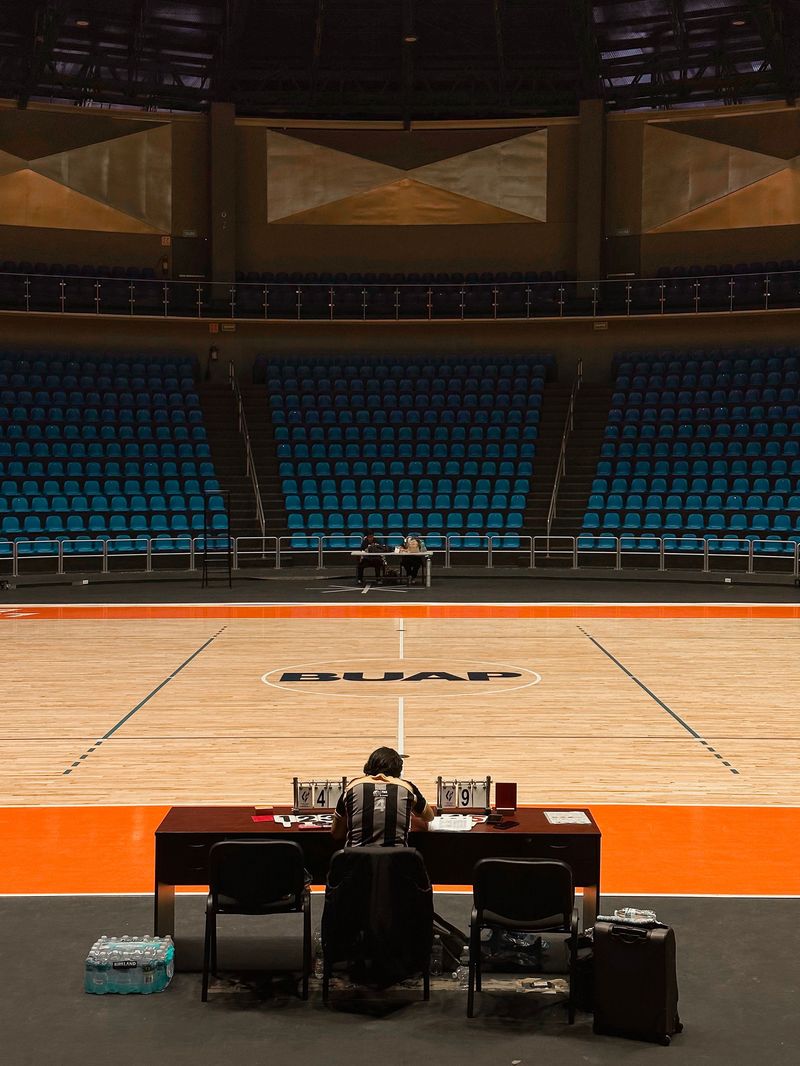
Attendance backed it up with real bodies. The 2026 regular season drew a record 3.79 million fans across 330 games, up 20.5%, at an average of 11,474 per game. Strip out the two expansion teams and underlying growth was about 3%, which is the honest caveat most coverage skipped. The 2025 season had already jumped 34% to 3.15 million.
Then the cost side moved. The seven-year CBA the WNBA and WNBPA announced on March 20, 2026 raised the salary cap to $7.0 million for 2026 from $1.5 million in 2025, lifted the maximum salary to $1.4 million, and set minimums between $270,000 and $300,000. Average pay landed near $583,000. That is a 367% increase in the single largest controllable expense a franchise carries, and it is the reason a valuation built purely on revenue growth is incomplete. Payroll grew faster than attendance.
What WNBA teams actually sell for
One full WNBA franchise has changed hands at a public price in 2026, and it landed within a rounding error of its paper valuation. The Connecticut Sun sold to Tilman Fertitta for a reported $300 million, and Forbes independently valued the Sun at $300 million. The WNBA and NBA Board of Governors unanimously approved the sale and the relocation on May 13, 2026, with the team moving to Houston for the 2027 season and playing out 2026 at Mohegan Sun Arena.
That is one data point, and one data point is not a market. But the adjacent evidence runs the same direction. Sportico reported that the Cleveland expansion group raised $290 million in capital against a $250 million fee, and Detroit’s raised $325 million. Philadelphia’s cap table reads like a sports-finance who’s who: Josh Harris at 32.8%, David Blitzer at 30.1%, Arctos Partners at 15.1%, with a 0.1% sliver to Will Smith. In 2025, the New York Liberty sold a 20% stake at a reported $450 million valuation, then a year later carried a $600 million tag.
Here is the discipline that distinguishes a real number from a headline. Minority stakes trade at a discount to control, because a limited partner cannot force a sale, fire a GM, or move a team to Houston. Sportico explicitly benchmarks to control transactions for this reason. When you see a valuation implied by an LP stake, it understates what the whole business would fetch. When you see one implied by an expansion fee, it understates it in the other direction, since a new franchise comes with no roster, no season-ticket base, and years of losses ahead.
The Finals show valuations aren’t about winning
The 2026 WNBA Finals pit the league’s most valuable franchise against its least valuable, and the matchup is the cleanest available proof that championship equity and enterprise value are different assets. The Valkyries are worth roughly 3x the Dream. The Dream swept their way into the Finals anyway.
Atlanta’s business is not weak. The franchise says season ticket memberships are up more than 400% over five years. They sold out every Gateway Center game for three straight seasons and recorded eight sellouts at State Farm Arena, several above 17,000. Their 2026 average attendance rose 55% to nearly 7,000, the biggest one-year jump in the league. They sold out full-season and half-season memberships.
And they are still valued at $250 million with $16 million of revenue, because for most of the year they play in a building that holds 3,500 people. You cannot sell 17,000 tickets in a 3,500-seat room. You cannot sell premium suites that don’t exist, or arena signage to sponsors who want reach. The ceiling is physical.
Compare that to the Washington Mystics, whose attendance fell 16% in 2026 largely because fewer games were moved out of their 4,200-seat home arena, even as their average get-in ticket price roughly doubled from about $50 to over $100. Demand was up. Supply was capped. Revenue stayed at $18 million.
The lesson travels well beyond basketball. A business with a hard capacity constraint gets valued on the constraint, not the demand curve. Founders hit the same wall when a service company’s revenue is bounded by headcount, which is why the same logic shows up in how athlete-owned media companies split into two models and in why athletes increasingly take equity instead of cash in brand deals. Owning the asset beats renting the audience.
What to check before you buy into women’s sports
Three questions separate a WNBA valuation you can trust from one you should discount. Ask them in this order, because they map to the order the money actually moves.
What building does the team control, and on what terms? A team sharing an NBA arena with a common owner captures sponsorship, hospitality and premium seating it would otherwise rent. The Valkyries and the Dream are the two ends of this spectrum, and the valuation gap tracks it almost exactly. Check the lease before you check the roster.
Is the revenue base repeatable or event-driven? Golden State’s $78 million first season included a novelty premium that an expansion team gets once. That the figure climbed past $100 million in year two is the real signal, because it survived the novelty. Indiana’s merchandise sales rose 60% in a year when Caitlin Clark missed about 70% of games, which is the kind of detail that tells you demand is institutional rather than personal.
What did the last comparable control stake actually trade at? The Sun at $300 million is the live comp. Expansion at $250 million is the floor. Everything between those numbers and the $1 billion headline is forecast. That gap is a bet on the 2036 end of the media deal, not an observation about 2026.
None of this makes the growth fake. A league that was worth $1.16 billion in 2024 and $5.4 billion in 2026 repriced for real reasons: a media package, an expansion wave and an attendance record that all landed inside two years. Sponsorship spending rose 45% in 2025 alone. Rising prices in men’s leagues pushed capital toward cheaper assets, which is the same dynamic driving athlete investment in prediction markets and the co-ownership funds built around athlete equity.
It does mean the number on the list is a claim, not a fact. WNBA franchise valuations in 2026 are three reasonable people applying three defensible models to a market with one confirmed transaction. Read the methodology, then read the multiple, then decide what you think the building is worth. The growth in women’s NIL deals, the rise of player-built business portfolios like Angel Reese’s, and the logic founders use when deciding whether to sell into a tender offer all run on the same question: what is this worth to someone who has to write the check?