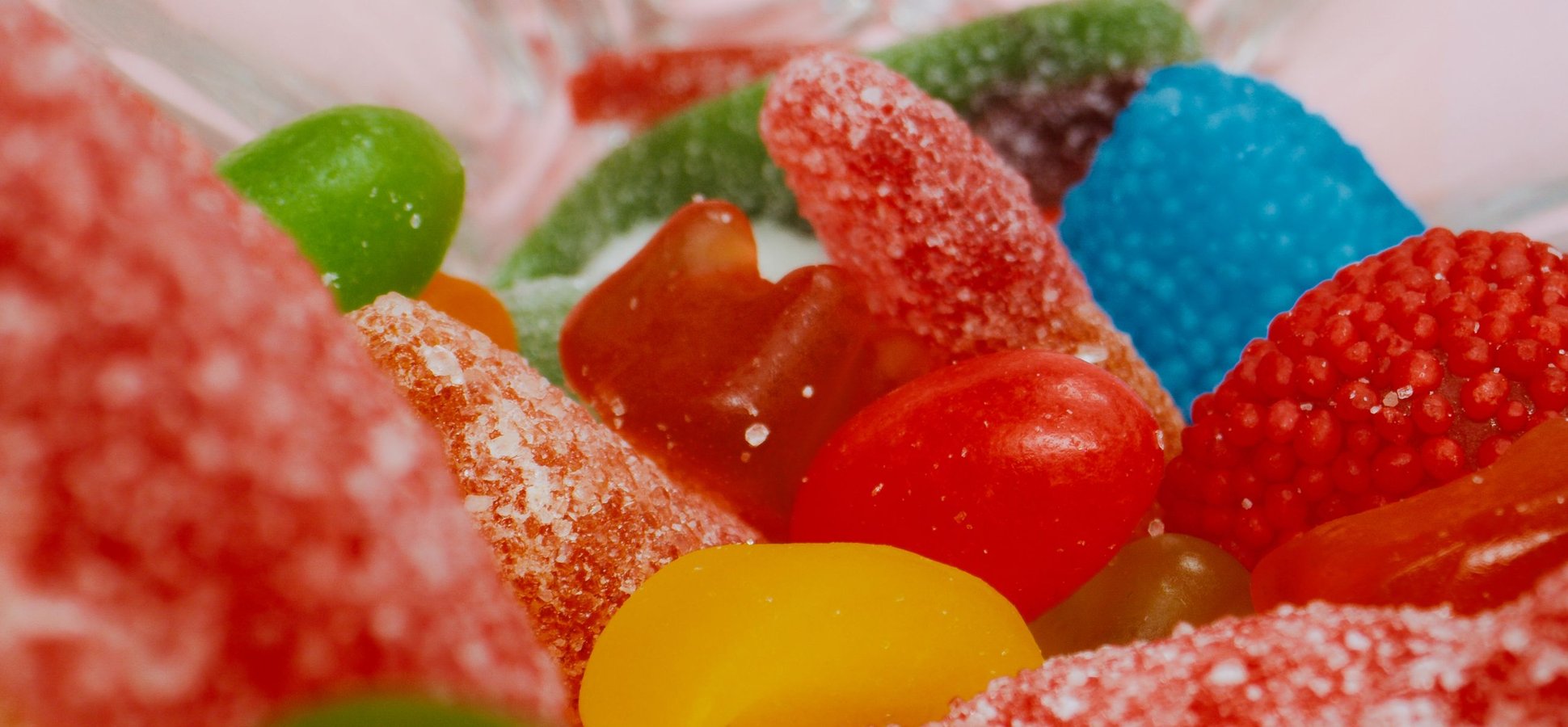
On March 7, 2024, a high school dance team posted a video of itself dumping bags of gummy worms, sour belts and peach rings into one giant bowl before a competition. They called it a candy salad. The account was Fusion Dance Company, the clip ran 11.9 million views, and the format spread through classrooms, locker rooms and HR offices within about eight weeks. Nobody on that team registered a trademark. Nobody licensed anything. There was nothing to license.
Two and a half years later, four candy companies have shipped products built on that format, a legacy German gummy maker has handed a TikTok comedian a C-suite title, and a Canadian reseller is charging $57.99 for two pounds of candy she buys in bulk. The dance team still has 11.9 million views and no revenue.
The candy salad trend is a social format in which a group pours multiple bags of store-bought candy into one shared bowl and tosses them together, usually on camera. It costs nothing to copy and belongs to nobody, which is exactly why the money went where it did.
Last updated: October 2026
Quick answers
Who is making money off the candy salad trend?
Established candy companies with existing distribution are capturing most of the value: Ferrara, SmartSweets, 1UP Candy and Katjes. A second layer of small resellers packs bulk candy into branded containers at roughly four times the per-pound cost. The creators who popularized the format earned nothing directly.
What is a candy salad?
A candy salad is a shared bowl made by emptying several bags of store-bought candy together and mixing them, typically filmed as a group activity. It is a format rather than a product, so no company owns it and anyone can sell a version of it.
Can you make money selling candy salads?
Yes, and the gross margins are unusually high. Bulk gummies run about $6.00 to $7.99 a pound at Bulk Candy Store’s published prices, while reseller Mom & Dad’s Candies lists a two-pound build-your-own bag at $57.99. Labor, containers, cold packs and shipping eat into that spread fast.
What is the candy salad trend?
The candy salad trend is a TikTok format where a group combines several bags of packaged candy into one large bowl, mixes it, and films the result. It is participation content, not a recipe. The point is the pour, the group and the mess.
The Daily Dot traces an early solo version to the account joshandsav in 2023, which drew 16.5 million views, and credits the group format to Fusion Dance Company’s March 2024 post. From there it ran through a familiar sequence: classrooms, offices, college admissions departments and the Los Angeles Chargers all posted their own. Compare that spread pattern with how Food Jutsu moved from one kitchen to a format, or how Glamoratti turned an aesthetic into a label. Same mechanics, different props.
What makes candy salad commercially unusual is that the format consumes a competitor-agnostic basket. A single bowl might hold Sour Patch Kids, Skittles, Nerds and SweeTarts at once, which means no single brand can claim the trend and every brand benefits from it. Ferrara’s Brian Camen, senior director of content and public relations, put the ubiquity plainly to MediaPost in December 2024: “A consumer can’t open up TikTok without seeing the candy salad trend.”
That ubiquity landed in a category already growing. The National Confectioners Association’s State of Treating 2026 report, summarized by The Shelby Report, put US confectionery sales at a record $55 billion in 2025, with non-chocolate candy climbing to 40.9% of the market from roughly a third in 2015. Gummy and chewy formats are where Gen Z spends. Candy salad didn’t create that shift. It gave brands a reason to talk about it.
Which candy brands are capitalizing on the candy salad trend?
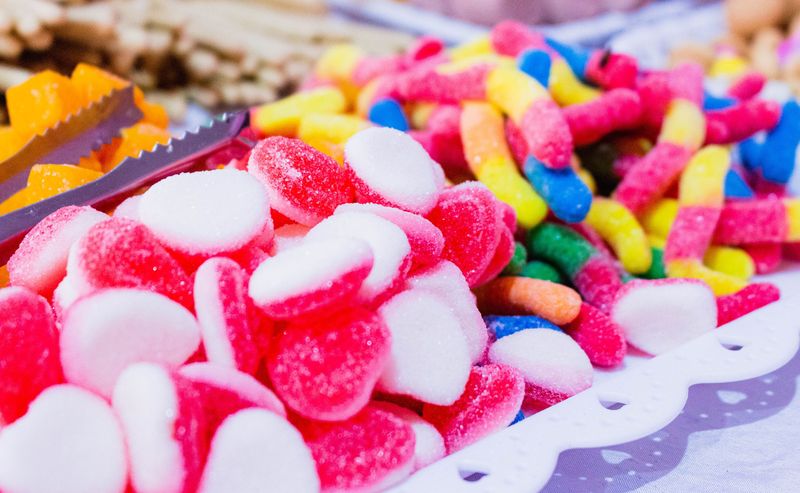
Four companies have shipped something tied to the format: Ferrara, 1UP Candy, SmartSweets and Katjes. Each monetized a different asset, and none of them invented anything.
Ferrara was first and had the least to prove. In December 2024 the Chicago company bundled Nerds Frosty Gummy Clusters, SweeTarts, Twisted Holiday Punch Ropes, Trolli Sour Brite Abominable Snowmen and mini candy canes into a $30 Holiday Candy Salad Kit with a jar, stickers and a hat, sold through its first-ever TikTok Shop. The strategic move wasn’t the kit. It was using a viral format as the excuse to stand up a commerce channel the company didn’t have.
Ferrara could afford that bet because its shelf position was already strong. In its FY2023 performance announcement, the company reported $1.8 billion in net sales, up 15%, a 20.1% share of the US sugar candy category, and roughly $500 million in NERDS sales alone after 67% year-over-year growth. Ferrara’s brands were already in the bowl. The kit just charged people for the convenience of not shopping.
1UP Candy monetized distribution plus an audience. The brand was founded by YouTuber Brian “FaZe Rug” Awadis with venture studio VO/D, targets 8- to 24-year-olds, and runs through Walmart, Circle K and Five Below. CEO Matt Weiss told Snack & Bakery the company was performing across about 12,000 retail doors nationwide. At the 2026 Sweets & Snacks Expo it showed a Mashups Candy Salad Kit with candy sauces, chewy gummies, sour belts and sour powder, per NOSH’s expo coverage.
The timing matters more than the product. 1UP built its reputation on freeze-dried sour strips, and Tastewise’s panel data shows consumer engagement with freeze-dried candy fell more than 50% over twelve months while nostalgic framing among Gen Z candy buyers rose 89%. A format that lets you sell a mixed bag of familiar textures is a clean hedge against a novelty category cooling off. This is the same move creators make when audience income gets volatile: convert attention into something with shelf space.
SmartSweets monetized a positioning claim. In July 2026 the brand made Candy Salad a permanent SKU, a five-shape sweet-and-sour mix with 3 grams of sugar and 6 grams of fiber per bag, sold through Target, Sprouts, Hy-Vee, H-E-B, Walgreens, Harris Teeter and Amazon. Brand director Roanna Wang framed it to Snack & Bakery as “applying SmartSweets mission to Kick Sugar, Keep Candy to one of the biggest trends in the category.” A trend about dumping six bags of sugar into a bowl became a vehicle for a low-sugar product. That’s the whole trick.
| Player | What they shipped | Timing | Asset monetized | Ceiling |
|---|---|---|---|---|
| Ferrara | $30 Holiday Candy Salad Kit, first TikTok Shop | December 2024 | Existing SKUs already in the bowl | High, seasonal |
| 1UP Candy | Mashups Candy Salad Kit with sauces and sour powder | 2026 Sweets & Snacks Expo | 12,000 retail doors plus creator reach | High, year-round |
| SmartSweets | Candy Salad permanent sweet-and-sour mix | July 2026 | Low-sugar positioning, grocery shelf | Medium, repeat purchase |
| Katjes USA | Jake Shane as chief creative officer, Squishy Sourpuss gummies | February 2026 | Borrowed audience and cultural fluency | Unproven |
| Independent resellers | Build-your-own bags and containers | Ongoing | Assembly, packaging, local demand | Low, labor-bound |
Why Katjes gave a TikTok comedian a C-suite title
Katjes USA named Jake Shane its chief creative officer in February 2026, handing creative strategy, brand messaging and marketing campaigns to a 26-year-old whose first viral hit was reenacting the Clinton-Lewinsky scandal. The German gummy maker entered the US market in 2021 with plant-based gummies, according to vegconomist, and has been trying to build American awareness since.
Shane’s résumé is a creator résumé. Real name Jacob Shane Roshkow, USC public relations degree in 2022, signed with WME in March 2023 and UTA that September, about 3.9 million TikTok followers, and a podcast, Therapuss, launched in January 2024. His first Katjes product is Squishy Sourpuss Gummies, octopus-shaped sours named after his handle, @octopusslover8.
Read the hire as a distribution purchase, not a talent purchase. Katjes isn’t buying someone who can run a brand. It’s buying a shortcut past the three to five years of paid media an unknown import usually needs to register with American teenagers, and candy salad is the format that proves teenagers will do the advertising themselves if the product is mixable. We’ve covered the version of this trade that goes wrong in why celebrity restaurants fail, and the version that works in Frosh and the Ciara and Russell Wilson model.
The risk is the obvious one. A creator’s audience is loyal to the creator, not the gummy. If Shane’s attention moves, Katjes owns a title and an octopus mold.
How much money can a candy salad business actually make?
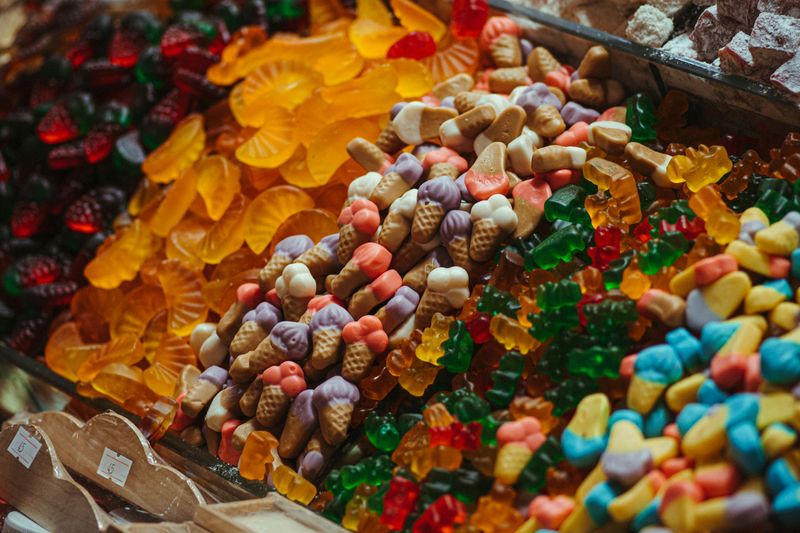
Gross margins in candy salad reselling run near 70%, and net margins are a fraction of that once labor and shipping land. The spread is real. The business underneath it is small.
Here’s the arithmetic, using two public price lists. Mom & Dad’s Candies, a Canadian operation that sells build-your-own bags, lists a 1/2 lb bag at $16.99, a 2 lb bag at $57.99, a 3 lb bag at $72.99, a 5 lb bag at $102.99 and a 6 lb bag at $119.99 on its storefront. That’s $29.00 a pound at the two-pound size and $20.00 a pound at six pounds.
Now the input. Bulk Candy Store publishes Albanese gummi rings at $26.99 for 4.5 lb, Swedish Fish at $39.95 for 5 lb and Nerds Gummy Clusters at $314.99 for a 30 lb case. Call it $6.00 to $10.50 a pound at retail-bulk pricing, lower with a real wholesale account. By Grey Journal’s calculation, the candy inside a $72.99 three-pound bag costs roughly $18 to $24, leaving a gross spread around 70% of the sale price before the container, the cold pack, the labor and the payment processing.
Those four costs are where the model gets ugly. Someone has to physically scoop, weigh, seal and pack every order. There’s no batch efficiency, because the entire pitch is customization. Shipping gummies in July means insulated packaging, and Mom & Dad’s charges $2.00 for shipping ice as a separate line item. A reseller doing 40 orders a week at a $45 gross spread clears about $1,800 before any of that, which makes this a competent side business and not much more. The ceiling looks a lot like the one in most AI side hustles: good margin per unit, no scale.
The reputational cost is real too. Mom & Dad’s pricing drew a public pile-on over markup and handling hygiene. Charging four times bulk cost is defensible when you’re selling assembly and presentation. It stops being defensible the moment a customer can see you doing the assembly on camera.
Why the people who made it viral made nothing
The creators captured none of the value because a format can’t be owned, and candy salad is a format. Fusion Dance Company’s video spread because it was trivially copyable. That same property made it worthless as an asset.
Compare it to a product trend. When a creator launches a drink or a snack, the thing being copied is a SKU, and SKUs have brands, supply chains and shelf contracts attached. Candy salad had none of that. It had a bowl. By the time Ferrara’s social listening tools picked it up, the format had already been donated to the commons, and the only question left was which company had enough distribution to wrap packaging around it fastest.
The companies that won all owned something the format needed and couldn’t supply: Ferrara had the SKUs in the bowl, 1UP had 12,000 doors, SmartSweets had grocery shelves and a health claim, Katjes had cash to buy an audience. The dance team had a video. We’ve seen the same split in how the rich-in-life trend got commercialized and across 2026’s biggest celebrity brand launches. Attention is not an asset. Attention plus distribution is.
What founders should steal from this
The transferable lesson is that trend monetization is a distribution test, not a creativity test. Ask one question when something goes viral in your category: what does this format need that I already own?
Three concrete moves came out of this cycle, and they’re repeatable.
Use the trend to open a channel, not to launch a product. Ferrara’s kit was a $30 item. The TikTok Shop it justified is permanent. If a viral moment gives you internal cover to build infrastructure you’ve been arguing for, the infrastructure is the win and the product is the invoice.
Attach the trend to a claim you were already making. SmartSweets didn’t change its positioning for candy salad. It pointed its existing 87%-less-sugar claim at a format where people buy six bags at once. That took no new R&D and no new story.
Move before the format cools, and know what cooling looks like. Freeze-dried candy engagement dropped more than 50% in a year on Tastewise’s panel while nostalgia-framed candy rose 89% among Gen Z. Ferrara shipped roughly nine months after the format peaked and still caught a holiday. SmartSweets shipped in July 2026, more than two years out, and got away with it because the product stands on its own without the trend.
That last point is the test. Build the thing that survives the trend’s death, then let the trend pay for its launch. A candy salad kit that’s just a bag of candy is still a bag of candy. A chief creative officer whose relevance expires with his follower graph is a harder asset to keep on the books.