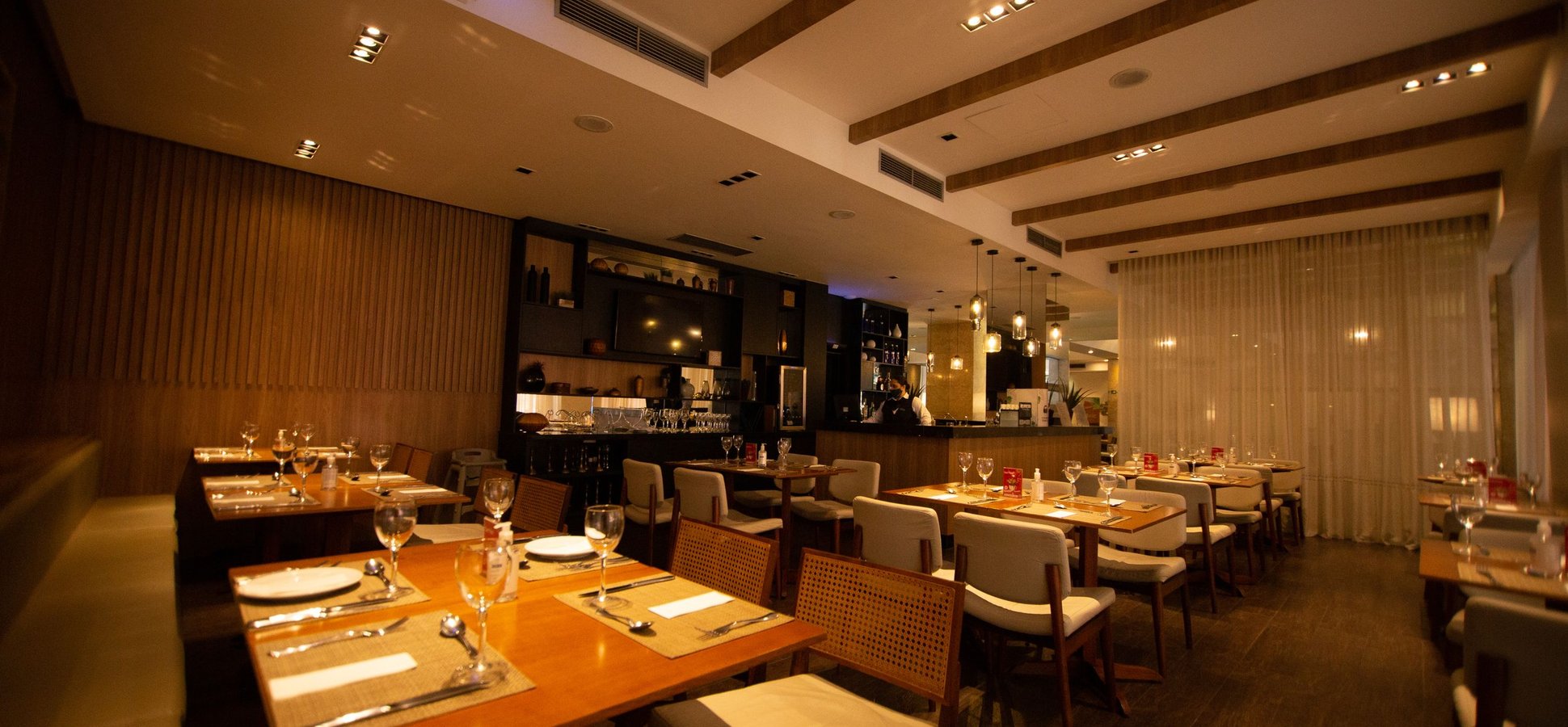
On September 30, 2026, the Wahlburgers at 19 Shipyard Drive in Hingham, Massachusetts served its last meal. It was the first one, opened in October 2011 by Paul, Mark, and Donnie Wahlberg, and for fifteen years it was the proof of concept for everything that followed: an A&E reality show, restaurants in more than a dozen states and four countries, a run at grocery-store expansion. The 2,000-square-foot space is now listed for lease.
Ask why celebrity restaurants fail and the answer usually starts with bad food. The Wahlburgers record points somewhere duller. In January 2025, the chain walked away from 79 locations inside Hy-Vee supermarkets, cutting itself roughly in half in two weeks. CEO Randy Sharpe was direct about why: “We are growing restaurants. We’re not going to be in the grocery business.”
Now hold that against a different celebrity number. In June 2017, Diageo agreed to pay $700 million upfront for Casamigos, the tequila George Clooney built with Rande Gerber and Mike Meldman, plus up to $300 million more on a ten-year earnout. Casamigos sold 120,000 cases the year before. No dining rooms, no line cooks, no leases.
Same fame, same idea of aiming celebrity attention at a consumer product, opposite outcomes. A celebrity restaurant is a restaurant that rents a famous person’s name to drive traffic, usually through a licensing or minority-equity arrangement rather than through the celebrity’s own capital and operating control. Once you see the deal structure instead of the storefront, the failure rate stops being a mystery.
Last updated: September 2026
Quick answers
Why do celebrity restaurants fail?
Celebrity restaurants fail for the same reasons other restaurants do, only on a shorter clock. Fame fills a dining room for a few months and does nothing for food cost, labor, or rent. Full-service restaurants average 3 to 5 percent net margin, so an opening-week crowd buys runway rather than a working business.
Do celebrities actually own their restaurants?
Usually not in the way diners assume. Most arrangements are name licenses or minority equity stakes in an operating company that carries the lease and payroll. Nellie’s Southern Kitchen at MGM Grand, branded for the Jonas family, closed in May 2026 after three years while the family’s other locations kept running.
How do celebrities make money from restaurants?
Three ways: an upfront name fee plus a royalty on sales, an equity stake in the operator that pays on a sale rather than on monthly profit, or using the restaurant as a marketing channel for a higher-margin product such as a spirits brand. The third path produces almost all the large outcomes.
Why do celebrity restaurants fail?
Celebrity restaurants fail because fame is a traffic tactic, not a margin tactic. It sells out the first six weeks, then leaves the operator with the same food cost, the same labor schedule, and a higher rent than an unbranded restaurant would have signed for.
Start with the baseline. H.G. Parsa, then at Ohio State, tracked 2,439 restaurants in Columbus using local health department records and found about 26 percent closed within the first year, with cumulative failure between 57 and 61 percent over three years. Parsa’s finding is considerably kinder than the 90 percent figure people repeat, and it’s still a coin flip with worse odds.
Margins explain the rest. Toast’s 2026 benchmark data, citing Restaurant365, puts the average restaurant net margin at 3 to 5 percent, with full-service concepts sitting at the low end and quick service running 6 to 9 percent. A famous last name doesn’t lower the price of ground beef. It does raise rent, because landlords price the traffic a marquee brings, and it raises the review standard, because a $26 burger attached to a movie star gets judged like fine dining.
The pattern is old enough to have a canonical case. Planet Hollywood, backed by Bruce Willis, Arnold Schwarzenegger, and Sylvester Stallone, filed for Chapter 11 on October 19, 1999, restructured, and filed again on exactly that date in 2001, down to roughly 60 locations. By the second filing, about 70 percent of the company belonged to investors including Prince al-Waleed bin Talal, Ong Beng Seng, and chairman Robert Earl. The actors supplied attention. Other people supplied the balance sheet and absorbed the write-down.
That split is the real story, and it repeats in nearly every celebrity restaurant closure since.
Do celebrities actually own their restaurants?
Most of the time, no. The typical structure is a trademark license or a minority stake, with an operating company holding the lease, hiring the staff, and taking the downside. Google’s own autocomplete gives away how confused people are about this: type “do celebrities actually own” and the first suggestion is “bars in nashville.”
Nashville’s Broadway strip is the cleanest example of the model. TC Restaurant Group operates the multi-floor bars branded for Jason Aldean, Luke Combs, and Post Malone. The artists supply the name, the merch tie-in, and the occasional appearance. The group supplies the liquor license, the 200-person staff, and the rent on a building in one of the most expensive retail corridors in the South.
Nellie’s Southern Kitchen shows what happens when the operator changes its mind. The Jonas family concept opened on the Las Vegas Strip inside MGM Grand and closed in May 2026 after three years, a decision MGM announced rather than the family. Casino food and beverage space is leased, programmed, and re-leased on the property’s schedule, not the brand’s.
Wahlburgers went the other direction and got burned by the same asymmetry in reverse. The chain franchised aggressively, then put 79 units inside Hy-Vee grocery stores under a 2018 deal. When that partnership ended on January 20, 2025, all 79 converted to Hy-Vee Market Grille by February 4, leaving roughly 40 Wahlburgers standing. Sharpe said plainly that the in-store units had underperformed.
The takeaway for anyone structuring a deal like this: whoever controls the lease controls the concept’s lifespan. A name on the sign isn’t control. GJ has tracked the same dynamic in other categories, including CardVault by Tom Brady, where Brady’s involvement came with actual operating equity rather than a licensing fee.
How do celebrities make money from restaurants?
Celebrities make money from restaurants through three distinct mechanisms, and they pay out on completely different timelines. A name license pays a fee plus a royalty on gross sales, typically in the low single digits. An equity stake pays on an exit, not on monthly profit. And a restaurant used as a marketing surface pays through whatever higher-margin product sits behind it.
The royalty route is the safest and the smallest. A percentage of gross sales gets paid whether the unit is profitable or not, which is exactly why it appeals to talent and exactly why it produces so many closures: the licensor has no financial reason to care about unit economics. Nobody renegotiates a 5 percent royalty down to keep a struggling franchisee alive.
Equity is where the real money is, and it only works when the operating company is worth buying. That means a repeatable format, a real management team, and a growth story a strategic acquirer wants. One restaurant isn’t that. Fifty restaurants inside a hotel platform can be.
The third mechanism is the one most founders miss. Trevor Horwell, CEO of Nobu Hospitality, told Skift in April 2024: “We make as much on an average restaurant seat as we do in a hotel room.” The restaurant isn’t the business there. It is the demand engine that makes the hotel financeable, which is the same logic behind Cardi B’s Grow-Good Beauty structure, where the visible product is a channel into a larger margin pool.
Licensing, equity, and ownership compared
The three structures differ on who carries the loss, which is the only variable that matters when a concept underperforms. Guy Fieri’s Flavortown licensing arrangements, Wahlburgers’ franchise units, and Nobu’s founder-shareholder model sit at three different points on that spectrum.
| Structure | What the celebrity gets | Who eats a loss | Upside ceiling | Best for |
|---|---|---|---|---|
| Name license only | Upfront fee plus low-single-digit royalty on gross sales | The operator or franchisee | Low. Royalties cap out with unit count | Talent who want cash and zero operating exposure |
| Minority equity in the operator | Shares that pay on a sale, sometimes plus a smaller royalty | Shared, proportional to the stake | High, but only at an exit | Brands with a repeatable format and an acquirer in sight |
| Founding shareholder and operator | Control of the concept, the P&L, and the expansion pace | The celebrity, alongside co-founders | Highest. Nobu is the reference case | People willing to run a hospitality company, not endorse one |
Read the table one more time and the failure pattern resolves. The structure that produces the most closures is also the one that costs the celebrity the least, which is why it keeps getting signed.
What MrBeast Burger proved about licensing at scale
MrBeast Burger is the clearest modern demonstration that a name license with no quality control is a liability dressed as revenue. Virtual Dining Concepts opened roughly 1,000 virtual MrBeast Burger locations in 2021 and added about 700 more in 2022, and by 2023 more than half of those locations carried customer ratings below 2 out of 5 stars.
Jimmy Donaldson’s Beast Investments sued Virtual Dining Concepts in August 2023, alleging that the expansion pace produced “poor customer experiences and food quality,” that customers received mostly raw burgers, that orders went out in 7-Eleven wrappers, and that Donaldson had “not received a dime” in royalty and distribution payments. Virtual Dining Concepts called the complaint riddled with false statements and countersued for $100 million.
Notice who absorbed the reputational cost. Diners tagged Donaldson, not the ghost-kitchen operator, because the name on the bag is the only name a customer sees. A license transfers operating risk away from the celebrity and transfers brand risk straight toward them, which is the trade almost nobody prices correctly at signing. Donaldson has been unusually open about how little of his gross revenue converts to personal cash, a point GJ unpacked in why MrBeast says he has zero money.
Anyone licensing a personal brand into food service should treat quality-control rights as the deal’s central term, above the royalty rate. A 6 percent royalty on 1,700 bad locations is worth less than 3 percent on 200 good ones.
Why the bottle beats the dining room
Spirits brands win because a bottle scales through distributors while a restaurant scales through leases. Diageo’s June 21, 2017 announcement valued Casamigos at up to $1 billion: $700 million at close plus up to $300 million tied to a ten-year performance earnout. The brand sold 120,000 cases in 2016, grew at a 54 percent two-year compound rate, and was tracking above 170,000 cases for 2017.
Run the comparison. Casamigos reached that valuation with a production partner, a distributor, and a marketing budget. Reaching a comparable outcome through restaurants would require dozens of profitable units, each with its own lease, its own general manager, and its own local labor market. Every new restaurant is a new small business. Every new case of tequila is the same business, slightly larger.
Dwayne Johnson ran the identical playbook with Teremana. Teremana’s February 1, 2022 announcement put the brand at 640,000 nine-liter cases in 2021, its first full year after a March 2020 launch, and brought in Mast-Jagermeister as a strategic investor on undisclosed terms. Johnson kept a large ownership position in a brand with no dining rooms attached.
This is why a founder watching celebrity business moves should read a restaurant opening as a marketing expense and a spirits launch as an asset build. The same insight drives the apparel and beverage plays GJ covered in Sydney Sweeney’s SYRN business model, where the product travels without a physical footprint.
What Nobu does differently
Nobu is the exception because Robert De Niro is a founding shareholder in an operating company, not a licensor collecting a fee. De Niro launched the first Nobu in New York in 1994 with chef Nobu Matsuhisa and producer Meir Teper, and the group now runs roughly 50 restaurants alongside a hotel platform that announced its 40th property in 2024, with a stated target of 80 hotels within five years.
The structural trick is that Nobu pairs a restaurant with real estate. Horwell told Skift the company sells itself to developers on its numbers: “We have a great business algorithm, and the P&L sells the brand to developers.” A Nobu restaurant raises the room rate of the hotel it sits inside and the price of the branded residences next door. The restaurant does not need to carry a 20 percent margin, because it is underwriting an asset that does.
Compare that to a standalone celebrity steakhouse on a ten-year retail lease. Same fame, no second revenue line, no appreciating asset, and a fixed occupancy cost that grows every year. The Nobu model also explains why scarcity plays work in this category, something visible in how the most exclusive restaurants in New York price access rather than food.
Operators without a famous name reach the same conclusion from the other direction. Chef Fabio Viviani built a hospitality group and then a business teaching restaurant owners the unit-economics discipline that celebrity concepts usually skip, a path GJ profiled in his work with restaurant operators.
What founders should copy from this
The transferable lesson has nothing to do with restaurants. It’s that attention is an input with a short half-life, and the structure you attach it to determines whether it compounds or evaporates.
Five rules fall out of the cases above.
Attach attention to something with margin headroom. A 3 to 5 percent net margin business cannot absorb a bad month. A consumer packaged good, a software product, or a media property can. Casamigos and Teremana both turned attention into an asset because the underlying product had room to pay for marketing.
Take equity or take control, not a royalty. A royalty caps your upside and hands your brand risk to someone whose only incentive is unit count. Donaldson learned that at 1,700 locations. If you license, license narrowly.
Make quality-control rights the deal’s first term. Audit rights, a unit-opening cap, and the power to shut down a bad location matter more than the percentage. Every reputational cost lands on the name, always.
Ask who holds the lease. MGM decided when Nellie’s Southern Kitchen ended. Hy-Vee decided when 79 Wahlburgers ended. If a partner controls the physical asset, they control your timeline.
Build a second revenue line before you scale the first. Nobu’s restaurants work because hotels and residences sit behind them. Creators face the same math when a single platform pays out, which is what made the collapse documented in the Flip app shutdown and its $2.91 average creator payout so damaging, and what separates the durable businesses in the highest-paid podcasters of 2026 from one-channel acts.
Celebrity restaurants fail at a high rate because the format asks fame to do a job it can’t do: cover fixed costs in a 3 percent margin business, month after month, once the novelty wears off. The version that works keeps the fame and changes the asset underneath it.