PLAY

Bad Bunny Net Worth 2026 and How He Built It

Bad Bunny net worth 2026 concert performance live on stage
0:00
0:00🎧 15 min

In 2013, Benito Antonio Martinez Ocasio was bagging groceries at an Econo supermarket in Vega Baja, Puerto Rico, earning barely enough to cover gas to the University of Puerto Rico at Arecibo. Between shifts, he recorded songs on his phone and uploaded them to SoundCloud. Nobody told him to stop singing in Spanish. Nobody needed to. The entire music industry had already made the message clear: English or irrelevance. Thirteen years later, Bad Bunny is worth an estimated $100 million, has won the Grammy for Album of the Year with a fully Spanish-language record, headlined the Super Bowl halftime show in front of 123 million viewers, and sold 2.6 million tickets for his current world tour in a single week. He did all of it without recording a single English-language hit.

Bad Bunny’s net worth in 2026 is an estimated $100 million, making him the first Puerto Rican artist to reach a nine-figure net worth. That fortune was built on Spotify dominance, a historic Grammy Album of the Year win for DeBI TiRAR MaS FOToS, the Debi Tirar Mas Fotos World Tour spanning 56-plus stadium dates across 18 countries, and brand partnerships with Adidas, Cheetos, and Modelo.

Last updated: April 2026

How did Bad Bunny make his money?

Bad Bunny’s $100 million fortune comes from six revenue streams working simultaneously, and the math behind each one explains why his net worth doubled in a single year.

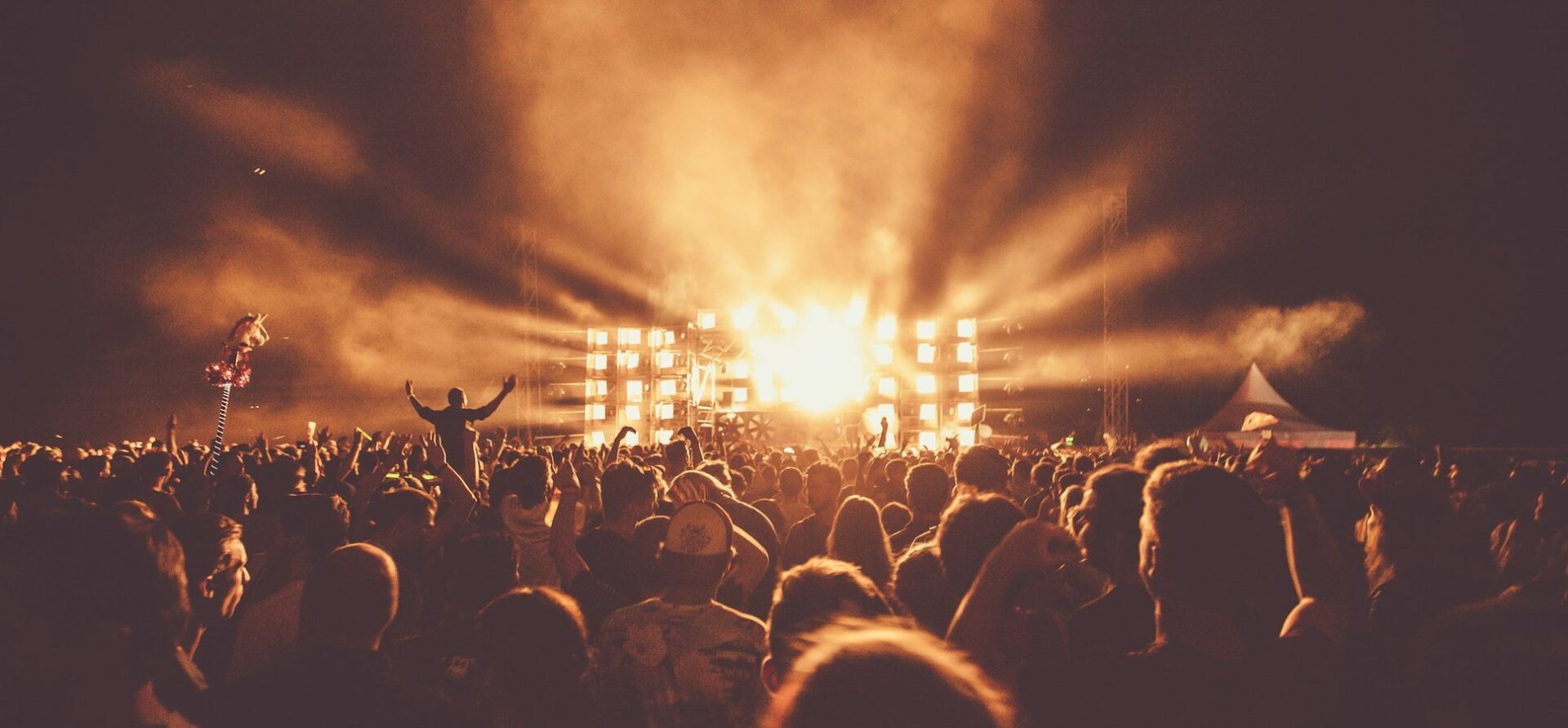
Touring is the engine. Bad Bunny has grossed over $900 million in lifetime touring revenue from 5.7 million tickets sold since 2018, according to Billboard Boxscore data. His current Debi Tirar Mas Fotos World Tour grossed $107 million in its first 12 shows alone. In December 2025, he set the Billboard monthly record: $99.1 million from 633,000 tickets in a single month. With stadium dates across Latin America, Australia, and Europe continuing through July 2026, this tour could become his highest-grossing ever.

Before the world tour launched, he ran “No Me Quiero Ir de Aqui,” a 30-show residency at the Jose Miguel Agrelot Coliseum in San Juan. The first nine shows were restricted to Puerto Rico residents. The other 21 invited the world to come to the island. Over 500,000 people attended. Short-term rental bookings in San Juan jumped 130% to 175% compared to the same months in 2024. The residency generated between $176.6 million and $733 million for Puerto Rico’s economy, depending on which study you cite. Local salsa and bomba artists reported a 65% average income increase during the run.

Bad Bunny performing live in concert stadium tour 2026

Streaming royalties are the second pillar. Bad Bunny was crowned Spotify’s most-streamed artist globally for the fourth time in 2025 Wrapped, with 19.8 billion streams that year. He and Taylor Swift are the only artists to surpass 100 billion total Spotify streams. Forbes estimates his annual digital royalties exceed $30 million. After his Super Bowl halftime performance, his U.S. Spotify streams surged 470%, with global streams up 210%.

Brand deals bring in roughly $18 million annually. His partnership with Adidas has expanded beyond sneaker collaborations into a full apparel line. The shoes he wore during the Super Bowl generated $1.6 million in media exposure for Adidas in a single night. Adidas CEO Bjorn Gulden has publicly credited the Bad Bunny line with helping the brand appeal to younger male consumers. Other partners include Cheetos, Corona, Pepsi, and Crocs.

The Grammy win that changed everything

DeBI TiRAR MaS FOToS won Album of the Year at the 68th Grammy Awards on February 1, 2026. It was the first time a Spanish-language album won the Recording Academy’s top prize in the award’s 68-year history. His previous album, Un Verano Sin Ti, had been the first Spanish-language album nominated in the category in 2023 but lost to Harry Styles. This time, Bad Bunny won.

The commercial impact was immediate. The album re-entered the Billboard 200 top 10. Streaming numbers for his full catalog spiked. And the Grammy validated what his touring numbers already proved: Spanish-language music doesn’t need an English crossover to compete at the highest level. For context, previous Latin artists who broke into the U.S. mainstream, from Shakira to Enrique Iglesias, did it by releasing English-language versions of their hits. Bad Bunny never made that concession.

That decision shaped his brand in ways that go beyond music. When Adidas designed the Bad Bunny apparel line, the tags read “adidas para Bad Bunny.” When he performed at the Super Bowl, the entire 13-minute set was in Spanish. The refusal to code-switch became the brand itself.

How much did Bad Bunny make from the Super Bowl?

Almost nothing in direct pay. The NFL pays halftime performers union scale, roughly $1,000 per day under the SAG-AFTRA contract. Apple Music and the NFL covered the estimated $10 to $15 million production budget for staging, pyrotechnics, and choreography. Bad Bunny did not receive a separate performance fee.

The real payoff is exposure math. Super Bowl LX drew over 123 million viewers. In the days after, Bad Bunny’s Spotify streams jumped 470% in the U.S. and 210% globally. Historically, Super Bowl halftime performers see a 300% to 400% streaming bump, which translates to millions in indirect royalty revenue over the following months. The Adidas shoes he wore during the show generated $1.6 million in media impact value in one night.

For an artist who already commands $50 to $80 per ticket across 56 stadium dates, the Super Bowl was less about the check and more about converting 123 million casual viewers into ticket buyers and streamers.

Bad Bunny’s business ventures beyond music

The $100 million figure doesn’t live entirely in music royalties and touring. Bad Bunny has built a portfolio of business interests that diversify his income and hedge against the inevitable career cycle every musician faces.

Gekko, the Miami steakhouse. Opened in August 2022 in partnership with nightlife mogul David Grutman, Gekko combines high-end Wagyu steakhouse dining with Miami club energy. The restaurant occupies 15,300 square feet in Brickell. UBS provided a $23.5 million refinance on the space, a signal of the property’s value. Gekko has become a destination for celebrities including Lionel Messi, DJ Khaled, and the Kardashians.

His own label and media company. Bad Bunny operates Rimas Entertainment as his primary label, where he reportedly holds a 90/10 split in his favor, an unusual deal that lets him keep the vast majority of his music revenue. Most artists, especially early in their careers, accept far worse splits.

Angel investing. He’s a confirmed investor in Creative Intell, an AI-powered platform for music industry contract drafting and negotiation. He also co-owns a Puerto Rican basketball team, the Cangrejeros de Santurce, connecting him to the island’s sports economy.

Real estate. While specific holdings aren’t public, multiple reports cite Puerto Rican and Miami real estate as part of his investment strategy, consistent with the pattern of high-net-worth entertainers who park touring income in property.

What is Bad Bunny’s real name?

Bad Bunny’s real name is Benito Antonio Martinez Ocasio. He was born on March 10, 1994, in Bayamon, Puerto Rico, and grew up in the Almirante Sur neighborhood of Vega Baja. His father was a truck driver, his mother a schoolteacher. The stage name came from a childhood photo where he wore a bunny costume with a furious expression on his face. He kept the name because it stuck, and because the contrast between the cute and the aggressive captured the energy he wanted his music to carry.

He sang in his local Catholic church choir until age 13. By 14, he was writing his own songs. He enrolled at the University of Puerto Rico at Arecibo in audiovisual communications, hoping to become a radio host, but left without finishing his degree after DJ Luian discovered his SoundCloud track “Diles” in 2016 and signed him to Hear this Music.

Bad Bunny fashion and style as cultural icon and performer

How Bad Bunny’s net worth compares to other Latin artists

Table 01
ArtistEstimated net worth (2026)Primary revenue sourceEnglish crossover?
Bad Bunny$100MTouring + streamingNo
Shakira$300MMusic catalog + brand dealsYes
J Balvin$50MBrand partnerships + touringPartial
Karol G$45MTouring + streamingNo
Daddy Yankee$60MMusic catalog + investmentsPartial (“Gasolina”)

The comparison tells a story. Shakira, worth three times as much, built her fortune over 30 years and released multiple English-language albums. Bad Bunny hit $100 million in roughly eight years of mainstream success, entirely in Spanish. Karol G, the closest comparison as a fellow reggaeton artist who stayed in Spanish, is at $45 million. Bad Bunny’s advantage is volume: more tours, more stadium capacity, and the streaming crown.

What founders can learn from Bad Bunny’s strategy

Strip away the music and what’s left is a business playbook that mirrors what the best founders do.

He bet on a market everyone else abandoned. When Bad Bunny started, the conventional path for Latin artists was to cross over into English. He rejected that entirely. The parallel in business: founders who build for an underserved market instead of fighting over the same saturated one often build faster. Bad Bunny treated the Spanish-speaking global audience as his total addressable market and proved it was bigger than anyone assumed.

He reinvested everything. His Puerto Rico residency wasn’t just a concert series. It was an economic stimulus program that generated hundreds of millions for the island. That built political capital, cultural loyalty, and a fan base that treats his events as civic pride. The creator economy equivalent: reinvest early revenue into your audience instead of extracting maximum profit immediately.

Revenue diversification happened fast. Touring, streaming, brand deals, restaurants, angel investing, sports ownership. Bad Bunny didn’t wait until he was “big enough” to diversify. He started building parallel revenue streams early. For founders, the lesson is the same: don’t be a one-product company if you can help it.

He controls his economics. The reported 90/10 label split is the music equivalent of owning your cap table. Most artists hand over 80% or more to their label. Bad Bunny’s deal means he keeps the vast majority of every stream, every download, every sync placement. Equity matters, in music and in startups.

Is Bad Bunny a billionaire?

No. Bad Bunny is not a billionaire. His estimated net worth of $100 million puts him in the top tier of active musicians but well below the billionaire threshold. For reference, the only musicians confirmed as billionaires are Jay-Z (approximately $2.5 billion), Rihanna ($1.4 billion, primarily from Fenty Beauty), and Paul McCartney ($1.3 billion from decades of Beatles royalties and catalog ownership). Bad Bunny would need to 10x his current fortune to join that group, which would likely require a business exit on the scale of Fenty or a massive catalog sale.

That said, his trajectory is steep. His net worth doubled from $50 million to $100 million in a single year. If the Debi Tirar Mas Fotos World Tour performs as projected and his Adidas partnership expands, he could realistically cross $150 million by the end of 2026. The path to a billion would require building a business beyond music, something along the lines of a fashion brand, spirits company, or media empire.

Read More From the PLAY desk