

When business people pursue entrepreneurship, they need to address the pros and cons associated with their choice to become a business owner, because entrepreneurs must be aware that almost half of all businesses fail within their first five years. Monetary analysts believe that the right type of funding can determine the success or failure of a company.
What is an entrepreneur? These owners bear the majority of risks and enjoy the majority of rewards for starting an organization. Who are famous entrepreneurs? Jeff Bezos with Amazon. Bill Gates with Microsoft. Mark Zuckerberg with Facebook. Steve Jobs with Apple. While some people want to become an entrepreneurs, there is no surefire way to make that happen.
Cutting Through the Infinite Clamor of Advertisements
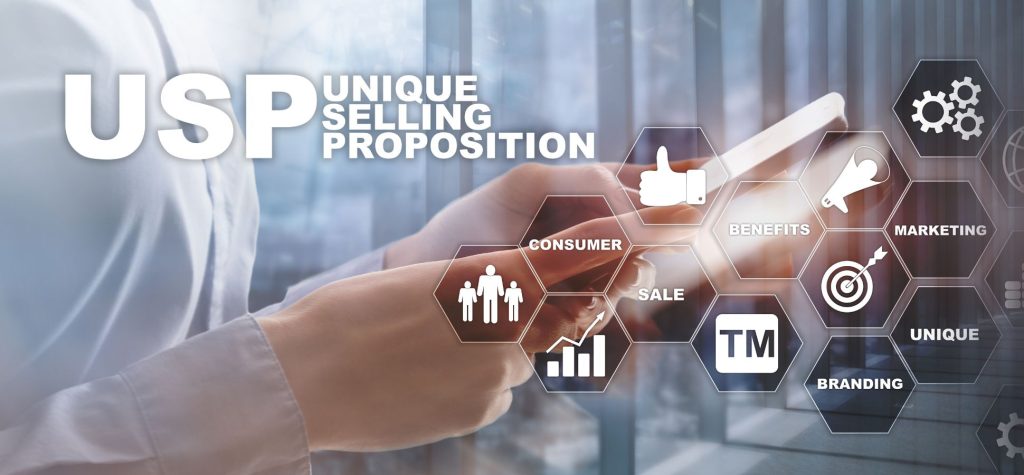
If entrepreneurs choose the path less traveled, they must secure market share by using a unique selling proposition (USP). This communication lets consumers know why they should purchase your products and services. A USP establishes an effective brand identity that enables people to create memorable and recognizable communications in the marketplace of ideas.
Some marketing campaigns have staying power. Wendy’s “Where’s the beef?” advertisement has entered the lexicon as a catchall sentence that questions the legitimacy of some idea or product. There is no substitute for a great marketing campaign. In 1988, the Wieden+Kennedy advertising agency created one of the most profitable campaigns for Nike.
The Nike brand symbolizes victory in all of its forms and fashions. The Nike swoosh logo along with their slogan, “Just do it,” cuts through the uproar of organizations vying for the attention of consumers. The slogan is repeated in contexts that have nothing to do with sports or athletic clothing. This phrase has been used as a motivator to compel someone to achieve greatness.
New products must include a call to action that positions the product in the mind of consumers or repositions the reputation of competitors to illustrate some deficiency with their products. One organization disparages another organization to carve out some market share. Marketing indicates that the dual application of a USP with repositioning tactics can undermine even the best retaliatory efforts of the competition that is under siege.
How Your Emotional Intelligence (EQ) Translates Into Money

Here are entrepreneur examples who succeeded without a college degree. Henry Ford with Ford Motor Company. David Geffen with Geffen Records and the co-founder of DreamWorks. David Neeleman with JetBlue Airlines. Rush Limbaugh with Excellence in Broadcasting Radio Network. Russell Simmons with Def Jam records. Simon Cowell with American Idol. Steve Wozniak with Apple. The list goes on and on.
If entrepreneurs lack certain hard skills such as a college degree, then they can improve their chances for success by developing the capacity to pinpoint their emotional triggers – this soft skill allows business persons to handle interpersonal relationships wisely and empathetically. This skill serves as a pathway that establishes relationships with teams and organizations. This ability is an interpersonal communication skill where people exchange thoughts and emotions that lead to cooperation. Entrepreneurs could benefit from finding a mentor who fortifies this relationship based on trust, confidentiality, and mutual understanding.
Some psychological profilers compare these triggers to fingerprints because each person rates differently for these traits that gauge attitudes towards concepts such as goal orientation, sole responsibility, solo environments, and group environments. Entrepreneurs can benefit greatly through personal introspection.
How a USP Can Make Entrepreneurs the Best in the Business
Determine the needs and preferences of your target audience and deliver powerful messages that explain the USP of your product. For example, entrepreneurs provide pet owners with several reasons to purchase their products. The healthiness of pets makes pet owners susceptible to advertising that addresses the effects of organic and processed pet foods.
Entrepreneurs need to determine the knowledge of consumers. Are pet owners familiar with emulsifiers, sweeteners, colors, and microparticles, and nanoparticles? Entrepreneurs need to keep their communications simple until the conversation has reached a certain sophistication level. Do media consumers know the difference between emulsifiers and microparticles?
Effective entrepreneurs focus on the mass desire that motivates their market. The healthiness attributed to our pets remains a priority. How many studies have proven that processed foods undermine the health of our furry friends? This is where existing beliefs create the framework for a marketing campaign. It has been drilled into our psyche that processed foods cause poor health. Are all emulsifiers equally harmful? We are not sure.
Types of Loans That Can Make All the Difference
On every street corner and in every nook in cyberspace, entrepreneurs can find lenders who want to finance their new company – but what type of loan should entrepreneurs pursue? Lenders offer numerous options: merchant cash advances, working capital loans, equipment loans, invoice factoring, business lines of credits, and small business loans.
What makes loans offered by the Small Business Administration (SBA) attractive? They range from $50 thousand to $5 million to cover diverse situations. The SBA provides some of the lowest interest rates, because these loans receive a guarantee of payment from the federal government.
Regarding the percentage of loans that will be covered, the SBA guarantees that they will pay up to 90% for loans of $350 thousand or less. If the borrowed amount exceeds $350 thousand, the SBA agrees to cover up to 75% of the loan.
While microloans have drawbacks, borrowers can use these funds to pay for most business expenses with an interest rate that varies from 8% to 13%. Microloans provide entrepreneurs with the capacity to expand a product line, buy or repair equipment, furnish an office, or pay suppliers. Significate drawbacks stipulate that the loan amount cannot be used to pay for real estate or to pay off existing debt.
Fundamentals for Securing an SBA Loan
To be eligible for an SBA loan, the borrower meets certain requirements: (1) has the status of a for-profit business; (2) meets the exact purpose of the loan; (3) fails to secure money from non-government sources; (4) has an acceptable personal and business credit rating; (5) attains SBA funding requirements.

To qualify for an SBA 7(a) loan, entrepreneurs must meet the standards developed by the FICO Small Business Scoring Service (SBSS). This service determines creditworthiness by analyzing your personal FICO score and your business financial behaviors. An SBSS ranges from 0 to 300. Entrepreneurs increase their potential to receive an SBA loan if their personal FICO score ranges near 650 or more.
Microloans Are Not Your Gig? Try This One
If the money allocated for microloans does not cover your needs or expenses, an SBA 7(a) loan provides entrepreneurs with the option to borrow up to $5 million. All SBA loans do not allow borrowers to use the loan to buy property. However, an SBA 7(a) loan can be used to purchase real estate.
An SBA 7(a) loan can also be used for the following purposes: (1) constructing or renovating buildings; (2) providing money for working capital; (3) buying equipment, supplies, machinery, furniture, or fixtures; (4) refinancing business debt; (5) starting, expanding, or acquiring an organization.
According to the SBA, in 2023, the federal government backed more than 57,300 SBA 7(a) loans that were valued at $27.5 billion. The government-backed more than 5,500 microloans that were valued at $87 million. Black-owned businesses compiled 35% of the total percentage of microloans and Latino-owned organizations created 15% of this sum total.
SBA 7(a) loans have favorable repayment terms that allow entrepreneurs to pay back loans for an extended timeframe – most loans have terms of five to seven years while an SBA loan can allow borrowers up to 25 years to repay real estate and up to 10 years to repay money used for working capital and inventory and equipment.
Use EQ and Financial Literacy to be Successful
Throughout the process of becoming a successful entrepreneur, stay on track by regenerating your focus on EQ. As time passes, people are introduced to new environments and they come in contact with new people who have new ideas. Do not let the train go off the rails. Create USPs that will develop marketing campaigns. At the same time, create a financial blueprint that demonstrates the funding that you will need to cover your expenses. These are key moments. Capitalize on opportunities to grow your business.


