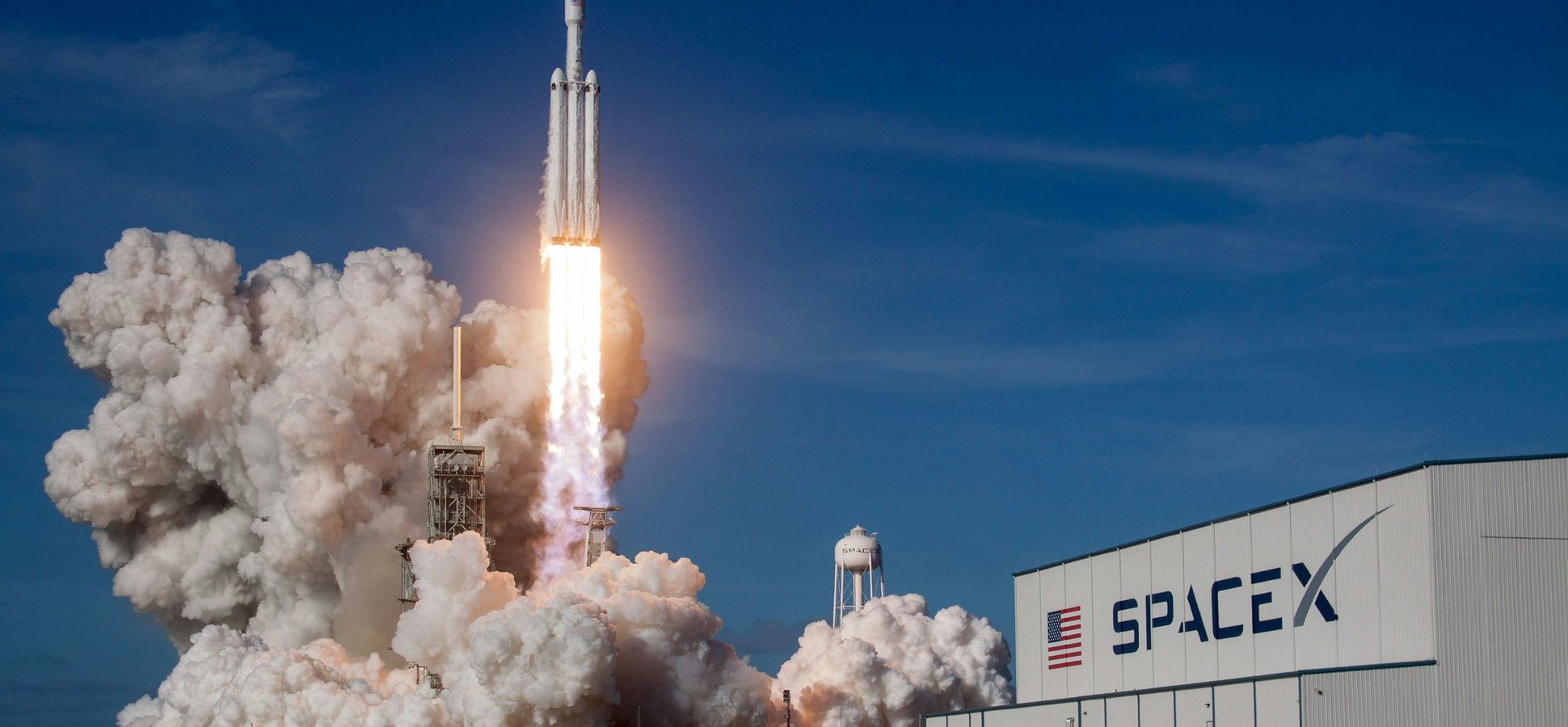
At 9:30 a.m. Eastern on June 12, 2026, Elon Musk became the world’s first trillionaire. A ticker symbol appeared on Nasdaq for the first time: SPCX. Within minutes, SpaceX shares were changing hands at $135 apiece, pricing the company at $1.77 trillion and making its largest IPO in recorded history look almost routine. Musk owns 4.76 billion vested shares plus 350 million options exercisable at $8.39. The math crossed a line nobody had crossed before. His combined holdings in SpaceX, Tesla, and the merged xAI entity pushed his net worth past $1 trillion.
He is now worth more than the GDP of Saudi Arabia. More than the combined wealth of the bottom 3.8 billion people on Earth, according to Oxfam’s analysis. Over the past year alone, his fortune grew at a rate exceeding $1 million per minute.
Elon Musk is the world’s first trillionaire, a status reached not through one company but through a portfolio of six companies employing roughly 150,000 people across electric vehicles, aerospace, artificial intelligence, brain-computer interfaces, tunneling, and social media.
The number is staggering. But the playbook behind it is what matters for anyone building a business. Musk didn’t get here by following the conventional founder path of “pick one thing, do it well, exit, repeat.” He ran multiple companies simultaneously, cross-pollinated technology between them, and stacked asymmetric bets over 24 years. That strategy carries lessons, risks, and honest counterpoints that every founder should understand.
Last updated: June 2026
Quick answers
Who is the world’s first trillionaire?
Elon Musk became the world’s first trillionaire on June 12, 2026, when SpaceX began trading on Nasdaq at $135 per share. His combined holdings across SpaceX (approximately $642 billion), Tesla (approximately $160 billion), and other ventures pushed his total net worth past the $1 trillion threshold, according to both Bloomberg and Forbes estimates.
How much did SpaceX raise in its IPO?
SpaceX raised $75 billion by selling 555.6 million Class A shares at $135 each, making it the largest IPO in history. The previous record was Saudi Aramco’s $29.4 billion offering in 2019. Goldman Sachs led the deal, with underwriters holding an option for an additional 83.33 million shares worth $11.2 billion.
Is Elon Musk’s $1 trillion in cash?
No. Virtually all of Musk’s wealth is equity in companies he controls, not liquid cash. He earns no meaningful salary from any of his ventures. If SpaceX stock drops below $135, his net worth could fall back under $1 trillion. His wealth is paper wealth tied to market valuations of Tesla, SpaceX, and the merged xAI entity.
How did Elon Musk become a trillionaire?
The short answer: SpaceX went public and the market priced his 42% stake at over $640 billion. The longer answer involves 24 years of compounding bets that each seemed reckless in isolation.
Musk’s wealth trajectory breaks into three distinct phases. From 2002 to 2019, he was wealthy but not historically unusual, holding a net worth between $2 billion and $22 billion. He’d founded SpaceX, invested in Tesla, and nearly gone bankrupt in 2008 when both companies almost ran out of cash simultaneously.
Phase two was the Tesla explosion from 2020 to 2021. Tesla’s stock price ran roughly 10x in 18 months as investors began valuing it as a technology company rather than a car manufacturer. Musk’s net worth jumped from $27 billion at the start of 2020 to $300 billion by the end of 2021. He became the world’s richest person for the first time.
Phase three, from late 2024 to today, is SpaceX-driven. Every private secondary sale, every upward valuation revision, and finally the IPO itself added $50 billion to $200 billion in rapid succession. He hit $400 billion in December 2024, $500 billion in October 2025, $800 billion in February 2026, and $1 trillion on June 12.
The critical detail: Musk held concentrated, illiquid positions in companies he controlled and refused to diversify. That’s the opposite of standard wealth management advice. It worked because the underlying companies executed. When they stumbled (Tesla lost 65% of its value in 2022), his net worth cratered to $140 billion. He didn’t sell.
What companies make up Musk’s trillion-dollar net worth?
SpaceX accounts for roughly 80% of Musk’s total fortune, a concentration that would make any financial advisor uncomfortable. Here’s the breakdown as of IPO day, based on SEC filings and Bloomberg data:
| Company | Musk’s stake | Est. value | % of net worth | Status |
|---|---|---|---|---|
| SpaceX (incl. xAI, Starlink) | ~42% equity, 82.4% voting | ~$686B (shares + options) | ~68% | Public (SPCX, Nasdaq) |
| Tesla | ~11% common stock | ~$160B | ~16% | Public (TSLA, Nasdaq) |
| X (formerly Twitter) | Folded into SpaceX entity | Included above | Included | Subsidiary of SpaceX |
| Neuralink | Majority owner | ~$8-12B (est.) | ~1% | Private |
| The Boring Company | ~90% owner | ~$7B (est.) | <1% | Private |
The February 2026 merger reshaped this picture. SpaceX acquired xAI in an all-stock deal valued at $1.25 trillion (SpaceX at $1 trillion, xAI at $250 billion), creating what Musk called “the most ambitious, vertically-integrated innovation engine on (and off) Earth.” That combined entity is what went public as SPCX.
The practical effect: investors buying SPCX stock are getting rockets, satellites, an AI lab, and a social media platform in one ticker. No public company in history has bundled these capabilities under one roof.

The multi-company flywheel
Musk’s companies aren’t separate bets. They’re interlocking pieces of the same machine, and that integration is what separates his model from a holding company like Berkshire Hathaway.
The cross-pollination is concrete. Early in Tesla’s development, SpaceX engineers helped Tesla implement friction stir welding on Model S aluminum body panels, a technique SpaceX had developed for Falcon 9 rocket tanks. Tesla got a lighter, stronger car body. SpaceX got manufacturing learnings that fed back into rocket production. That single engineering exchange saved Tesla months of R&D and reduced vehicle weight by an estimated 10%.
The AI connections run deeper. Musk moved top AI engineers from Tesla’s Autopilot division to xAI, where they worked on Grok’s foundational model. Now, with the merger complete, xAI’s Grok will run natively in Tesla vehicles, turning the car’s voice assistant into a reasoning engine. Tesla’s fleet of millions of cars generates real-world driving data that feeds back into xAI’s training pipeline. The data flows in both directions.
Then there’s the infrastructure layer. SpaceX’s Starlink satellite constellation provides global internet coverage. Musk has publicly discussed building “orbital data centers” that would run AI workloads on satellite-connected servers. That’s why the SpaceX-xAI merger happened: to vertically integrate the compute infrastructure (Starlink’s network) with the AI models (xAI’s Grok) and the distribution platform (X’s 500+ million users).
For founders, the lesson isn’t “start six companies.” It’s this: when you build a second product or venture, ask whether it can feed your first one. Calculated risk-taking works best when the risks compound into something greater than the sum of parts. A solo SaaS founder who launches a complementary tool that shares the same customer base and data infrastructure is running a miniature version of the same playbook.
The patience game
In January 2019, Elon Musk was worth $22.3 billion. Seven years later, he’s worth $1 trillion. That’s a 45x return. But the trajectory wasn’t a straight line upward, and the timeline matters more than the destination.
Musk founded SpaceX in 2002. For its first 24 years, SpaceX was private, illiquid, and valued primarily on faith. The first three Falcon 1 launches failed. The fourth succeeded with barely enough money left to attempt it. Musk has said he was within weeks of personal bankruptcy in late 2008, with both Tesla and SpaceX simultaneously running out of cash.
Most founders would have sold one company to save the other. He didn’t. He put his last $20 million from his PayPal exit into both, splitting the bet rather than hedging it. That decision, which looked foolish at the time, is now worth $1 trillion.
The patience extended to his equity structure. Musk held concentrated positions for decades without diversifying. When Tesla dropped 65% in 2022, taking his net worth from $300 billion to $140 billion, he didn’t sell a single share to lock in gains. He’d already demonstrated this pattern with SpaceX: hold through the volatility, bet that the underlying business will compound.
The net worth milestones tell the compounding story. He hit $300 billion in November 2021, then crashed to $140 billion in late 2022. Recovery to $400 billion came in December 2024. Then $500 billion in October 2025. $600 billion in mid-December 2025. $700 billion later that same month. $800 billion in February 2026. $1 trillion in June. The acceleration at the top is what makes asymmetric bets asymmetric: the first $100 billion took 20 years, the last $200 billion took four months.
The founder takeaway: compounding works on a timescale that feels unbearable while you’re living it. Musk spent 17 years (2002-2019) building SpaceX before it drove any meaningful wealth creation. During that stretch, SpaceX nearly died three times and Tesla came within days of running out of cash. Most founders would have taken secondary liquidity, sold to Boeing, or gone public at a $50 billion valuation and called it a win. The trillion-dollar outcome required holding a concentrated, illiquid position through a period when selling seemed rational. It also required a tolerance for paper losses that most people, including professional investors, simply don’t have.
What founders can learn from the first trillionaire
Strip away the scale and the controversy, and five patterns emerge from Musk’s path to $1 trillion that apply at any company size.
1. Cross-pollination beats diversification. Musk’s companies share talent, technology, and data rather than operating as isolated entities. A founder running two ventures should think about shared infrastructure, shared customers, or shared R&D before assuming each needs its own everything. The friction stir welding transfer between SpaceX and Tesla created value that neither company’s engineering team would have found alone.
2. Concentrated bets compound faster. Standard wealth advice says diversify. Musk did the opposite: he held illiquid, concentrated positions in companies he controlled. This only works when you have genuine operational control and conviction in the underlying business. For founders, the parallel is keeping meaningful equity rather than selling early. The difference between Musk at $22 billion in 2019 and $1 trillion in 2026 is that he didn’t sell.
3. Dual-class shares protect the builder. Musk holds 82.4% of SpaceX’s voting power with 42% of the economic interest. That structure means he can make long-term bets (Mars colonization, orbital data centers) without pressure from quarterly-focused shareholders. The SpaceX IPO was designed to raise capital without surrendering control. Founders negotiating funding rounds should study this: control matters more than valuation.
4. Revenue first, profit later, but revenue must exist. SpaceX posted a $4.94 billion net loss in 2025. But Starlink generated $11.4 billion in revenue and $4.42 billion in operating income. The losses came from xAI’s $6.36 billion operating loss, a conscious bet on AI infrastructure. There’s a cash-generating core (Starlink) funding a speculative initiative (xAI). Founders can run the same structure: one profitable product subsidizing bets on the next one. The key is that the profitable core must actually be profitable. SpaceX’s S-1 filing showed this clearly.
5. Timing an IPO is a strategic act. SpaceX stayed private for 24 years. The IPO came when Starlink was profitable, xAI was integrated, and market conditions supported a $1.77 trillion valuation. Musk didn’t go public when he needed money. He went public when the market would give him the best price while he retained the most control. The $75 billion raise was more than triple Saudi Aramco’s previous record. Founders often IPO too early, under pressure from investors wanting liquidity. SpaceX is the case study for waiting.

The honest counterpoints
Any article about the first trillionaire that doesn’t address the risks is selling you something. The playbook has real costs.
Paper wealth isn’t spending money. Musk’s $1 trillion is equity, not cash. He earns no salary from any of his companies. If SPCX stock drops 30%, his net worth falls below $800 billion. If Tesla and SpaceX both correct simultaneously, as happened in 2022, the number could halve. Oxfam’s calculation that he could give $100 to every person on Earth is technically accurate but practically irrelevant, because selling $800 billion in stock would crash the price to zero long before the sales completed.
The governance question is real. One person holding 82.4% voting control of a $1.77 trillion public company while simultaneously running Tesla, Neuralink, The Boring Company, and a social media platform creates a concentration of corporate power without historical precedent. Public shareholders in SPCX have no meaningful say in capital allocation decisions. When Musk decided to merge xAI into SpaceX at a $250 billion valuation, shareholders couldn’t block it. When he redirected Starlink revenue to fund xAI’s $6.36 billion operating loss, shareholders couldn’t object.
The survivorship bias is massive. For every Musk who held concentrated positions through near-bankruptcy and came out worth $1 trillion, there are thousands of founders who held concentrated positions through near-bankruptcy and lost everything. The strategy of “don’t sell, don’t diversify, bet everything” requires both exceptional execution and exceptional luck. Musk nearly went bankrupt in 2008. If NASA hadn’t awarded SpaceX a $1.6 billion contract at exactly the right moment, the trillionaire story would be a cautionary tale instead.
The wealth gap context. Oxfam’s analysis shows Musk’s wealth grew by over $550 billion in the past year, roughly $1 million per minute. He’s now wealthier than the bottom 46% of the world’s population combined, about 3.8 billion people. Whether that concentration of wealth represents market efficiency or systemic dysfunction is a question every founder should sit with, especially founders building companies that employ people.
Musk’s trillion-dollar milestone is a data point in the history of wealth creation. It happened because one founder ran multiple companies simultaneously, held concentrated equity positions for decades, cross-pollinated technology between ventures, and timed a historic IPO to perfection. The playbook is real. So are its risks, its costs, and its open questions. The founder who studies it honestly will learn more than the one who either worships or dismisses it.