What if I told you that one of the most effective ways to shave five minutes off your next marathon time didn’t involve running another mile?
It sounds like a late-night infomercial scam, but the science is actually starting to back it up. We’re talking about “sauna bathing”—a tradition that’s been around for thousands of years but is just now becoming the hottest trend in the world of elite endurance training .
Whether you are a casual 5k jogger or a seasoned ultramarathoner, hitting the “hot box” after your run might be the missing link in your training. Let’s dive into the new research that is changing how we think about heat, blood, and the finish line.
The Study That Shocked the Running World
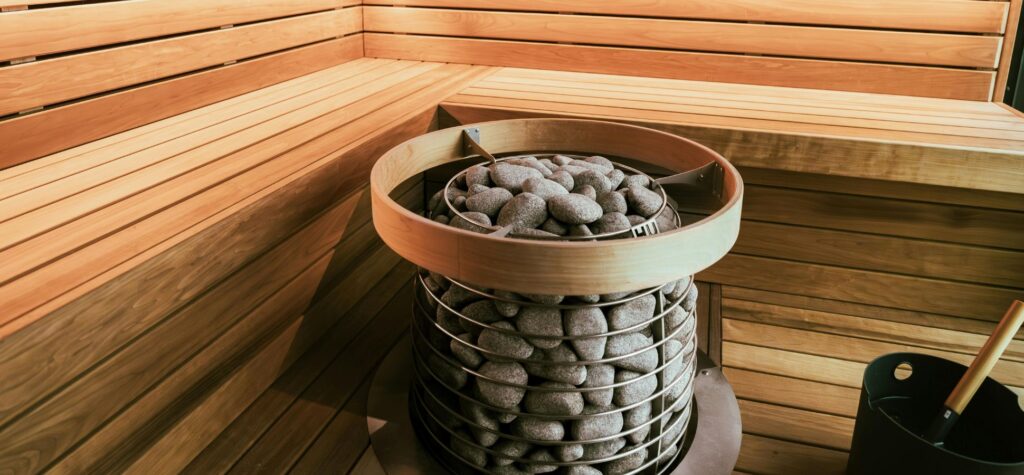
The buzz started with a landmark study published in the Journal of Science and Medicine in Sport. Researchers took a group of competitive male distance runners (guys who were already fast, running sub-18-minute 5ks) and added a simple tweak to their routine: three 30-minute sauna sessions a week for three weeks, right after their runs.
The results were staggering. After just 21 days, these runners saw a 32% increase in their time to exhaustion.
Now, to be clear, that doesn’t mean they suddenly became 32% faster (we’d all be Olympic gold medalists if that were the case). However, it translated to a roughly 2% improvement in speed during a time trial.
Think about that for a second. If you’re a 4-hour and 37-minute marathoner, a 2% boost means you’re crossing the finish line 5 minutes and 21 seconds sooner. In the world of running, where we fight for every single second, that is a lifetime.
How Does it Work? (The “Water Pump” Theory)
You’re probably wondering: How does sitting on a wooden bench in $90^{\circ}C$ heat make my legs move faster?
It all comes down to your blood. Think of your cardiovascular system like a water pump. When you exercise, your muscles need oxygen, and your blood is the delivery truck that brings it to them.
1. Expanding the Plasma
When you sit in a sauna, you sweat. This causes you to lose fluid, which initially makes your blood “thicker.” Your body hates this. To compensate, it starts a chain reaction that expands your plasma volume—the liquid part of your blood—by about 7.1%.
With more plasma, your “pump” (the heart) becomes way more efficient. It can move more blood with every single beat, meaning your heart rate actually stays lower even when you’re pushing the pace.
2. The “Red Taxi” Effect
Red blood cells are like tiny red taxis zipping through your veins, carrying oxygen to your muscles.The heat stress from a sauna can actually trigger the production of a hormone called Erythropoietin (EPO).
If that sounds familiar, it’s because synthetic EPO is the stuff that gets pro athletes banned. But here, your body is making it naturally. The more red blood cells you have, the more oxygen your muscles get, and the longer you can run before you “hit the wall”.
The “Poor Man’s Altitude”
For decades, pro runners have flown to high-altitude camps in places like Flagstaff or Kenya to boost their red blood cells. But altitude training is expensive, and you need to live there for at least 500 hours to see a real change.
Sauna training is now being called the “poor man’s altitude”. You can get remarkably similar blood-boosting benefits at your local gym for the price of a monthly membership. In fact, heat training can be completed in just 10 to 20 sessions over a few weeks, making it much more accessible for those of us with 9-to-5 jobs and families.
More Than Just Speed: The Recovery Factor

While speed is the headline, the recovery benefits are just as important. Have you ever finished a long run and felt like your muscles were made of lead for the next three days?
The Cellular “Repair Crew”
When you heat your body up, you trigger the release of Heat Shock Proteins (HSPs). Think of these as your body’s internal repair crew. They go around “fixing” damaged proteins in your cells that were broken down during your workout. This can lead to a 20% reduction in muscle soreness and significantly faster recovery times between hard training sessions.
Brain Health and Mental Resilience
Let’s be honest: running is 90% mental. Sitting in 90F heat for 25 minutes requires a serious amount of grit. This “forced discomfort” builds mental toughness that carries over to the final miles of a race.
Plus, there is a massive brain benefit. Frequent sauna use has been linked to a 65% reduced risk of Alzheimer’s and dementia because it improves blood flow to the brain and clears out toxins .
New for 2025: Does the Hot Tub Beat the Sauna?
If you don’t have access to a sauna, don’t worry. Brand-new research from the University of Oregon (published in 2025) suggests that Hot Water Immersion (HWI)—basically a hot tub—might actually be better than a dry sauna for some things.
Because water is more dense than air, your body can’t sweat to cool itself down as effectively. This causes your core temperature to rise faster and stay higher. The study found that hot tubs increased core temperature by about $1.1^{\circ}C$, compared to only $0.4^{\circ}C$ in a traditional sauna. This higher “heat load” might lead to even bigger boosts in circulation and immune function.
The “Pro” Protocol: Exactly How to Do It
Ready to try it? You can’t just wing it. To get those 2% speed gains, you need to follow the “Scoon Protocol” (named after the lead researcher of that 32% study) :
- Timing: Get into the sauna within 30 minutes of finishing your run. Your core temperature is already elevated, so you start the “adaptation” process much faster.
- Frequency: Aim for 3 to 4 sessions per week.
- Duration: Stay for 20 to 30 minutes. If you can’t make it that long at first, start with 10 minutes and add 2 minutes every session.
- The Taper: This is crucial. Stop all sauna training 7 to 10 days before your race. This allows your body to recover from the stress of the heat so you can use all that extra blood volume on race day.
Common Mistakes (And How to Avoid Them)
Saunas are powerful tools, but they can be dangerous if you’re reckless. Here are the big “no-nos” from the experts:
- Mistake #1: Going in Cold. The magic happens when you go in immediately after exercise. If you wait two hours, the “blood-boosting” effect is much weaker.
- Mistake #2: Ignoring Hydration. You should drink about 500 mL of water before you enter and another 500 mL to 750 mL afterward.4 Pro tip: Add electrolytes. Plain water isn’t enough when you’re sweating that hard.
- Mistake #3: Bringing Your Phone. The heat in a sauna will destroy the internal hardware of your iPhone or Android in minutes. Leave the tech in the locker and use the time to meditate or focus on your breath.
- Mistake #4: The “Cold Plunge” Shock. While contrast therapy (hot-to-cold) is popular, don’t jump into an ice bath immediately if your goal is heat adaptation. Let your body cool down naturally for a few minutes first to let the “heat signals” settle in.
Is it Safe?
Safety is the number one priority. Harvard Health and the Mayo Clinic recommend that anyone with high blood pressure or heart conditions talk to their doctor before starting a sauna routine.2
If you feel:
- Dizzy or lightheaded
- Nauseous
- A “racing” heart that won’t slow down
- A sudden headache
…GET OUT. It isn’t a competition. The goal is to stress the body, not to break it.
Famous Fans of the Heat
If you start a sauna routine, you’re in good company. Michael Phelps, the most decorated Olympian ever, used saunas as a cornerstone of his recovery . LeBron James reportedly spends up to an hour in the sauna after games to keep his body in “repair mode” . Even stars like Jennifer Aniston and Taylor Swift swear by infrared saunas for detoxification and metabolic health .
The Final Verdict
Adding a sauna to your routine isn’t a “shortcut”—you still have to put in the miles. But it is a scientifically proven way to make those miles count for more. By training your blood to carry more oxygen and your heart to pump more efficiently, you are essentially building a bigger engine for your body.
So, next time you finish a grueling tempo run, don’t just head for the shower. Grab a towel, a big bottle of water, and head for the sauna. Your future “Personal Record” will thank you.