
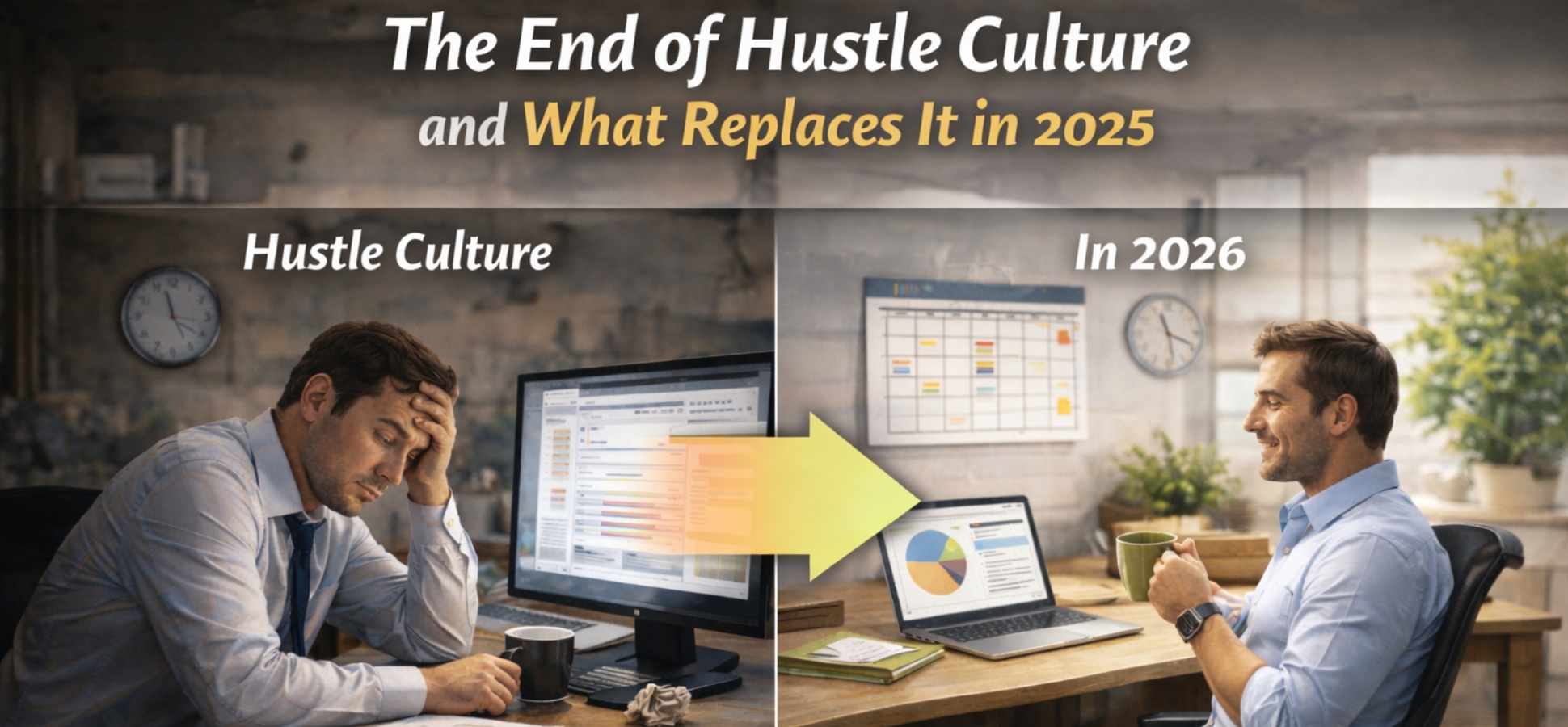
For more than a decade, hustle culture shaped how entrepreneurship looked, sounded, and felt. Long hours were worn like a badge of honor. Burnout was reframed as dedication. Rest was something to be earned only after success arrived.
But in 2026, something has shifted.
Founders are no longer impressed by constant urgency or glorified exhaustion. The end of hustle culture isn’t loud or dramatic; it’s happening quietly, through changes in behavior, priorities, and expectations. Entrepreneurs are questioning whether the nonstop grind actually leads to better businesses or simply faster burnout.
This shift isn’t about doing less for the sake of comfort. It’s about recognizing that sustainable success requires a different approach; one rooted in energy, clarity, and long-term thinking rather than endless output.
The future of work in 2026 is no longer built on how much you can endure. It’s built on how well you can sustain momentum without sacrificing your health or life.
The Hidden Cost of Hustle Culture

What once felt like discipline and drive has quietly revealed more profound consequences that many entrepreneurs can no longer ignore.
Burnout Is No Longer a Personal Failure—It’s a Business Risk
Entrepreneur burnout is no longer viewed as a mindset issue or a lack of resilience. It’s increasingly recognized as a structural problem. Businesses built around constant pressure eventually break their founders, and when founders burn out, decision-making, leadership, and creativity decline with them.
In 2026, burnout isn’t just emotional exhaustion. It shows up as slower growth, reactive choices, stalled innovation, and disengaged teams.
The Mental and Physical Toll on Founders
The “always on” mentality rewired how entrepreneurs relate to work. Notifications replaced the rest. Urgency replaced strategy. Over time, this led to chronic stress, sleep issues, anxiety, and declining focus.
Many founders are now acknowledging that their biggest bottleneck was never time or effort; it was depleted energy.
Why the Hustle Model No Longer Works
The idea that working more hours automatically produces better outcomes has proven false. As businesses become more complex, cognitive clarity matters more than raw effort. Hustle culture optimized for volume, not quality, and that tradeoff is no longer acceptable in a competitive, fast-evolving market.
What’s Driving the Shift Away From Hustle Culture
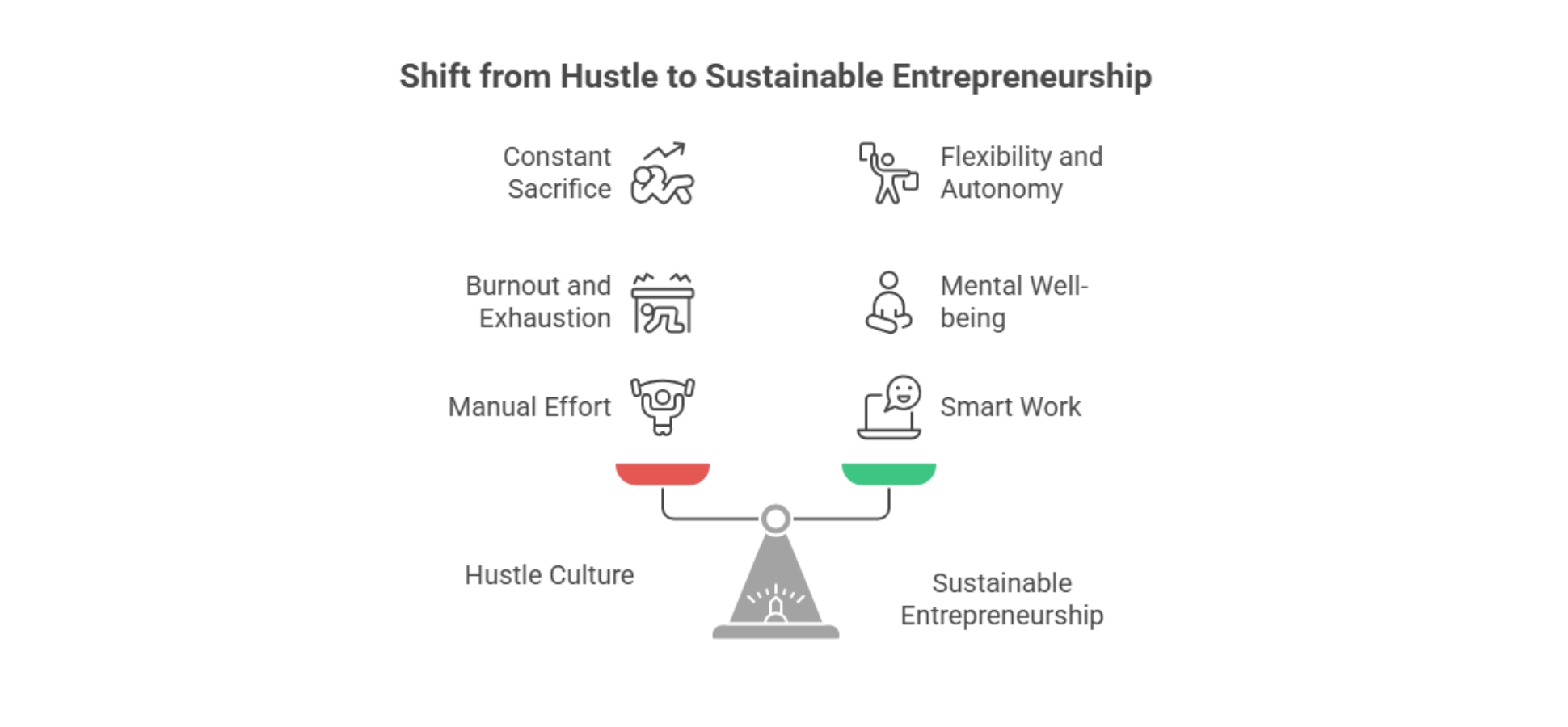
The move away from hustle culture isn’t a trend; it’s a response to honest structural and personal breakdowns across entrepreneurship.
Burnout Has Reached a Breaking Point
The post-pandemic years forced entrepreneurs to confront exhaustion they could no longer ignore. Many realized they had built businesses that required constant sacrifice just to stay afloat. That realization sparked a reevaluation of what success should actually look like.
Leaving hustle culture isn’t about laziness; it’s about survival.
Generational Values Are Reshaping Work
Newer generations of founders value flexibility, mental health, and autonomy as much as financial growth. They’re less willing to trade their well-being for external validation. This mindset is redefining what ambition looks like and accelerating the move toward sustainable entrepreneurship.
Technology Enables Smarter, Not Harder, Work
Automation, AI, and streamlined systems have reduced the need for constant manual effort. In the future of work 2026, leverage matters more than hours logged. Founders who embrace systems can scale without burning themselves out, while those who don’t fall behind.
What Replaces Hustle Culture in 2026
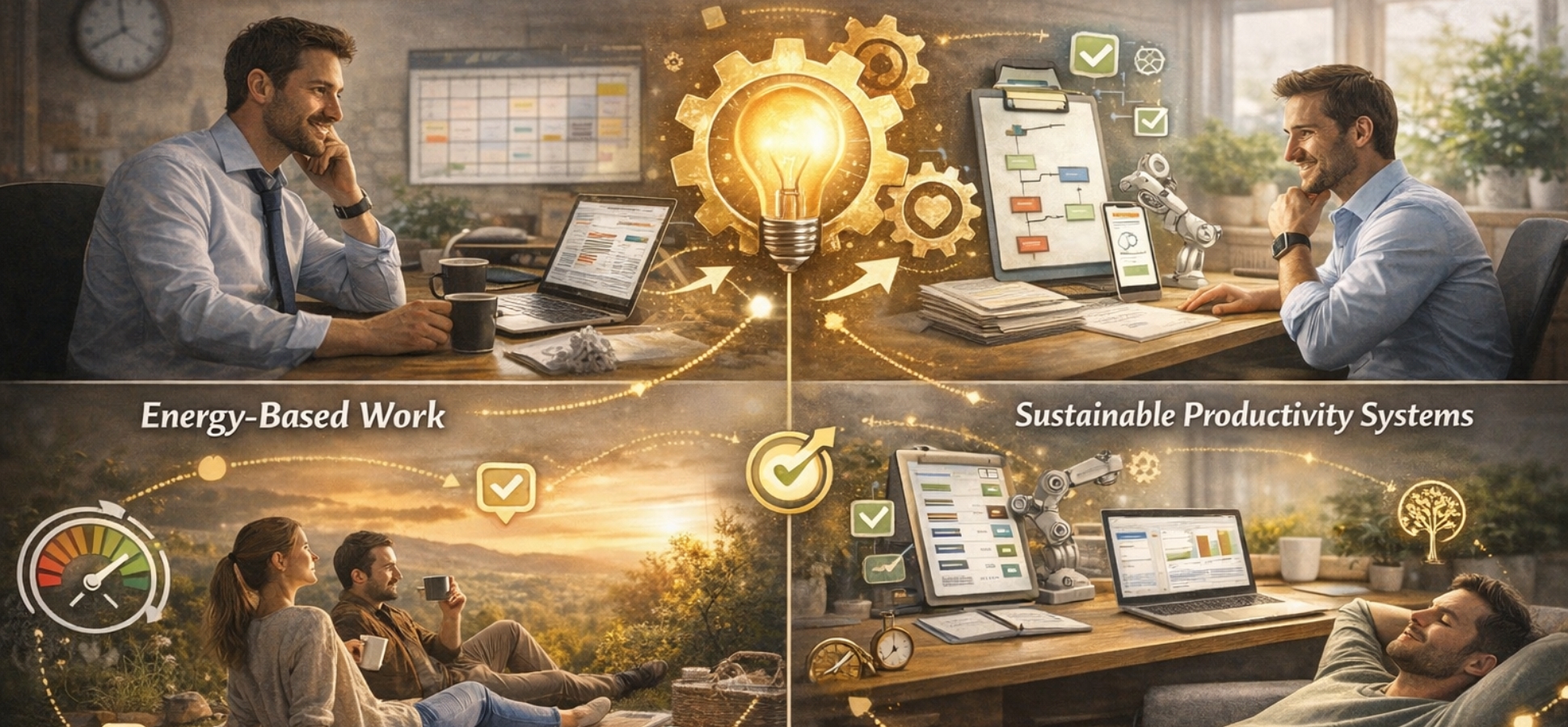
The end of hustle culture doesn’t mean entrepreneurs are working less; it means they’re working differently. In 2026, success is no longer measured by exhaustion or endless hours, but by sustainability, clarity, and long-term impact. Founders are replacing hustle with systems that protect energy, support focus, and reduce burnout while still driving growth.
Energy-Based Work Over Time-Based Work
Instead of tracking success by the number of hours they work, entrepreneurs are prioritizing the quality energy they bring to their most essential tasks. This shift recognizes that not all hours are equal. Two focused hours of deep work often outperform an entire day of distracted effort.
Many founders now design their schedules around natural energy rhythms—handling creative or strategic work during peak focus times and reserving lower-energy periods for administrative tasks. This approach improves execution while reducing mental fatigue, a key factor in burnout among entrepreneurs.
Sustainable Productivity Systems Replace Motivation
Motivation was once the fuel of hustle culture, but it proved unreliable and exhausting. In 2026, entrepreneurs rely on systems instead of willpower. Clear priorities, repeatable workflows, and automation remove the daily friction that once demanded constant self-discipline.
By setting fewer goals and defining what truly matters each quarter, founders avoid spreading themselves thin. Sustainable entrepreneurship thrives on consistency, not intensity. Systems ensure progress continues even on low-energy days, protecting momentum without burnout.
Redefining Success Beyond Revenue
Revenue still matters, but it’s no longer the only metric that defines success. Entrepreneurs are expanding their definition of winning to include health, flexibility, autonomy, and business longevity.
Founders are intentionally building companies that support their lives rather than consume them. This mindset shift reflects a broader change in the future of work in 2026, where success is measured by how long a business and its founder can thrive, not how fast it grows at the expense of well-being.
Intentional Rest and Recovery Become Strategic
Rest is no longer treated as a reward for hard work; it’s built directly into how entrepreneurs operate. Strategic rest improves decision-making, creativity, and emotional resilience, all of which are essential for long-term leadership.
In post-hustle entrepreneurship, downtime is normalized. Breaks, boundaries, and recovery periods are planned just like meetings or deadlines. This approach directly counters the “always on” mindset and supports the recovery from burnout without sacrificing ambition.
How Entrepreneurs Are Adapting to the Post-Hustle Era
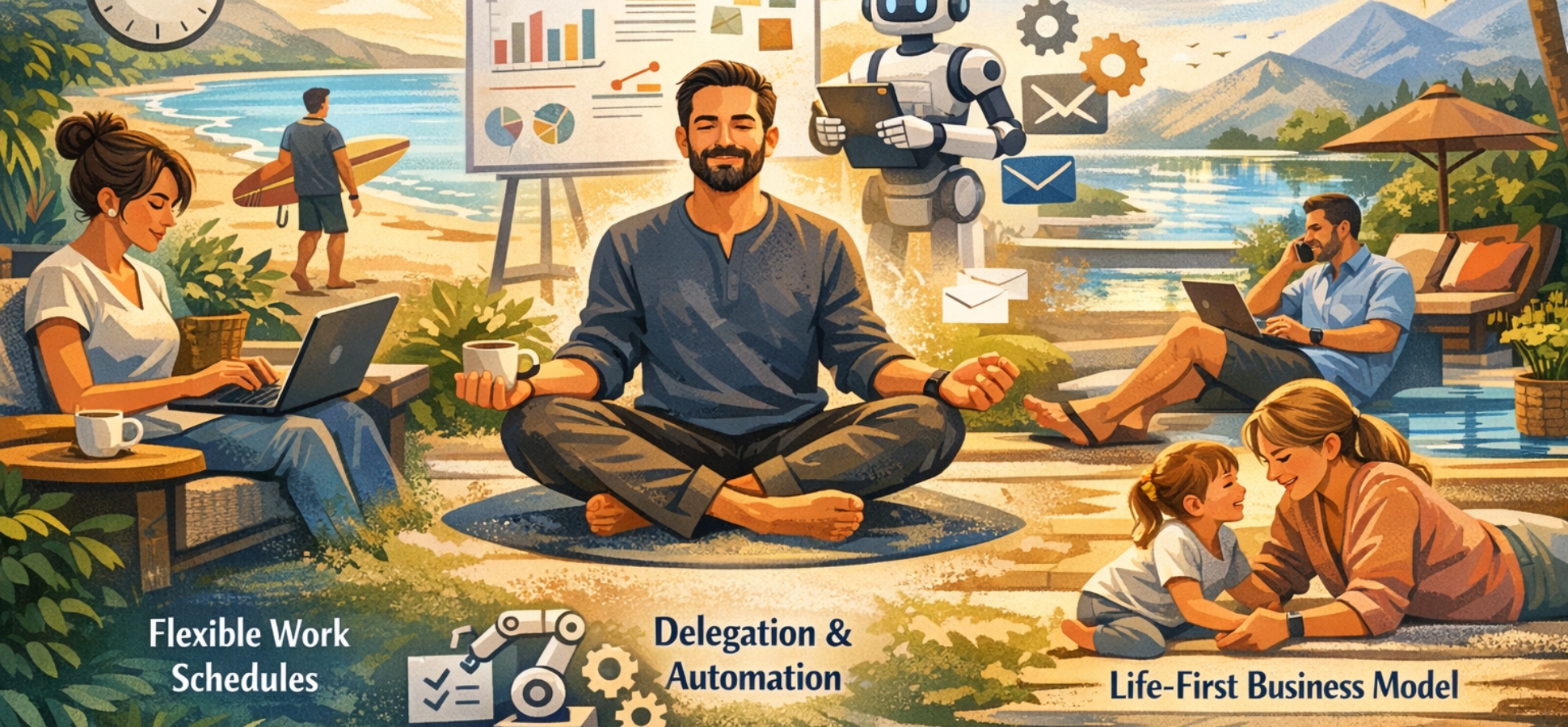
As hustle culture fades, entrepreneurs aren’t stepping back from ambition—they’re redesigning how ambition fits into their lives. The future of work in 2026 is defined by intention, flexibility, and sustainability. Founders are actively reshaping their work lives to support growth without burnout, proving that success no longer requires constant urgency.
Designing Flexible Work Structures
Entrepreneurs are moving away from rigid schedules and embracing flexible work structures that adapt to real life. Instead of forcing productivity into fixed hours, they build days around energy levels, personal responsibilities, and mental clarity.
This flexibility allows founders to protect their most productive hours while avoiding burnout from overextension. By working smarter rather than longer, entrepreneurs maintain consistency without sacrificing health or focus.
Delegating and Automating With Purpose
One of the most evident signs of the end of hustle culture is a willingness to let go of control. Entrepreneurs are delegating tasks that don’t require their unique expertise and using automation to eliminate repetitive work.
AI-powered tools and more intelligent systems reduce manual effort, freeing founders to focus on leadership, strategy, and creativity. This shift not only improves efficiency but also reinforces sustainable entrepreneurship by reducing dependency on constant personal effort.
Building Businesses Around Life, Not the Other Way Around
In 2026, entrepreneurs are intentionally designing businesses that support their desired lifestyle. This includes choosing scalable models, setting clear client boundaries, and defining what “enough” looks like.
Rather than chasing endless growth, founders prioritize longevity and freedom. Businesses are structured to survive busy seasons, personal downtime, and life changes—ensuring that success is sustainable, not fragile.
Common Myths About Leaving Hustle Culture
“You’ll Fall Behind Without Hustling”
This belief persists because hustle culture rewards visibility, not effectiveness. In reality, entrepreneurs who focus on clarity and execution often outperform those who stay constantly busy. Sustainable systems outperform frantic effort over time.
“Less Work Means Less Success”
Post-hustle entrepreneurs are proving the opposite. Less unnecessary work creates space for better decisions, higher-quality output, and more decisive leadership. Success in 2026 is defined by impact, not exhaustion.
What the Post-Hustle Entrepreneur Looks Like
The post-hustle entrepreneur represents a clear shift in how success is defined. Instead of wearing exhaustion as a badge of honor, these founders prioritize clarity, sustainability, and intentional growth. Their approach isn’t slower; it’s smarter, grounded in long-term thinking rather than constant urgency.
- Calm Confidence Over Constant Urgency: Entrepreneurs no longer equate stress with importance. Calm decision-making and emotional stability replace panic-driven productivity, leading to better long-term outcomes.
- Focused Execution: With fewer priorities and stronger systems, founders execute with intention. Distractions are minimized, and progress is measured by results—not hours worked.
- Long-Term Thinking: Post-hustle entrepreneurs build with the future in mind. They prioritize resilience, adaptability, and personal sustainability, ensuring their businesses can thrive for years—not just quarters.
Conclusion: A New Era of Entrepreneurship
The end of hustle culture is not the loss of ambition; it’s the evolution of it. Entrepreneurs in 2026 are rejecting burnout as a badge of honor and embracing a healthier, more sustainable way to build businesses. This shift reflects a deeper understanding of performance, where energy, clarity, and long-term thinking drive success.
As the future of work continues to evolve, sustainable entrepreneurship is becoming the new standard. Founders who adapt to this change aren’t falling behind; they’re leading the next generation of business forward, proving that success doesn’t require sacrifice of health, balance, or purpose.


