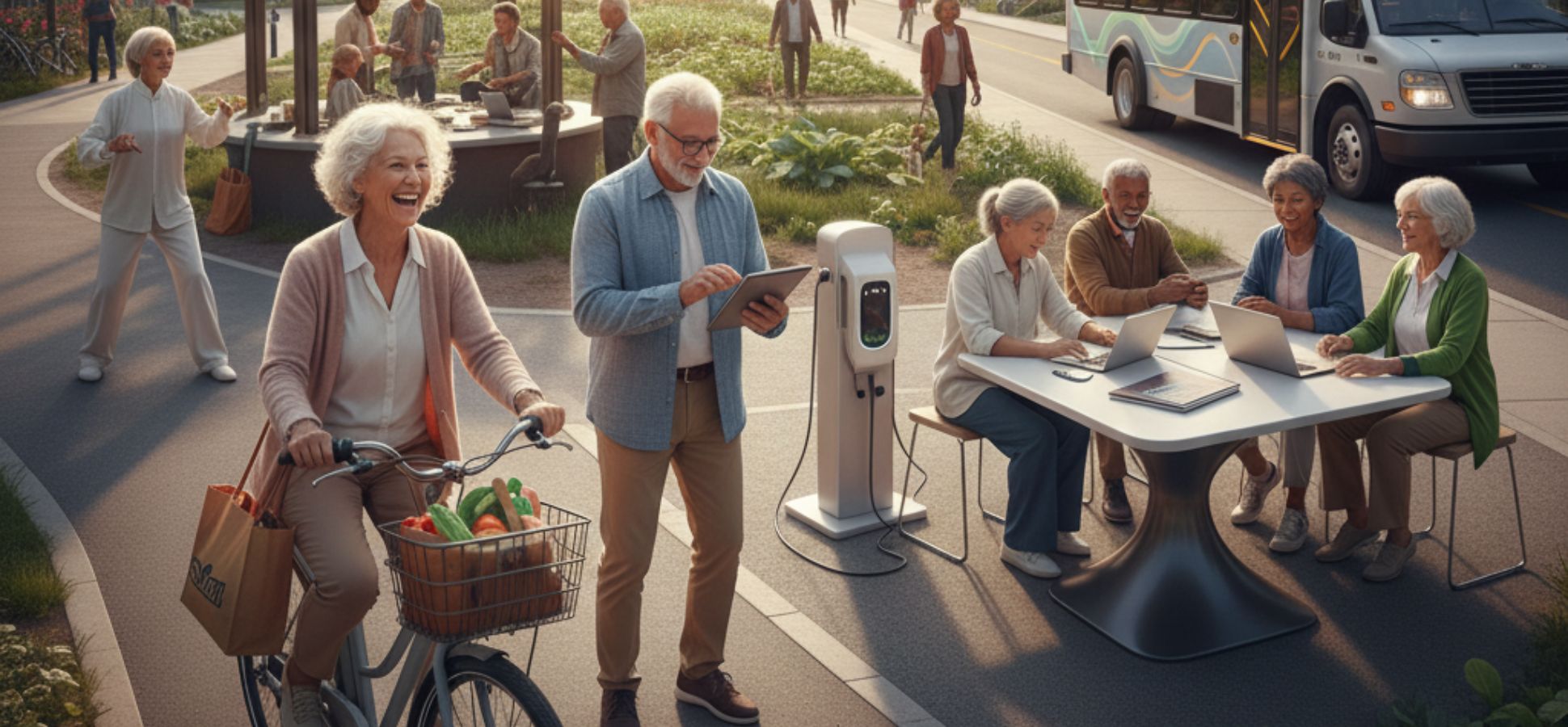
The Elder Swell is here. Within a few years, the U.S. will have more people over 65 than under 18, and it is not just lifespan that is rising, it is healthspan too. Older adults are living, consuming, and contributing differently than earlier generations, but much of our housing, transportation, work design, and benefits systems still reflect 20th century assumptions.
Already, older adults outnumber children in more than ten states and in nearly half of all counties. The ripple effects are profound for employers facing tight labor markets, for industries that serve an older consumer base, and for public finances as healthcare demand and entitlements expand. This outline maps the market shifts and workforce realities and offers a practical playbook to modernize for 21st century aging.
The Elder Swell at a Glance
By the early 2030s, the United States will reach a demographic milestone: the population of adults over 65 will surpass that of children under 18. This crossover, already visible in many states and counties, signals a dramatic shift in the nation’s age structure. The expansion of the 65-plus cohort is not only about longer lives but also about healthier ones, with more Americans enjoying extended years of work, spending, caregiving, and community engagement.
The economic impact is substantial. The so-called longevity economy, already valued in the trillions of dollars, is poised for further growth as household spending patterns shift. Sectors such as housing, health, financial services, mobility, and experiences are seeing increased demand from older adults who are living longer, more active lives. This shift is transforming traditional markets and creating new opportunities for businesses that can adapt to evolving consumer needs.
At the same time, public systems are under mounting pressure. Healthcare utilization rises as the population ages, and the ratio of workers to retirees declines. This demographic reality intensifies the need for greater productivity and a stronger focus on prevention within healthcare and social support systems.
What Shifts First
Industries most closely connected to where older adults live, earn, and spend are the first to experience significant change:
- Homes and neighborhoods are being reimagined to support aging in place. Universal design, safety upgrades, and access to essential services within a 15-minute radius are becoming standard considerations.
- Transportation is evolving toward more reliable, accessible, and on-demand options. These alternatives are crucial for maintaining independence among those who no longer drive.
- Healthcare is transitioning from a reactive, illness-based model to one centered on prevention and home-based care. This approach aims to reduce hospitalizations and prevent falls, supporting healthier, more autonomous aging.
- Local tax bases, planning priorities, and civic services are being recalibrated to meet the needs of communities where older adults make up the majority. This includes everything from public safety to recreation and social engagement, ensuring that infrastructure and services remain relevant as demographics shift.
Work is Aging
Older Americans are reshaping the workforce. The fastest growing segment of the labor force is now people in their late 60s and 70s, with many choosing to stay employed longer or returning after retirement. This trend is accelerating: workers aged 75 and older are projected to nearly double in number this decade. Labor force participation among those 65 and older continues to climb, and by the next decade, the presence of older workers will be a defining feature of the employment landscape.
About three quarters of occupations have become more age friendly since 1990. Tens of millions of jobs are now more compatible with the needs and strengths of older workers, reflecting shifts in technology, workplace design, and employer attitudes.
Implications for Employers
Retaining experienced talent means rethinking how work is structured:
- Flexibility should become standard. Hybrid schedules, part-time roles, and phased retirement pathways help keep institutional knowledge in-house and support diverse employee needs.
- Skills-based hiring and internal mobility can better align talent with business needs, regardless of age, focusing on what workers can do rather than when they were born.
- Investments in ergonomics, assistive technology, and job rotation reduce strain and injury risk in physically demanding roles, making these jobs more sustainable for older employees.
- Benefits must evolve to match current realities. Caregiving support, preventive health initiatives, financial planning resources, and robust leave policies address the needs of a multigenerational workforce.
- Measuring and managing age inclusion alongside other DEI priorities helps reduce bias and unlock the performance advantages of teams with a wide age range.
Implications for Workers
Longer careers mean more varied paths and opportunities:
- Reskilling in digital tools, AI collaboration, and fields that prize judgment and client trust will be essential for staying relevant and competitive.
- Encore careers, consulting, and micro-entrepreneurship allow older professionals to monetize their expertise while maintaining control over their schedules and workload.
- Phased retirement options offer a way to transfer institutional knowledge through mentoring and apprenticeships, while gradually reducing hours and responsibilities.
The aging workforce is not just a demographic shift—it’s a catalyst for reimagining career trajectories, workplace design, and what it means to build a resilient, inclusive organization.
Markets and Enablers for Longevity
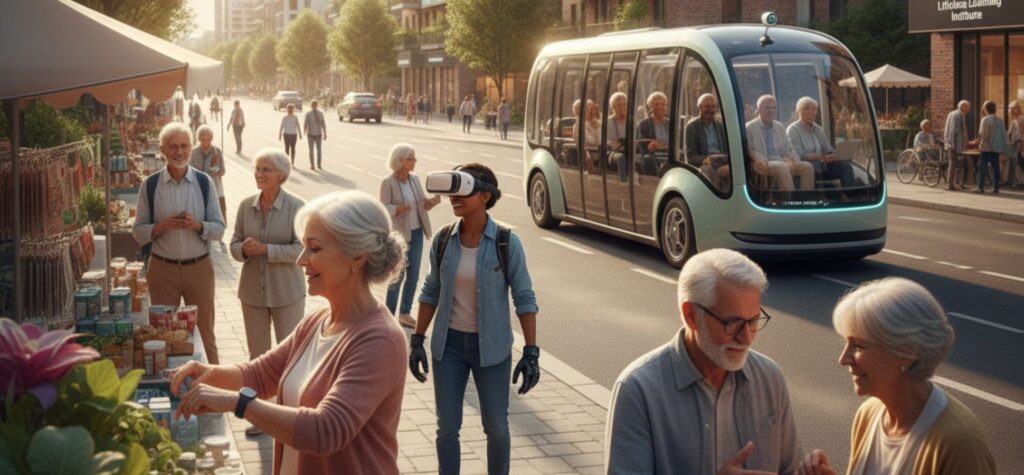
As the U.S. population ages, the structure of consumer demand is shifting toward products and services that support longer, healthier, and more independent lives. Businesses that succeed in this landscape prioritize dignity, simplicity, and autonomy, designing solutions that scale through services rather than just hardware.
Where value is growing, demand is clustering in several “age ready” categories where outcomes and convenience drive decisions:
Age Ready Housing and Home Services: Home environments are being reimagined for accessibility and safety. This includes renovations such as no-step entries, improved lighting, grab bars, lever handles, and smart fall detection systems. Subscription-based home maintenance and safety assessments are gaining traction, bundling ongoing monitoring, repairs, and emergency response into a single, manageable service.
Care Platforms and Workforce: Digital marketplaces are emerging to connect trained caregivers with families and employers, offering better wages, ongoing training, and improved retention. Administrative tools that streamline scheduling, compliance, payments, and remote supervision are reducing friction for both care providers and recipients.
Healthspan Tech and Prevention: Technology is enabling at-home diagnostics, remote monitoring, and virtual care, all integrated with primary care to prevent costly hospitalizations. Programs focused on strength, balance, and nutrition are helping to reduce fall risk and slow the progression of chronic diseases.
Financial Longevity: Solutions are evolving to help older adults manage the risk of outliving their savings. This includes income smoothing products, annuities, and drawdown tools, as well as enhanced fraud protection, simplified user interfaces, and caregiver permissions for secure shared financial management.
Mobility and Microtransit: Accessible ride-hailing, community shuttles, and delivery services are connecting older adults to daily necessities and social activities, reducing reliance on personal vehicles and supporting continued independence.
Experience and Leisure: Travel, education, and social platforms are being tailored for intergenerational groups, offering flexible itineraries and experiences that accommodate a wide range of abilities and interests.
Unlocking the full potential of these markets depends on modernization across policy, infrastructure, and incentives:
- Reimbursement models must evolve to support prevention, home-based care, and caregiver support, moving beyond traditional fee-for-service frameworks.
- Zoning laws should be updated to allow for accessory dwelling units and multigenerational living, while investments in safe streets and transit accessibility are essential.
- Expanding broadband and ensuring interoperability among devices, apps, and providers will facilitate secure and seamless data sharing.
- Standardized home safety certifications and product labeling can make age-friendly options the default, reducing confusion and increasing adoption.
- Public-private partnerships are vital to extend services into rural and underserved communities, ensuring equitable access to longevity-enabling innovations.
These shifts are not just about accommodating an older population—they represent a significant opportunity for businesses to lead in designing the future of aging, where independence and quality of life are at the forefront.
Aging Well Is a Growth Strategy
Embracing the Elder Swell as an opportunity rather than a challenge is proving to be a smart move for forward-thinking companies and communities. With Americans living longer and healthier lives, organizations that adapt to the changing demographic landscape are positioned to benefit in multiple ways. This shift calls for a reimagining of products, services, and workplaces to better serve and engage older adults, while also enhancing experiences for all generations.
Businesses that prioritize aging well can:
- Tap into a rapidly expanding market segment with significant purchasing power
- Attract and retain experienced talent by offering flexible work arrangements and age-inclusive benefits
- Foster innovation by designing products and services that support longevity, independence, and well-being
Communities that invest in age-friendly infrastructure—such as accessible housing, public spaces, and transportation—become magnets for residents of all ages. These improvements not only support older adults but also enhance quality of life for families, young professionals, and children. By creating environments where people can thrive at every stage of life, cities and towns can drive economic growth and social cohesion.
Reframing the Elder Swell as a wave of innovation, rather than a looming crisis, unlocks new revenue streams and competitive advantages. Companies that lead in this space will shape the future of work, redefine consumer expectations, and set new standards for what it means to age well in America.
Quick Takeaways
Older adults are beginning to outnumber children in many communities, with the nationwide shift expected by 2030. This demographic change is reshaping the workforce, as those aged 65 and older — and even 75 and older — are now the fastest growing segments of the labor force. As a result, a growing number of jobs are becoming more accommodating to older workers. However, employers need to go further by redesigning roles, updating benefits, and creating flexible work environments to retain the valuable expertise that comes with age.
Aging in place is becoming a top priority, fueling demand for home modifications, preventive health services, and in-home care solutions. Businesses that address these needs are well positioned for growth. For products and services targeting longevity, features like financial security, reliable mobility options, and robust fraud protection are essential to meet the expectations of older consumers.
To manage the impact of an aging population on healthcare and public finances, prevention and productivity must work hand in hand. Focusing on proactive health management and enabling older adults to remain active contributors can help ease systemic pressures. Finally, organizations that embrace age inclusion gain a competitive edge in recruiting, retaining talent, and driving innovation, as diverse perspectives lead to stronger business outcomes.
FAQs
What is the difference between lifespan and healthspan?
Healthspan refers to the years a person lives in good health, free from major disability or chronic illness. While lifespan measures total years lived, healthspan focuses on the quality and functionality of those years. With improvements in healthspan, more people remain active, productive, and independent well into older age.
How should small and midsize firms start?
Start by auditing current roles for flexibility and ergonomic needs. Pilot programs such as phased retirement and part-time expert positions can help integrate older workers. Training managers on age inclusion and adopting skills-based hiring practices will expand your talent pool and foster a more age-diverse workplace.
Will automation crowd out older workers?
Most automation shifts tasks rather than eliminating entire jobs. By assigning repetitive or physically demanding tasks to machines, organizations can enable older employees to focus on areas where experience matters—such as judgment, client relationships, quality assurance, and mentoring. This approach can boost productivity and keep valuable institutional knowledge in-house.
Which roles will be most in demand?
- Care professionals and home health aides
- Technicians for home safety and health technologies
- Retrofit and maintenance trades
- Customer service and trust-based advisory positions
- Operations coordinators for logistics and mobility services
These roles align with the needs of an aging population and the expanding market for age-friendly services.
What metrics signal progress?
Key indicators include:
- Age distribution by role and level
- Retention and promotion rates for employees 55 and older
- Utilization rates of flexible work and phased retirement options
- Ergonomic injury statistics
- Revenue and Net Promoter Scores (NPS) from age-friendly products and services
Tracking these metrics helps organizations measure the impact of age-inclusive strategies and identify areas for further improvement.