
There is a famous quote by productivity consultant David Allen that says, “Your mind is for having ideas, not holding them.” In a similar statement, Albert Einstein said that “paper is to write things down that we need to remember. Our brains are used to think.”
Entrepreneurs should take these ideas to heart. In a video posted in June, consultant and event planner Jese Gary said, “Entrepreneurship can be overwhelming if we don’t have any structure and try to keep everything in our brain.” In the entrepreneurial world, some people have great ideas but don’t know how to build a tangible plan to bring them to life.
Is that your case?
Here are five tips to help you plan your week and be on top of your schedule.
1. Allocate specific tasks on a specific day
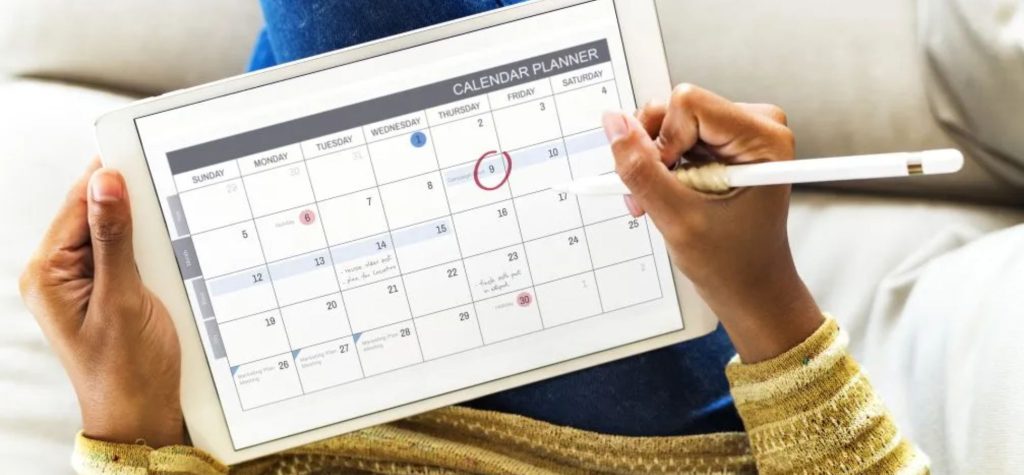
We all have recurring tasks that we must perform every week. Deciding when to do each of them can be energy and time-consuming, so why not designate a day of the week to take care of each thing?
In a video posted last September, Canadian content creator Katie Stackly shared that performing the major task of the day on the same day every week has decreased her decision-making effort when planning her schedule.
She has a specific day to do editing, another to write scripts, another to record podcast episodes and so on.
Other professions might involve more malleable activities and timeframes, especially if one depends on other people (like me, as a journalist). But regardless of how flexible our schedules are, we can always try to build a structure around our recurring tasks, even the small ones. It can be checking our Slack channel and emails every morning.
2. Plan the week before it starts
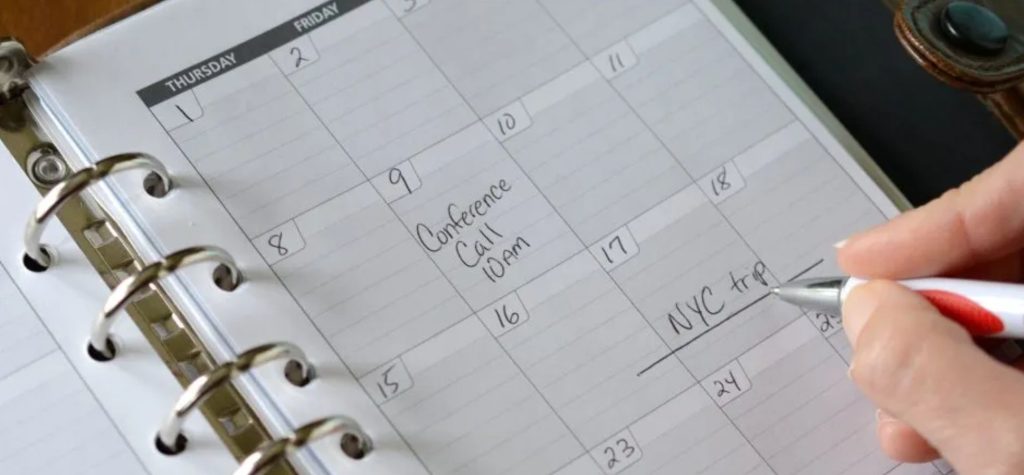
Since planning the week is a recurring task, doing that on the same day every week is helpful. Gary likes Sundays. Stackly prefers Fridays.
Whatever day you pick, the most important thing is to have a method. You can start by allocating your recurring tasks (of which you can have a template saved) in the upcoming week’s schedule, then consult your calendar for new commitments and, lastly, read your general to-to list to identify short, mid and long-term issues you need to take care of.
Including major buckets for non-negotiable activities and areas of her life is also helpful. That can include church, family, exercising, studying, and volunteering, as Gary said in her video.
It’s also a good idea to consider the routine of other people when planning your week. Stackly, for example, plans her tasks around her husband’s meeting schedule since both work from home, and she wants to avoid background noise when recording.
In terms of tools, some entrepreneurs like the platform Notion, which gives you room to set annual and weekly goals and allows you to visualize the week and copy and paste tasks easily. Others prefer Asana or ClickUp. I like paper. The most important thing is to adapt to the tool you pick.
3. Update your to-do list constantly
You can have a “next-week” list that includes tasks you could not finish before Friday or build an all-encompassing to-do list with absolutely everything you want to do in the year. Regardless of the timeframe, create a list that includes unfinished things and things you want to take care of in the future.
Deya, a freelancer focused on helping women who work as digital business managers, calls her list a “parking lot.” There, she writes all her “floating to-dos,” like decisions she has to make, things she must do and responses she must await.
For her, it’s a relief to be able to drag undone tasks at the end of the day to the parking lot or directly to the next week’s schedule. “You can do anything,” she said in the video. “But you cannot do everything.”
4. Examine the week that ends
The moment you sit to plan your next week is also a good opportunity to “audit” the week that just ended to review and adjust your schedule.
Gary encourages entrepreneurs to use the ending week’s experience as a learning opportunity. “Don’t let it be frustrating,” she tells her viewers.
5. Plan how much time to spend on each area of your life
Establish weekly goals for how long you want to work, rest, do errands, participate in calls, etc. After planning your week, check if the proportions look reasonable, and if not, you can postpone the less-urgent activities. That will help you be realistic about your goals and the time you want to spend pursuing them.
The best system to plan your week is the one that works for you. But you’ll never figure it out unless you practice it.
Understanding that it takes time to integrate weekly planning into our routine takes off our shoulders the pressure of making things work instantly. And remember, as Deya says, “There is always tomorrow.”