Technology in 2025 will continue to amaze us by pushing the boundaries of impossibilities and continuing the trend of reforming industries. This rapid pace of advancement in technology has never been witnessed before. From the arena of AI to the correlation of the Internet of Things (IoT), these trends have upgraded life.
Why should you keep an eye on future trends? For the success you dream of, there should not be any gap between you and future trends. These predictions about future trends help you save time and money. It enables you to compete in challenges that might occur while learning a skill or in professional or business life.
Below are some top trends to watch in 2025
Coming to The Fore Trends of Technology
1. Personalization Driven by AI
The noteworthiness of AI can be evaluated by its current worth. The market price of AI is more than 200 million and is expected to grow to over 1.8 trillion U.S. dollars by 2030. Artificial intelligence has altered all industries dramatically by eliminating many and creating new ones.
Advanced data analytics is backing AI, which allows artificial intelligence to give a more personalized experience to every user. Stay competitive and prepare for future challenges by exploring new skills in technology trends. In the realm of advanced data analytics, mastering tools such as Python is crucial. With various Python courses available, you can learn to analyze vast data sets efficiently and derive meaningful insights that drive personalization in AI and more. As businesses lean more heavily on advanced data analytics to support AI-driven personalization, platforms like Zenlytic, a modern analytics solution designed to simplify data exploration and insight generation, illustrate how organizations can transform complex data into faster, clearer decision-making.
Personalization is the most indispensable demand by consumers all over the world. By 2025, the individualized approach aimed at providing a picked-out user experience in multitudinous devices connected at the same instant.
Intelligence retrieval can recognise human behaviour and requirements. The ability to scrutinise data can give accurate assistance in providing content product or service recommendations and even interact as per user’s demand. This tailored trend is all set to grow customer monetary value and loyal bonds in ecommerce, socialising, mobile app development, and cybersecurity companies.
Some examples of personalisation by AI
DCO: Dynamic creative optimisation is a computational advertisement that uses real-time data to create personalised ad experiences.
Email marketing by AI: The customers are divided into segments and targeted by their preferences and customised emails.
2. Expansion of 5G
The estimated subscriptions of 5G were 2.17 billion in the year 2024. This statistic is anticipated to reach 5.56 billion roaming users in a decade. The world’s population will reach 8.2 billion while creating 1.2 billion 5G connections.
The fifth generation of cellular wireless technology for mobile networks promises 100% better downloading and uploading speed, extended coverage, and firm connections. This technology is entirely prepared to swap the way of living, shopping, and entertaining.
The automation of 5G is modified enough to redraw the Internet of Things (IoT). Capacitate robotic cars, smart cities, computerisation across workplaces, and many more beyond imagination.
This technology is all getting prepared to improve healthcare, education, transport, entertainment and autonomous vehicles. In 2025, we will have cars communicating with other cars, self-updating, tracking weather, safety and traffic on the roads, and self-recovery of stolen vehicles.
3. Necessitation of Cybersecurity
Ransomware (malware that encrypts your file and blocks you from accessing your device and stored data) will be more self-possessed by 2025.
The exactness and acceleration of cyber attacks due to AI and automation will be one step ahead. Such a decisive blitz will make timely malware detection more complicated than ever, leaving room for ransomware to unroll swiftly throughout the network.
Hence, such online strikes will be the cause for an advanced cybersecurity landscape. Cybersecurity operations will depend on AI all the more; this way, it can adapt to any tangled cyber threats within seconds on the assumptions of what to chase for.
4. Blockchain on The Far Side of Crypto Currency
Blockchain was associated with crypto, but with its advancement and features, it is being used in other industries. The reason behind the adoption of blockchain by industries is its distinctive features like permanence and transparency, which lead to easy traceability and intensified security.
This mechanism can auto-check information every 10 minutes. After self-examination, each part is known as a block. Each node contains a copy of the data, which increases its durability.
Simply put, corruption and data attacks do not damage the structure of the blockchain.
This technology is used in online transactions, and it seems easy to transfer money online using account numbers. The notification is received at once, too. But behind the scenes, there is a giant ledger that records all of the transactions. More than 1.7 billion people lack access to financial services, according to the World Bank. Blockchain will bridge this gap by providing a segregated infrastructure far from traditional banking.
5. Ultra-Modern Robotics
The ultra-modern robotics are highly developed and can perform complex tasks impulsively without human insight. Robots can now work in various sectors such as agriculture, manufacturing, medicine and personal help at home. While technology keeps on thriving, it will amaze us more with innovative applications that will emerge in robotics.
Robots are more adaptable with the help of AI and machine learning advancements. Jobs get done speedily and more accurately with robots than ever before. This automation can increase the growth rate by 1.4% annually.
Modern robots make no human error and give time to humans to remain focused on the tasks that require creativity and critical thinking.
Home robots helping daily with house chores will be a reality in 2025.
6. Agritech
Agritech is short for agricultural biotechnology, where science is used to improve farming purposes for plants, animals, and microorganisms. Advancements in biotechnology are increasing by empowering the evolution of crops with traits like more resistance to pests and disease. It also has an impact on nutritional profiles and towering yields.
In agritech, techniques like the CRISPR gene create crops that bear environmental stresses and supply good food.
Examples
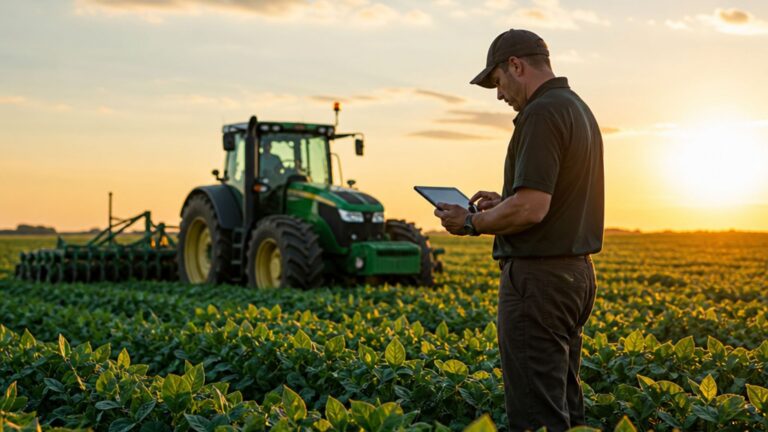
Drones will be used even by small setups to check. Facilitated with high-quality cameras, these drones or UAVs (Unnamed Ariel Vehicles) will change the way farmers live by surveying and capturing gigantic fields for them.
7. Virtual Reality 2.0 (VR)
Virtual reality is the technology with the sky-scraping capacity for growth. The production of VR is focusing on more captivating and naturalistic experiences. Virtual meetings, education, and virtual tourism are new ways to associate with the digital globe. Gaming has revolutionised so much more and will continue to evolve. Virtual reality is not replacing real-world exploration. It is reshaping the film industry but slower than you like.
Still, the industry is increasing in size expeditiously. The industry’s total worth in 2022 was less than 12 billion U.S. dollars, which is anticipated to grow to 22 billion U.S. dollars by 2025.
Furthermore, wireless virtual reality with stand-alone features like no computer connection will be required. It will also have an integrated screen processor, hardware, and batteries.
8. Cloud Computing
The recently developed and accommodating style of computing is cloud computing. Almost every application is connected to the cloud in some way. The data of the companies continues to shift to online platforms for better management and upgraded security.
On-demand computing allows access to the data anytime regardless of location. Cloud computing systems authorise the simultaneous running of multiple softwares. Virtualisation on this system empowers companies to test applications on various platforms and have expanded hardware capacity.
Multi-cloud or hybrid cloud computing will be a new norm in 2025. Different clouds tend to communicate with other clouds. And online businesses will only have some of their eggs in a basket. Several providers will be used to enjoy more safety.
9. Automation
The technique of letting a process happen automatically is automation. Or the application of technology to keep track of production and services, including deliveries.
This technology is used in vehicles; however, we still have not witnessed fully autonomous vehicles. But it will be the next emerging technology. Automatic cars will bring down the number of accidents and refine traffic management.
Automation is not going to replace humans, but automatic machines, robots, and humans will work together. The collaboration between human and robotic systems will result in more free time, sustainability, and extra production.
10. Personalization in Medicine
Genetics, environment, and lifestyle factors are studied to diagnose and prepare a personalised prescription. Advancements in biotech have entitled doctors to choose treatments with high effectiveness and fewer side effects.
The future of personalisation in medicine is promising, with the potential to improve patient’s health better than ever before. This treatment will be more accessible and affordable with time.
Digital healthcare assistants will bring down the number of visits. People will consult virtually and will get treated on the basis of medical history and symptoms.
11. Environmental Technology
This technology has other names like green, sustainable, or clean technology. This applied science is used to minimise the adverse effects of technology and utilisation of resources. The awareness about technology’s negative impacts has risen among individuals looking for sustainable technology.
A mechanism that can provide a carbon-free environment and reduce energy consumption to help create healthy surroundings.
Businesses are shifting to green buildings to maintain a more sustainable environment. The usage of heat pumps in green buildings is a new game changer and leading technology that reduces energy consumption. Such pumps instead of boilers take us closer to a carbon-free environment by 35% to 65%.
Final Words
Keeping an eye on future trends can help us thrive in the fast-changing world. The sources for authentic information about tech trends can be reputable industry newsletters, participation in conferences and webinars, being part of online communities, and being attentive to learning new skills. The key to surviving in the continuously changing landscape is following new technology trends. Backing up will give authorisation to stay ahead of the curve of the digital globe, competitive and relevant in this rapidly changing logarithmic landscape.