The Promise and Controversy of AI Bracelets
Wearable technology has evolved from simple fitness bands into always-listening AI companions. Amazon’s recent move to acquire Bee, a startup behind a wrist-worn device that transcribes every conversation signals a major shift in both its product strategy and the broader tech landscape.
Called the Bee Pioneer, this bracelet buddy listens continuously, turning day-to-day chats into to-do lists and personalized summaries. Yet the same always-on capability that promises convenience also raises profound privacy questions. Why is Amazon willing to wade into this contentious market, and what does it hope to achieve?
In this deep dive, we analyze the top three tech write-ups on Amazon’s AI bracelet acquisition and explore the strategic, technological, and ethical factors driving this play. Along the way, we’ll touch on how to say Nguyen, amazon market dynamics, bee drawing aesthetics, and the idea of your wearable as a true “bracelet buddy.”
The Rise of AI Wearables
A Brief History of Wearable Technology
The wearable market has come a long way since pedometers of the 1970s. Over the last decade, fitness trackers and smartwatches dominated headlines, from Fitbit’s early step-count craze to Apple Watch’s health-monitoring features. More recently, startups have experimented with AI wearables like the Rabbit R1 and Humane AI Pin, but few found mass appeal.
Amazon itself dipped its toes in with the Halo fitness band in 2020, only to sunset it in 2023 amid lukewarm reviews. Bee’s AI-focused bracelet, however, marks a more aggressive push into generative AI, an evolution from wake-word-activated speakers to truly ambient assistants.
From Fitness Trackers to Always-Listening AI Companions
Traditional wearables track metrics steps, heart rate, sleep. AI bracelets like Bee do more: they listen, transcribe, and analyze conversations to create actionable insights. Think of it as outsourcing your memory to an always-present digital assistant. Early adopters praise its ability to capture fleeting thoughts; critics warn of constant surveillance.
The leap from passive tracking to active listening underscores a new frontier in human-computer interaction. Rather than checking a screen, your wearable gently nudges you with reminders generated from your own words, transforming everyday speech into structured to-dos and summaries.
Meet Bee: The AI Bracelet at the Heart of Amazon’s Strategy
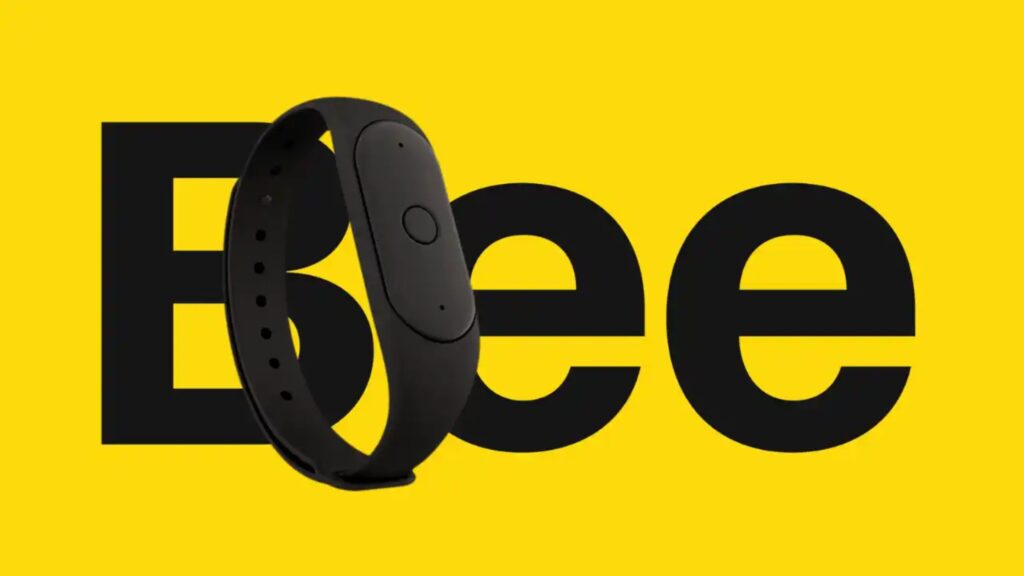
Bee’s Pioneer Device: Features and Functionality
- Records ambient conversations throughout the day unless muted.
- Transcribes spoken words into searchable text history in real time.
- Generates action items, reminders, and day summaries via its smartphone app.
- Syncs with calendar, contacts, emails, photos, and location for enriched context.
- Costs $49.99 upfront plus a $19 monthly subscription fee.
Bee CEO Maria de Lourdes Zollo describes the device as “a personal, ambient intelligence that feels less like a tool and more like a trusted companion”. Its sleek design, inspired by a subtle bee drawing motif on the clasp, makes it easy to wear all day without calling attention.
Bee’s Privacy Claims: Processing vs. Storing Audio
Privacy is Bee’s top defense. The company insists it never stores raw audio; instead, audio is processed on-the-fly to extract text, then immediately deleted. All that remains are encrypted transcripts and AI-generated insights stored in the cloud. Users can delete their data at any time, and Bee pledges not to use transcripts for AI training or third-party sales.
Yet skeptics question whether Amazon will uphold these policies post-acquisition, given past controversies over Ring camera footage shared with law enforcement without warrant or consent.
Why Amazon Acquired Bee: Strategic Motives
Reentering the Wearable Market with a Difference
Amazon’s first attempt at wearables, the Halo focused on fitness and wellness, a highly competitive niche dominated by specialized brands. Bee represents a departure: it leverages Amazon’s generative AI ambitions and deepens integration with Alexa+ and other cloud services.
By acquiring Bee, Amazon sidesteps the R&D phase, instantly gaining hardware expertise and an existing user base. Bee employees have been offered roles within Amazon, ensuring continuity and faster product evolution.
Strengthening Amazon’s AI Ecosystem
Amazon’s AI playbook centers on ecosystem lock-in: Prime membership, Echo devices, AWS services, and now wearable AI. Bee “bracelet buddies” feed conversational data into Amazon’s AI stack, complementing Alexa’s voice-first interface with an always-on wrist-mounted partner.
This synergy allows Amazon to:
- Extend Alexa+ generative AI to a new form factor.
- Incorporate user conversations into personalized shopping and content recommendations.
- Differentiate its AI offerings from competitors like Google’s Gemini-powered earbuds and Meta’s Ray-Ban AI glasses.
Unlocking Richer Data for AI Model Training
Generative AI models thrive on contextual, real-world data. Bee’s continuous listening captures diverse speech patterns and user contexts. Aggregated (and anonymized) conversational transcripts could help Amazon refine its language models, improving accuracy and personalization across devices.
That richer dataset can:
- Enhance intent detection for voice commerce.
- Improve natural language understanding for customer service bots.
- Identify emerging consumer trends within conversational clues.
Expanding Commerce and Voice Shopping Opportunities
Imagine your bracelet casually noting your craving for green tea while you chat with friends. Alexa+ could proactively recommend deals on Amazon’s marketplace, tied to your transcribed conversations. Bee’s AI bracelet becomes a hands-free shopping assistant that subtly nudges purchases based on your own words.
Such voice commerce expansion deepens revenue streams beyond hardware sales and subscription fees, reinforcing Amazon’s dominant position in global e-commerce.
Market Implications: How AI Bracelets May Reshape Retail and Tech
The Amazon Market Advantage
Amazon’s vast distribution network and Prime logistics allow it to price Bee’s AI bracelet aggressively. Priced at $49.99 plus a subscription, Bee undercuts pricier alternatives like Humane’s $499 AI Pin, lowering the barrier to entry for mainstream consumers.
Free trial periods for Prime members or bundling the device with Echo purchases could further accelerate adoption. In the amazon market, competitive pricing and seamless integration often decide winners, Amazon has both levers at its disposal.
Competitive Landscape: From Tech Giants to Startups
The wearable AI space is heating up. Key players include:
| Device | Price | Core Function | Status |
| Bee Pioneer Bracelet | $49.99 + $19/mth | Always-listening AI assistant | Acquired by Amazon (pending) |
| Humane AI Pin | $499 | Screen-free voice AI, button activation | Limited launch, niche |
| Rabbit R1 | $199 | ChatGPT-powered Q&A device | Modest adoption |
| Meta Ray-Ban AI Glasses | $299 | Photo/video + AI responses | Growing popularity |
| Google Pixel Buds A-Series | $99 | Crowd-source language translation, voice AI | Established line |
Early results show Bee’s low price and Amazon’s scale could eclipse competitors in unit volume. But sustained success hinges on trust and perceived value.
Potential Challenges and Risks
- Privacy Backlash: Continuous listening may trigger regulatory scrutiny and consumer resistance.
- Data Security: Any breach of transcripts could expose sensitive personal information.
- Social Acceptance: Will people feel comfortable wearing a device that “spies” on every word?
- Technical Limitations: Accents, background noise, and distinguishing TV dialogue from real speech remain hurdles for transcription accuracy.
Amazon must address these concerns head-on to avoid a repeat of Ring’s controversies or the Halo’s lukewarm reception.
Emerging Technology Trends in 2025
Wearable AI is just one aspect of a broader tech revolution. To see which other innovations will shape the next five years from quantum computing breakthroughs to sustainable batteries, check out our roundup of the top technology trends to watch in 2025.
That article highlights pivotal advancements and their implications across industries, giving you a comprehensive roadmap for future strategies.
Making the AI Bracelet Conversation-Friendly
To capture broad search interest, weave in related keywords while keeping the narrative smooth. For example:
- If you’re curious how to say Nguyen, the founder’s surname, you pronounce it “<ng-win>,” though some say “<new-yen>.”
- Your Bee bracelet comes with charms styled after a bee drawing motif, reinforcing the brand’s identity.
- Treat your wrist AI as a bracelet buddy, always ready to set reminders or summarize meetings.
- In the amazon market, Amazon’s distribution muscle and Prime perks could make the AI bracelet a top holiday gift.
Two Central Tables
Below are two tables summarizing the competitive landscape and Bee’s core features.
Comparison of Leading AI Wearables
| Feature | Bee Pioneer Bracelet | Humane AI Pin | Rabbit R1 | Meta Ray-Ban AI Glasses |
| Price | $49.99 + $19/mth | $499 | $199 | $299 |
| Always Listening | Yes | No (press button) | No (wake word) | No (wake word) |
| Real-Time Transcription | Yes | No | No | No |
| Personalized Summaries & To-Dos | Yes | Limited | Limited | No |
| Cloud Integration | Extensive | Moderate | Moderate | Limited |
| Device Ecosystem | Amazon-driven | Independent | Independent | Meta/Essilor partnered |
Feature Breakdown of Bee’s AI Bracelet
| Category | Capability | Impact |
| Audio Processing | Real-time speech-to-text conversion (on device) | Immediate transcription, privacy-focused |
| AI Summaries | Daily meeting summaries, to-do generation | Reduces manual note-taking overhead |
| Contextual Insights | Calendar, contacts, photos, location sync | Deeper personalization |
| Battery & Design | 7-day battery life; water-resistant, minimalist | All-day wearability |
| Privacy Controls | Manual mute, topic/location fencing | User-driven privacy safeguards |
Separate Deep-Dive on Browsing Future
This bracelet’s context-aware AI parallels trends in web interactions. For a detailed look at how AI is transforming our online browsing habits, explore our deep analysis of AI web browsing. Here, we discuss how generative AI augments search, automates research tasks, and anticipates user needs based on browsing context.
Embracing a New Era of Ambient AI
Amazon’s acquisition of Bee underscores a pivotal shift. We’re moving from scheduled interactions with voice assistants to a world where AI quietly records, organizes, and prompts us as we speak. Such always-listening devices promise unprecedented productivity gains but also challenge our notions of privacy.
Whether you welcome a hands-free, conversational companion or view it as digital eavesdropping, the AI bracelet heralds a future where speech becomes actionable data. Amazon’s hardware prowess, distribution muscle, and subscription model position it to dominate this new frontier, if it can maintain user trust.
To explore partnerships, content services, or in-depth strategy consultations, Grey Journal stands ready to help you navigate the complexities of tomorrow’s technologies. Visit us at Grey Journal for tailored insights and expert support.
Frequently Asked Questions (FAQs)
1. What is an AI Bracelet?
Answer: An AI bracelet is a wrist-worn wearable that continuously listens to and processes your conversations, generating transcripts, reminders, and personalized insights using artificial intelligence. Unlike traditional fitness bands, it acts as an ambient assistant, managing your memory and daily tasks.
2. How does Bee price its AI Bracelet subscription model?
Answer: Bee’s pricing includes a $49.99 one-time device fee plus a $19 monthly subscription for AI services. The subscription covers cloud processing, transcript storage, and ongoing feature updates.
3. How do you pronounce Nguyen?
Answer: The surname Nguyen is commonly pronounced “ng-win” or “nuh-win,” though regional accents may vary. When you ask your AI bracelet to address someone named Nguyen, you can correct its pronunciation to match personal preference.
4. How will Amazon integrate the AI Bracelet into its market?
Answer: Amazon may bundle the AI bracelet with Prime memberships, integrate it with Alexa+ generative AI, and sync conversational insights with shopping recommendations. Its distribution network and Prime logistics give it a clear advantage in the amazon market.
5. What privacy measures does the AI Bracelet use?
Answer: The Bee bracelet processes all audio in real time on device, deletes raw recordings, and only stores encrypted text transcripts. Users can manually mute the device, set topic or location “fences,” and delete data any time via the companion app.