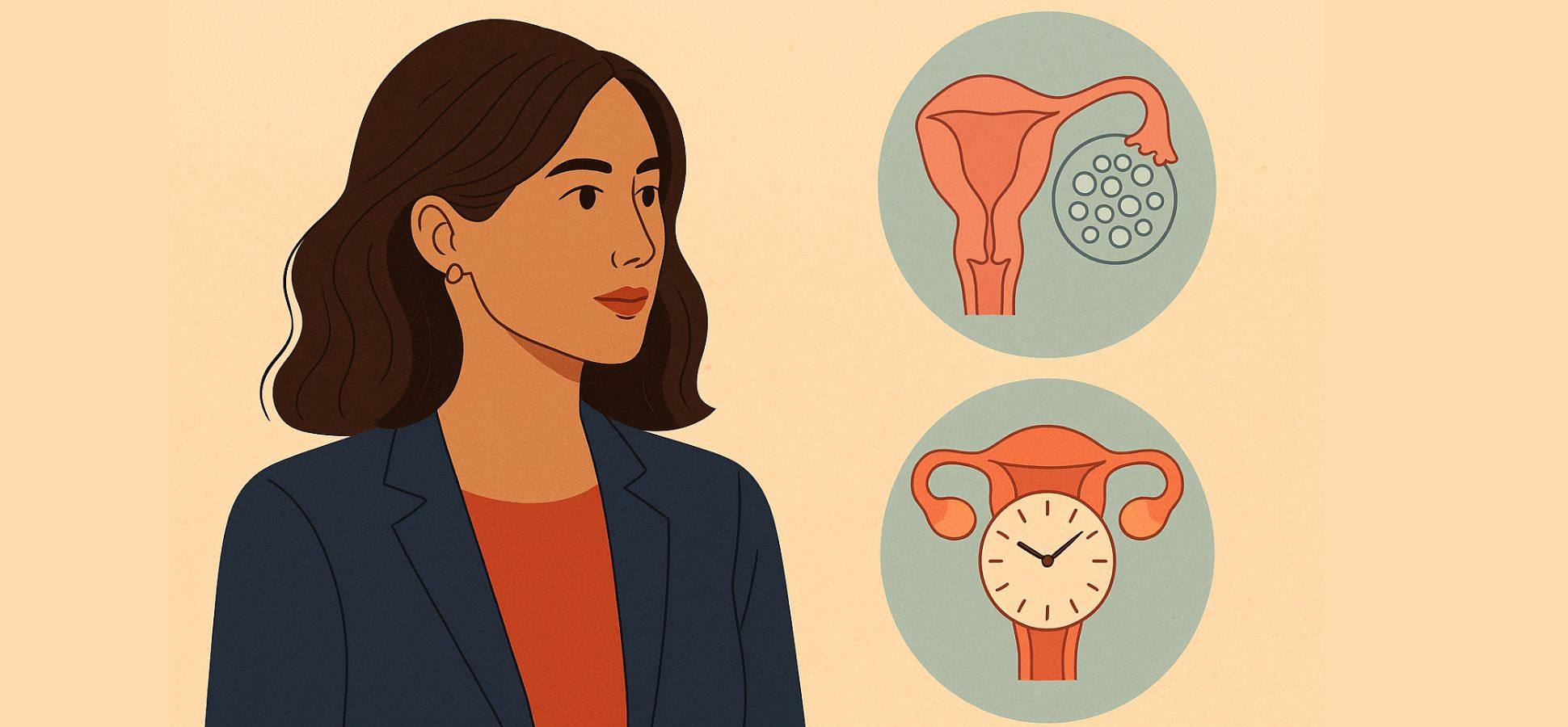
For many ambitious women building businesses, the question of when and how to start a family is pressing. Like our work goals, biological timing is something we must manage. Yet female fertility is not limitless: it follows a natural timeline, and menopause eventually ends natural childbearing. This guide helps women entrepreneurs understand reproductive health facts and plan proactively. We’ll review how fertility changes with age, explore options like egg freezing, discuss menopause and its impact on work, and share practical tips for balancing a career with family planning.
As part of this planning, access to women’s telehealth services makes it easier to explore birth control options and manage reproductive health without stepping away from busy career commitments.
Women’s Age and Fertility
Women are born with all the egg follicles they will ever have – millions at birth, dwindling over time. By puberty, only about 300,000–500,000 remain, and by age 37, roughly 25,000 remain. Naturally, fertility declines as women age. Experts note that fertility starts to decline in the early 30s, with a sharper drop after 35. For example, in their 20s, a healthy woman may have a ~25–30% chance of conceiving each month, but this falls to ~5% by age 40. Assisted reproduction faces the same reality: live birth rates from IVF fall from about 41.5% for women under 35 to only ~12% by age 41–42, and below 5% after age 43acog.org. In short, age is the single most important factor affecting fertility.
It’s important to remember that menopause – the end of menstrual periods – typically occurs around age 50–51 in the U.S.. Menopause is formally defined as the day after a woman has gone 12 consecutive months without a period. However, women do not stay fertile right up to menopause. In fact, most women lose the ability to conceive naturally by their mid-40s. One fertility expert notes: “Women do not remain fertile until menopause. The average age for menopause is 51, but most women become unable to have a successful pregnancy sometime in their mid-40s.
By menopause, an average woman has only ~1,000 of her original eggs left (down from millions). Chromosomal abnormalities in eggs also rise with age, dramatically increasing miscarriage risk and conditions like Down syndrome (for example, the risk of a Down syndrome birth rises from ~1 in 940 at age 30 to 1 in 85 by age 40).
How Motherhood is Different for Women Entrepreneurs

Balancing a startup or growing business with raising children brings unique challenges. Research confirms that motherhood can significantly impact entrepreneurship. A recent study found that women are about 42% less likely to start a business in the year they give birth. Moreover, existing female-led businesses often see declines in performance after a baby: on average, profits fall by ~21% and sales by ~21% in the five years following childbirth. In other words, the demands of a newborn – sleepless nights, infant care, etc. – can slow down a business. This is sometimes called the “motherhood penalty”: compared to women without children, mothers tend to earn less and miss promotions (even in entrepreneurship).
For a woman entrepreneur, the stakes can feel even higher. Unlike corporate employees, startup founders often lack paid maternity leave or large support networks. However, entrepreneurship also offers flexibility: you may have more control over your schedule than in a traditional job. Still, many women report that career and family planning collide. As one advocate notes, the lack of societal support (like paid leave or childcare) can make entrepreneurship feel “like an impossible dream” during pregnancy and postpartum.
Menopause: Timing and Transition
Menopause marks the end of a woman’s reproductive years. Formally, it is reached 12 months after the last menstrual period. The average age of menopause in the U.S. is about 51. It is preceded by perimenopause (the transitional years), where hormone levels fluctuate and cycles become irregular. Menopause ends natural fertility — after one year without periods, pregnancy is no longer possible.
Common Symptoms
Menopause brings a variety of physical and emotional symptoms due to falling estrogen and progesterone. These often include:
- Hot flashes and night sweats: sudden heat and sweating spells (the most common complaint)
- Sleep disturbances: trouble falling or staying asleep, sometimes due to night sweats
- Mood changes: irritability, anxiety, or low mood
- Cognitive changes: “brain fog”, memory lapses, and difficulty concentrating
- Genitourinary issues: vaginal dryness, painful intercourse, and urinary discomfort
- Physical changes: weight gain, thinning hair, and increased risk of osteoporosis
These symptoms can last for several years and vary widely among women
Egg Freezing and Fertility Preservation

Egg freezing (oocyte cryopreservation) is an option that allows women to delay childbearing while essentially “pausing” their biological clock. The process involves stimulating the ovaries, retrieving mature eggs, and freezing them for future use. If a woman later decides to use those eggs, they are thawed and fertilized via IVF.
When to Consider It
Fertility experts agree that earlier is better. Most recommend freezing eggs ideally before age 35, when egg quality and quantity are highest. Research shows that success rates are highest when eggs are frozen before 35, and that women who freeze eggs under 38 and thaw at least 20 eggs later have about a 70% chance of a live birth. For comparison, at age 40, fresh IVF success rates are generally under 30%. Even women as old as 41–43 have achieved births from frozen eggs, though with lower success rates.
Timeline and Process
The full egg-freezing process typically takes 2–6 weeks. It begins with a fertility consultation and initial testing, followed by daily hormone injections for 10–14 days to stimulate the ovaries. After that, a short egg retrieval procedure is performed. Most women recover fully within a few days.
Success Rates
While no fertility method is guaranteed, success depends largely on the age at which eggs are frozen and how many are retrieved. For younger women who freeze many eggs, the chances of later pregnancy are quite high. In one large study, women who froze more than 20 eggs before age 38 had about a 70% live-birth rate. Across all age groups, approximately 39% of women eventually had a child from their frozen eggs.
Importantly, storing eggs does not affect current fertility — it simply creates an option for the future.
Costs
Egg freezing can be a significant financial investment. On average, one cycle (including medications) can cost between $10,000 and $15,000. Additionally, there is an annual storage fee, typically around $500. Due to the high costs, many women use health savings accounts (HSAs), flexible spending accounts (FSAs), or employer fertility benefits to help fund the process.
Some women opt for programs that offer reduced-cost freezing in exchange for donating a portion of their eggs to families in need. Others explore fertility grants, academic medical centers offering discounted services, or startup-friendly fertility financing options.
Employer Benefits and Trends
Many companies have begun offering fertility preservation benefits as part of their health coverage. As of 2023, nearly one in five large U.S. companies covered elective egg freezing — a growing trend since 2014, when tech firms like Apple and Facebook began including it in their benefits packages. Today, major companies like Google, Netflix, and Spotify provide similar support.
In the UK, employers like NatWest Bank and Spotify offer allowances for egg freezing and IVF. For entrepreneurs, this trend shows that fertility planning is becoming normalized. Whether you’re hiring a team or working for yourself, acknowledging reproductive health as part of professional planning is increasingly seen as a sign of a forward-thinking, inclusive culture.
Practical Tips for Women Entrepreneurs to Manage Reproductive Health
Below are actionable suggestions for women entrepreneurs to manage reproductive health alongside demanding careers.
Plan Ahead with Data
Understand your fertility window. Consider getting a fertility check-up in your late 20s or early 30s—such as hormone tests like AMH—to estimate your ovarian reserve. Fertility generally begins to decline after age 35. Mapping out personal timelines (like ideal ages for conceiving or preserving fertility) alongside major business milestones can help reduce uncertainty. For example, you might plan to complete an egg-freezing cycle during a slower season in your business.
Explore Fertility Options
If you’re planning to delay having children, educate yourself about fertility treatments. Egg freezing is one option, but others include IVF, donor eggs, or even planned adoption. A consultation with a fertility specialist can help you understand which path fits your goals and health needs. While many women do conceive naturally later in life, relying on chance alone isn’t always wise—being proactive gives you more control.
Budget and Save for Family Needs
Fertility care can be expensive. One cycle of egg freezing may cost $10,000 or more, and IVF treatments can be equally or more costly. If parenthood is part of your plan, set aside savings—health savings accounts (HSAs), flexible spending accounts (FSAs), or designated family planning funds can help. If you’re an employer, consider offering fertility-related benefits to your team. If you’re self-employed, include reproductive care in your financial planning just like any other key investment.
Adjust Your Schedule Strategically
One major advantage of entrepreneurship is control over your time. Use that flexibility to your advantage. Schedule important work (like meetings, pitches, or deep-focus tasks) during your peak energy hours. If you’re more productive in the morning, protect that time. Reserve admin work or breaks for later parts of the day when your energy dips.
Stay Healthy and Manage Stress
Good health is foundational—not only for fertility, but also for managing menopause and maintaining long-term wellbeing. Prioritize regular movement, balanced meals, and sufficient sleep. Stress-reduction practices like meditation, journaling, or therapy can improve mental clarity and hormonal balance.
Conclusion
Reproductive health and family planning are deeply personal decisions—but they intersect with career in very real ways, especially for women entrepreneurs. There’s no one-size-fits-all path, but knowledge and preparation are powerful tools.