

The start of a new year is supposed to feel energizing. January arrives with fresh planners, ambitious goals, and a renewed sense of control. Yet for many founders, that motivation fades faster than expected. By late January or early February, a quiet dip sets in, a New Year slump that few entrepreneurs openly talk about.
This post–New Year’s slump often feels heavier for business owners than for others. Entrepreneurs carry the pressure of performance, growth, and responsibility not just for themselves, but for their teams and livelihoods.
When early momentum doesn’t match expectations, self-doubt creeps in. The gap between where you thought you’d be and where you actually are can feel discouraging.
Unmet resolutions also play a role. Many founders enter the year with aggressive plans to scale faster, work harder, and optimize everything at once. When reality pushes back, as it always does, the internal narrative can quickly turn critical. Instead of seeing the slowdown as natural, entrepreneurs often interpret it as failure.
What makes this phase especially challenging is that it happens quietly. Outwardly, business continues. Inwardly, motivation dips, focus scatters, and energy feels harder to access. Recognizing this experience as a regular part of the entrepreneurial cycle is the first step toward rebuilding momentum after the New Year in a healthier, more sustainable way.
Why Momentum Fades After the New Year

The loss of momentum isn’t a character flaw or a lack of discipline. It’s usually the result of how January expectations collide with real-world constraints. Many entrepreneurs unknowingly set themselves up for burnout before the year has truly begun.
One major factor is unrealistic expectations formed at the start of the year. January often carries the weight of “this is the year everything changes.” Goals are set aggressively, timelines are tight, and there’s an unspoken belief that motivation alone will carry execution. When progress feels slower than imagined, disappointment sets in quickly.
Mental fatigue also plays a significant role. Entrepreneurs make hundreds of decisions daily, and the New Year often adds more pressure to choose the “right” direction immediately. This decision overload drains cognitive energy, making even simple tasks feel heavier. Over time, this contributes to post–New Year productivity dips and emotional exhaustion.
Another overlooked reason momentum fades is the lack of visible progress early on. Many meaningful business efforts: strategy shifts, system improvements, long-term projects, don’t produce instant results. Without quick wins, the brain assumes nothing is working, even when foundations are quietly being built. This disconnect fuels frustration and accelerates post-holiday burnout.
Understanding why momentum fades helps remove the self-blame. The slump isn’t a sign that motivation is gone forever. It’s often a signal that the approach needs adjustment, something many successful founders learn to embrace rather than fight.
Reframing the Slump as a Reset Opportunity
When motivation drops after the New Year, it’s easy to assume momentum has been lost. In reality, momentum often isn’t gone—it’s simply misdirected. The post–New Year slump can serve as a valuable pause, offering entrepreneurs a chance to recalibrate instead of forcing forward movement.
Many founders rely heavily on motivation at the start of the year. Motivation feels powerful in January, but it’s unreliable in the long term. When it fades, progress stalls. This is where successful entrepreneurs shift their mindset. Rather than chasing motivation, they build systems that support consistent action even when energy is low. This mental shift alone can relieve much of the pressure entrepreneurs place on themselves during this period.
Letting go of the pressure of January is another crucial step. The calendar turning doesn’t magically change capacity, resources, or market conditions. Releasing the belief that everything must be figured out in the first few weeks allows entrepreneurs to approach their work with more clarity and less emotional weight. The slump becomes less of a setback and more of a strategic reset.
Practical Ways Entrepreneurs Rebuild Momentum
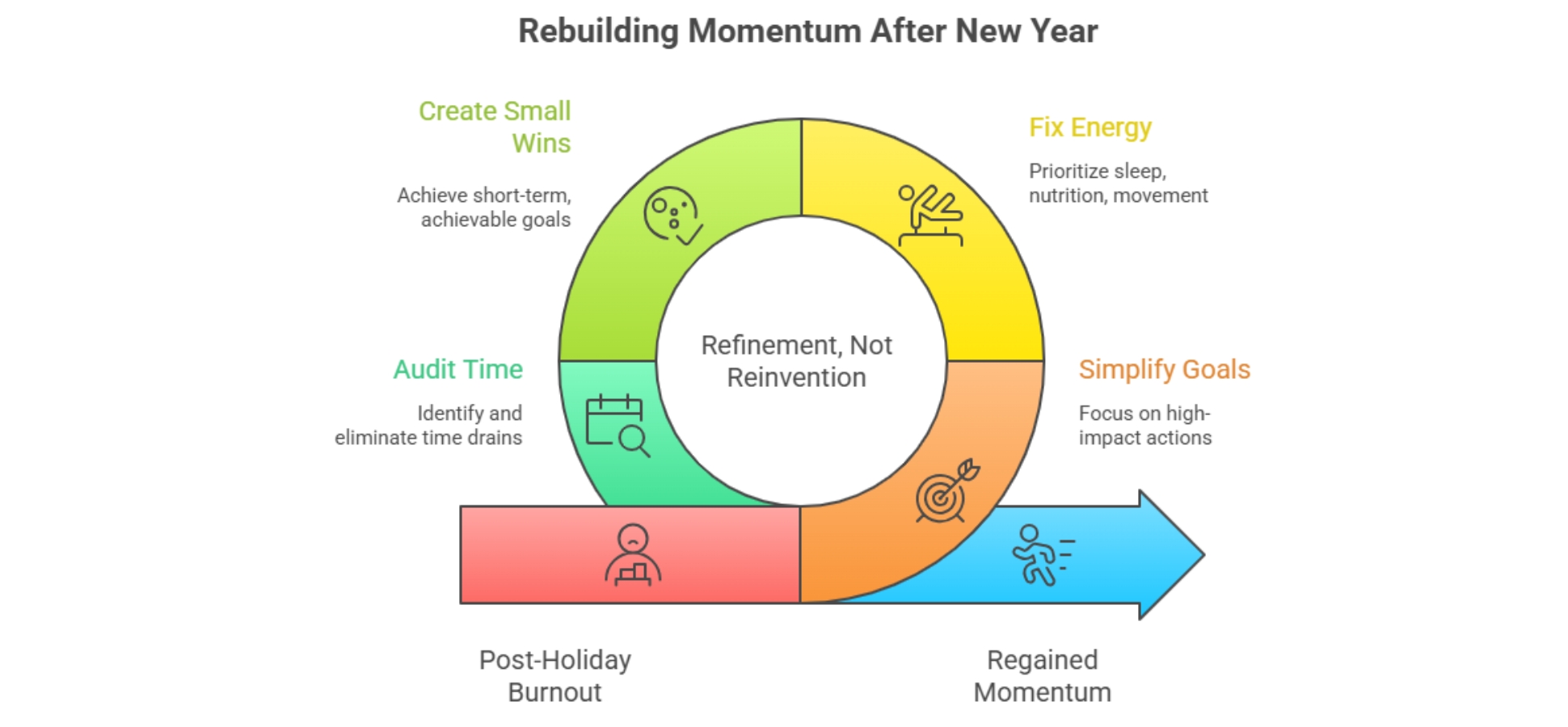
Rebuilding momentum after the New Year doesn’t require drastic changes. In fact, simpler adjustments tend to produce better results. Entrepreneurs who recover fastest from post-holiday burnout focus on refinement rather than reinvention.
Simplifying goals and priorities
One of the most effective ways to regain traction is to narrow the focus. Instead of juggling multiple objectives, founders benefit from identifying just a few high-impact actions that truly move the business forward. Simplifying priorities reduces cognitive load and makes progress easier to see and measure.
Reducing unnecessary commitments is equally important. Many entrepreneurs enter the year overcommitted; meetings, projects, and goals stack up quickly. Letting go of low-value tasks creates mental and physical space for meaningful work, which naturally restores momentum.
Fixing energy before fixing productivity
Productivity struggles are often energy problems in disguise. Entrepreneurs experiencing a New Year’s slump usually try to address it with stricter schedules or longer work hours, which only deepens burnout. Addressing sleep, nutrition, and movement first creates a stronger foundation for execution.
When energy improves, focus sharpens, and decision-making becomes easier. This is why entrepreneur burnout recovery often begins outside the office. Even minor improvements in rest or daily movement can have a noticeable impact on motivation and output.
Creating small wins
Momentum thrives on evidence of progress. Small wins rebuild confidence and counter the belief that nothing is working. Short-term, achievable goals provide entrepreneurs with quick feedback loops, reinforcing forward momentum.
These wins don’t have to be revenue-driven. Completing a system update, clarifying a process, or closing a lingering task all count. Measuring progress differently, beyond just growth metrics, helps entrepreneurs recognize the value of steady, consistent action.
Auditing time and attention
A post–New Year productivity dip is often tied to how attention is being spent. Auditing time reveals hidden drains: excessive notifications, unnecessary meetings, or reactive work that crowds out deep focus.
Resetting boundaries around time and attention allows entrepreneurs to reclaim control of their days. By intentionally deciding where energy goes, founders create conditions in which momentum can rebuild naturally rather than being forced.
Mental Habits That Support a Strong Comeback
Rebuilding momentum after the New Year isn’t just about changing plans or routines. It also requires adjusting the way entrepreneurs think about progress, pressure, and performance. Mental habits play a quiet but influential role in whether the post–New Year slump becomes a setback or a turning point.
Practicing self-compassion instead of self-pressure is one of the most important shifts entrepreneurs can make. Many founders are their own harshest critics, especially when early-year goals aren’t met. This internal pressure often backfires, leading to avoidance, fatigue, and reduced creativity. Treating the slump as a normal phase rather than a personal failure allows entrepreneurs to move forward with less resistance.
Normalizing plateaus in growth is equally important. Business progress is rarely linear, yet many entrepreneurs expect constant upward momentum. Periods of slower movement are often signs of consolidation, learning, or system-building. When founders accept plateaus as part of the process, they stop fighting them and start using them strategically.
Reconnecting with purpose also helps restore entrepreneurial motivation. During busy periods, it’s easy to lose sight of why the work matters. Taking time to revisit the original reasons behind the business, freedom, impact, creativity, or stability, can reignite intrinsic motivation that isn’t dependent on short-term results.
Avoiding Common Post–New Year Mistakes
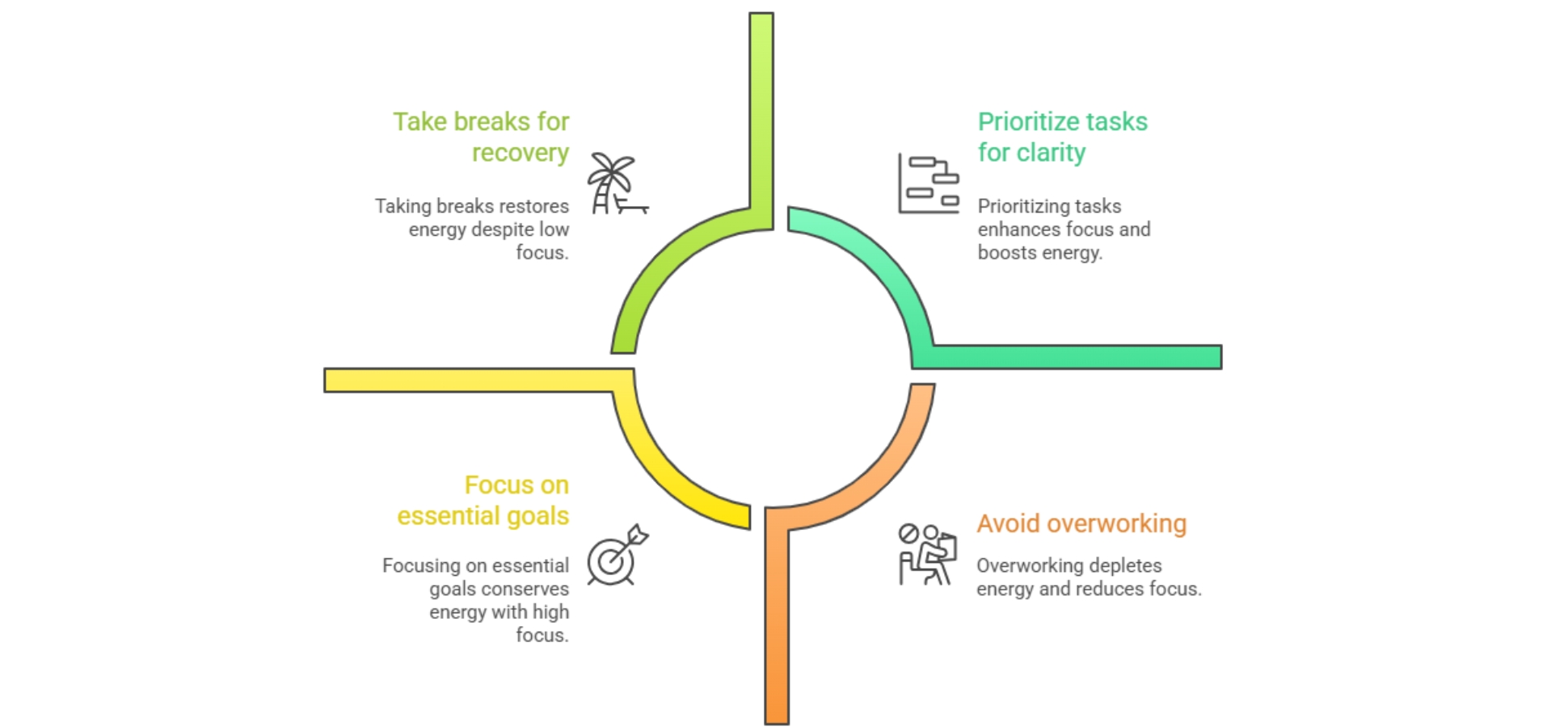
The way entrepreneurs respond to a slump often determines how long it lasts. Certain habits, though well-intentioned, can quietly intensify post-holiday burnout.
Don’t Double Down on Hustle
When momentum slows, many founders assume the solution is to work harder. Longer hours and tighter schedules may create short-term output, but they often deepen exhaustion and reduce creativity.
Sustainable momentum comes from alignment and clarity, not constant pressure. Restoring energy is often the fastest way to restore progress.
Avoid Adding More Goals Instead of Clarity
A typical response to slow progress is stacking more goals on top of existing ones. This increases mental load and decision fatigue, making execution harder—not easier.
Reducing goals creates space for focus. Entrepreneurs regain momentum faster when they simplify rather than expand their to-do lists.
Stop Ignoring Recovery and Rest
Rest is frequently treated as optional, especially for ambitious founders. In reality, it’s foundational. Ignoring recovery delays and burnout leads to diminishing returns.
Mental clarity, emotional resilience, and strategic thinking all depend on adequate rest. Without it, even the best plans lose effectiveness.
Momentum Is Built, Not Forced
Momentum doesn’t come from willpower or perfect planning. It’s built through small, repeatable actions taken at a sustainable pace. The post–New Year slump isn’t a sign that you’ve failed; it’s feedback that something needs adjustment.
Progress over perfection is what carries entrepreneurs forward. Small steps taken consistently outperform ambitious plans that can’t be maintained. When founders allow themselves to start where they are, momentum begins to rebuild naturally.
Choosing a sustainable pace over burnout protects not only productivity but long-term vision and enjoyment of the work itself. Entrepreneur success isn’t defined by how fast the year starts, but by how healthy energy, focus, and purpose are managed over time.
If you’re experiencing a New Year slump, let it be a reset, not a reason to quit or push harder. Rebuild momentum intentionally, with clarity and care. That’s how lasting progress is created.


