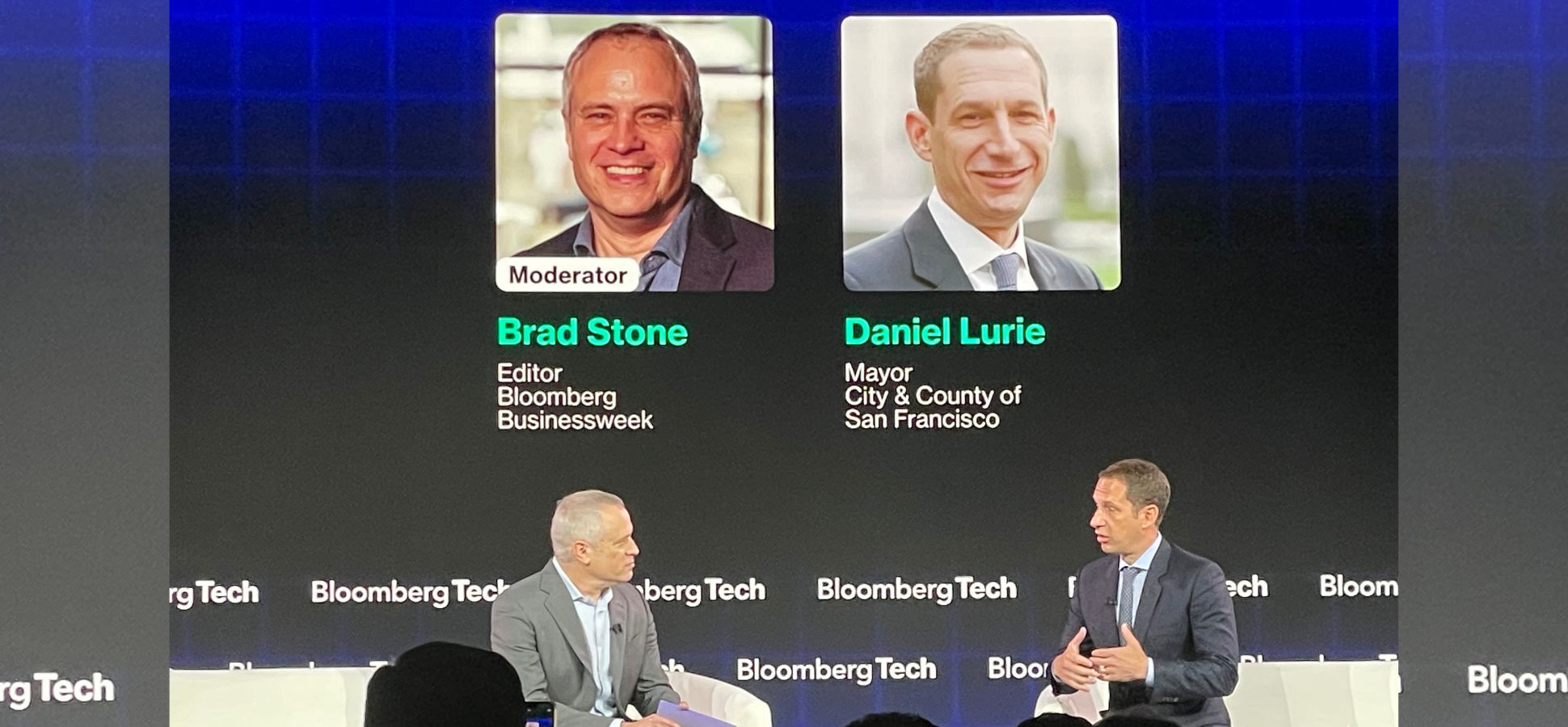
At this year’s Bloomberg Technology Conference in San Francisco, the opening session tackled the most pressing question on the minds of tech leaders, entrepreneurs, and residents alike: Is San Francisco back?
The city’s new mayor, Daniel Lurie, sat down with Bloomberg Businessweek Editor Brad Stone delivered a message of cautious optimism and bold ambition. “For the first time in years, people feel a sense of hope and optimism,” he said. “But I’m not here to say we’re out of the woods. We have a lot of work to do.”
Mayor Lurie emphasized that revitalizing San Francisco requires more than economic growth – it demands inclusive progress. With public safety, behavioral health, and affordable housing as his top priorities, Lurie aims to lay a durable foundation for a city where prosperity touches all communities. “We are open for business,” he declared, citing permit reform, streamlined small business operations, and a generational housing plan as cornerstones of his agenda.
The conversation turned naturally to San Francisco’s role in the global tech ecosystem. With OpenAI, Snowflake, and Databricks all headquartered or actively expanding in the city, Lurie didn’t shy away from positioning San Francisco as the “global epicenter of AI and tech.” Yet, he was quick to acknowledge the risks of over-reliance on a single sector. “We’ve seen what happens when the city becomes too dependent on one industry,” he said, emphasizing the importance of San Francisco’s rich culture, culinary scene, and arts as essential to its resilience.
Lurie cited statistics projecting over 60,000 AI-related jobs in the region within the next five years. But his vision also includes ensuring those jobs lift all boats. Public-private partnerships, such as Ripple’s recent investment in a Real-Time Intelligence Center to improve public safety, are being leveraged to jump-start civic innovation. “The private sector helps us test and launch. Then the city sustains,” Lurie explained, noting San Francisco’s $1 billion budget deficit and the need for pragmatic collaboration.
He also addressed the importance of mutual responsibility between city government and the tech sector. Companies like Salesforce, OpenAI, and Visa were highlighted as models of community investment. “We took business for granted,” Lurie admitted. “They left. But now we’re seeing them come back – and we know better this time.”
Moderator Brad Stone pressed the mayor on tangible steps to rebuild the downtown core and bring workers back. Rather than focus on office cafeterias, Lurie stressed restoring the fundamentals: clean, safe streets and accessible behavioral health resources. “That’s how we get people downtown again,” he said. “That’s how we restore civic life.”
As the opening session closed, it was clear that Mayor Lurie’s message – realistic but forward-looking – set the tone for a conference and a city determined to reclaim its global stature. “San Francisco is buzzing again,” he said. “And we’re just getting started.”