When The Cut published its Jennifer Lawrence cover interview on October 27, 2026, the same morning her haircare brand mes° went on sale, the obvious story had already written itself: another actress monetizing her face. Lawrence got there first. “A smarter exit plan would be signing up for a big franchise,” she told the magazine. Then, on the idea that the brand was a payday: “Starting a new company to get rich feels like jumping off a cruise ship to land on a door.”
Jennifer Lawrence’s net worth is an estimated $180 million in 2026, according to Celebrity Net Worth, built almost entirely on film salaries, backend profit participation and a Dior contract rather than on company ownership. That distinction is the entire story of the week. She is right about the cruise ship. Franchise money is fast, contractual and close to risk-free, and she would know, because she carried four Hunger Games films.
She may be wrong about the door. Over the past four years, the beauty door has paid out more than almost any acting contract: e.l.f. Beauty agreed to pay up to $1 billion for Hailey Bieber’s rhode after three years of trading, and Coty paid $600 million for a majority of Kylie Cosmetics. So the question behind every search of her name this week isn’t really how much she’s worth. It’s whether what she launched is an asset she owns or a job she took.
Last updated: November 2026
Quick answers
What is Jennifer Lawrence’s net worth in 2026?
Jennifer Lawrence’s net worth is an estimated $180 million in 2026, per Celebrity Net Worth, which updated the figure on September 30, 2026. Lawrence has never disclosed her finances, so every published number is a reconstruction from reported salaries, her Dior contract and property records.
What is mes°?
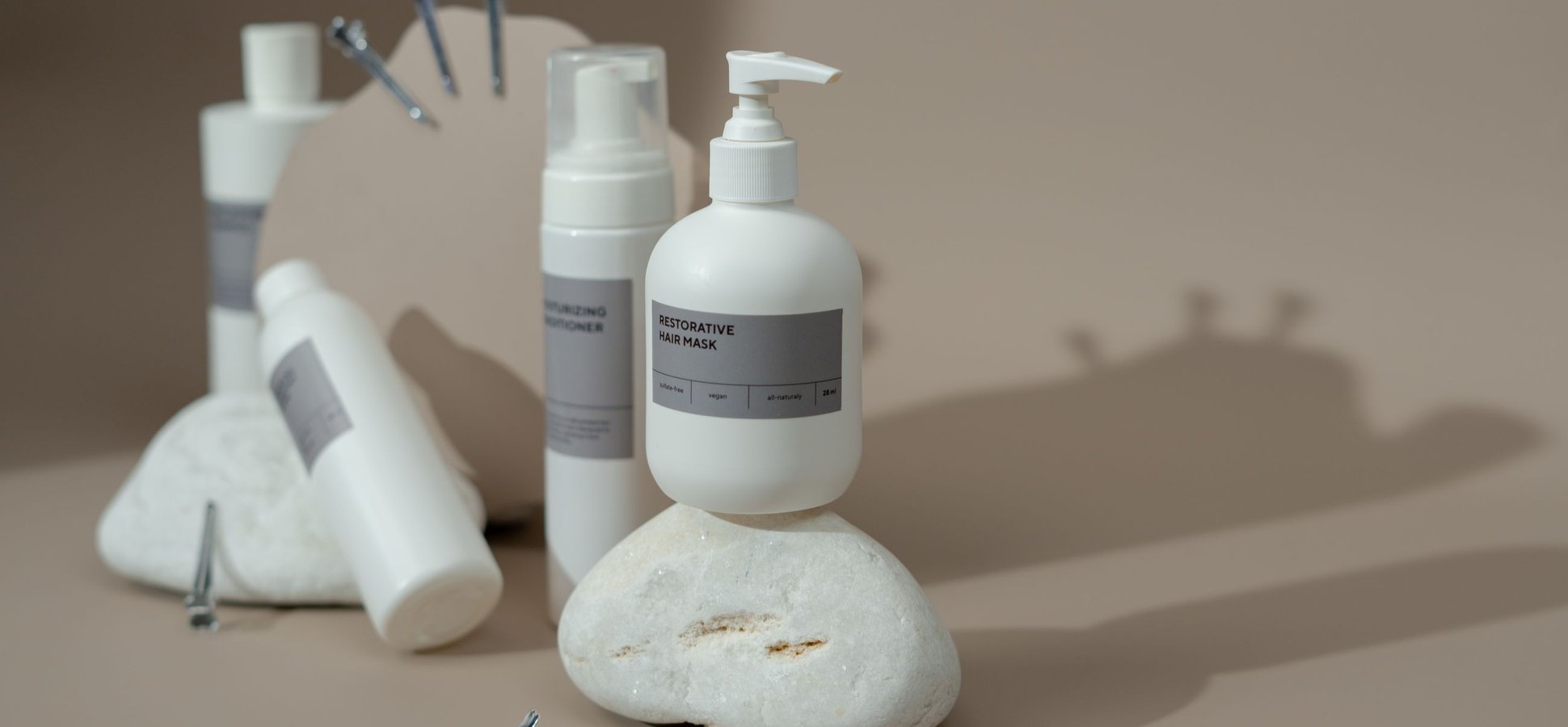
mes° is a direct-to-consumer haircare brand Jennifer Lawrence launched on October 27, 2026, developed with the biotech company Arcaea. It sells three products at mesbeauty.com: a $52 Multitask Repair Mask, a $44 Off-Duty Restyling Serum and a $34 Good Roots Volume Mist.
Does Jennifer Lawrence own mes°?
Neither Lawrence nor Arcaea has disclosed her ownership stake in mes°, and no public filing records one. Launch coverage treats the brand as hers and names Arcaea chief executive Jasmina Aganovic as her partner in building it, which points toward founder equity rather than a licensing fee.
What is Jennifer Lawrence’s net worth in 2026?
Jennifer Lawrence’s net worth is an estimated $180 million as of 2026, according to Celebrity Net Worth, which last updated the figure on September 30, 2026. That site states plainly that its numbers are estimates unless marked otherwise. Nobody outside her accountants knows the real figure.
The spread across the rest of page one tells you how soft these numbers are. Competing sites publish $160 million, $180 million and $200 million for the same person in the same month, all sourced to each other. The only hard data points in the pile come from Forbes, which estimated her pre-tax earnings at $52 million between June 2014 and June 2015 and $46 million the following year, making her the world’s highest-paid actress in back-to-back years.
Here is the part the net-worth farms skip. Lawrence’s wealth has one structural feature that matters more than its size: almost none of it is ownership. She has banked salaries, bonuses and a Dior ambassadorship. She has not, until now, had a company attached to her name that someone else might want to buy. Among the celebrity fortunes we’ve broken down, from Alix Earle’s skincare equity to Angel Reese’s business ventures, that’s the line that separates a large number from a growing one.
How Jennifer Lawrence built a $180 million fortune
Lawrence’s earnings went from a $500,000 base salary on the first Hunger Games in 2012 to a reported $25 million for Don’t Look Up in 2021, a 50x move in nine years driven by franchise power and one widely publicized fight over backend points.
| Project or deal | Year | Reported pay | What it tells you |
|---|---|---|---|
| The Hunger Games | 2012 | $500,000 base | Escalators took it to roughly $1 million |
| Catching Fire | 2013 | About $10 million | One hit resets the quote by 10x |
| American Hustle | 2013 | Around $4 million | Leaked Sony emails showed a smaller profit share than several male co-stars |
| Dior contract extension | 2014 | About $15 million over three years | Some reports put the ceiling at $20 million |
| Mockingjay Part 1 | 2014 | $15 million | Franchise pricing at its peak |
| Mockingjay Part 2 | 2015 | $30 million to $40 million reported | Salary plus bonuses, her career peak payday |
| Passengers | 2016 | $20 million plus 30% of profits | Her closest thing to equity, and it expires with the title |
| Don’t Look Up | 2021 | $25 million | Streaming buyouts pay cash instead of backend |
The Passengers deal is the one worth studying. Lawrence took $20 million against 30% of profits after the film broke even, which is the structure closest to ownership that a working actor gets. It still ends. When the title stops earning, the asset is gone, and there is nothing left to sell to anyone.
Every line in that table is a paycheck. Paychecks don’t compound. The reason the Hollywood-to-consumer-brand pipeline exists at all is that a brand is the only thing on an entertainer’s balance sheet that a strategic buyer will bid against another buyer for, a pattern we traced through this year’s biggest celebrity brand launches.
What is mes° and who actually built it?
mes° is a direct-to-consumer haircare brand that launched on October 27, 2026, selling three products exclusively at mesbeauty.com: the $52 Multitask Repair Mask, the $44 Off-Duty Restyling Serum and the $34 Good Roots Volume Mist. The science came from Arcaea, which Cosmetics Business describes as a biology-first beauty company.
Arcaea is the half of this story the consumer coverage buried. It was launched on the Ginkgo Bioworks platform and announced a $78 million Series A in its own November 2021 announcement, with Chanel and Olaplex among its backers. Its founder and chief executive, Jasmina Aganovic, is an MIT-trained chemical and biological engineer. Lawrence found her through a TED talk titled “Can Biotech Invent a Sustainable Future for the Beauty Industry?”
That origin matters commercially. A celebrity brand built on a contract manufacturer’s stock formula has no defensible product, which is why so many of them die quietly, as we found looking at celebrity businesses that failed to find a market. A brand built on a venture-funded ingredient platform has something a buyer can underwrite.
The claims mes° publishes are specific enough to be tested, which is itself a signal. The repair mask is marketed on a 32% reduction in wash-day protein loss, six times less breakage and up to 158% more lipids. The volume mist, built on what the brand calls ARC-5 Technology and Mediterranean microalgae, claims 2.5 times more volume and a 75% reduction in scalp oiliness. The serum claims 86% less frizz, 92% less tangling and heat protection to 450 degrees Fahrenheit. These are brand claims from clinical testing the company commissioned, not independent results, and they should be read that way.

Does Jennifer Lawrence own equity in mes°?
Neither Jennifer Lawrence nor Arcaea has disclosed her ownership stake in mes°, and no public filing records one. Launch coverage treats the brand as hers and credits Aganovic as the partner who built it with her, which points toward founder equity rather than a name license, but the split is private and may stay that way for years.
Celebrities get paid by consumer brands in three ways, and the difference between them is worth tens of millions of dollars.
- Endorsement. A fixed fee for a defined term. Lawrence’s Dior extension, reported at about $15 million over three years, is this. The money is certain, taxable as income, and ends on the final day of the contract.
- License. A royalty on net sales, often in the mid single digits, in exchange for the name and a set number of appearances. Upside without downside, and no asset at the end.
- Founder equity. A stake in the operating company. Worth nothing for years, then worth everything on the day someone buys it.
You can usually read which one you’re looking at from the outside. A licensed brand arrives fully formed, with a legacy manufacturer’s name on the back of the bottle and the celebrity booked for a campaign shoot. An owned brand shows the founder’s fingerprints in product decisions, which is what Lawrence’s own account sounds like: “The moment something was fussy, it was like ‘no’.” Three products, one website, a named scientific partner. That’s a company, not a campaign.
Why equity pays more than an endorsement deal
e.l.f. Beauty agreed to pay $800 million at closing for Hailey Bieber’s rhode, made up of $600 million in cash and about 2.6 million newly issued shares worth $200 million, plus a potential $200 million earnout over the three years after closing, according to the terms reported when the deal was announced in May 2025. rhode’s net sales for the twelve months ending March 31, 2025 were $212 million, putting the closing price at roughly 3.8 times sales.
| Deal | Who | Structure | What it paid | Time from launch |
|---|---|---|---|---|
| rhode | Hailey Bieber | Founder equity, sold to e.l.f. Beauty | $800M at closing plus a $200M earnout | About three years |
| Kylie Cosmetics | Kylie Jenner | Founder equity, 51% sold to Coty | $600M for the majority stake | About four years |
| Dior ambassadorship | Jennifer Lawrence | Endorsement contract | About $15M over three years | Paid on signature |
| mes° | Jennifer Lawrence | Undisclosed, built with Arcaea | Unknown | Launched October 2026 |
Run the ratio and the argument makes itself. Lawrence’s Dior contract paid roughly $15 million. Bieber’s equity paid up to $1 billion. That’s a gap of about 66x for a brand that existed for three years, and it’s why the calculus has changed for every famous person with a product idea, athletes included, as we covered when athletes started taking equity instead of cash.
The catch is the downside nobody puts in the headline. An endorsement fee arrives whether the product sells or not. Equity in a brand that stalls at $4 million in revenue is worth a rounding error, and the founder has spent four years earning it. Most celebrity brands land there, not at rhode.
What the Kylie Cosmetics deal proved about paper valuations
Kylie Jenner sold 51% of Kylie Cosmetics to Coty for $600 million in a deal that valued the brand at $1.2 billion, and within months Coty’s own filings became the evidence used to tear the valuation apart. On May 29, 2020, Forbes revoked her billionaire designation, as Axios reported at the time.
The specifics are brutal. Forbes said it had been led to believe the business generated $360 million in revenue, while Coty’s filings indicated roughly $125 million in 2018. The skincare line that Jenner’s representatives said had done $100 million in its first six weeks was tracking toward about $25 million from its May launch through year end. Forbes writers Chase Peterson-Withorn and Madeline Berg wrote that “the business was never that big to begin with,” and put her net worth just under $900 million. Jenner called the piece “a number of inaccurate statements and unproven assumptions.”
The lesson generalizes past beauty. A private valuation is a claim until a buyer wires money, and the moment a public company owns part of your business, your revenue stops being a press release and becomes a line in someone’s 10-K. Audiences don’t audit. Acquirers do, and so do their regulators.
Lawrence has so far done the opposite of the Kylie playbook. No valuation, no revenue projection, no billionaire framing. The only financial statement she’s made publicly is a denial that money was the point.
Can a direct-to-consumer brand reach a billion-dollar exit?
Yes, but the recent ones got there on volume rather than margin, and the volume required is larger than most founders model. rhode booked $212 million in trailing-twelve-month net sales before e.l.f. agreed to buy it. mes° launched with three products on a single website.
Here’s the arithmetic a founder can run on any DTC brand. At an $80 average order value, $212 million in net sales means roughly 2.65 million orders a year, or about 7,200 orders every single day. With mes° priced at $34, $44 and $52, a customer who buys the entire line spends $130 once. Everything after that depends on how fast the bottles empty.
That’s the quiet advantage of haircare over skincare or color cosmetics. A mask and a mist are consumables on a six to ten week replenishment cycle, so a brand with real repeat purchase compounds without buying the same customer twice. Fame solves the first purchase and nothing else. Lawrence’s name will deliver a launch spike and a cheap first click, exactly the dynamic we saw in Cardi B’s beauty business model. Repeat rate is the product’s job.
Selling only on mesbeauty.com is a deliberate trade. The brand keeps retail margin and owns its customer data, which is what makes a clean acquisition story later. It also gives up the discovery that a Sephora endcap buys, and it means every incremental customer has to be paid for with media. Brands that win this way tend to go retail later, from a position of proven demand, rather than launching into shelf space they then have to defend.
What founders can take from the mes° structure
The transferable lesson isn’t celebrity. It’s that Lawrence appears to have traded fame for a position in a company rather than a fee, and paired it with a partner who owns the hard part.
- Buy the capability you can’t build. Arcaea raised $78 million to do formulation science. Lawrence brought attention no media budget can buy. Neither side of that trade works alone, which is the same logic behind the operator-plus-name pairings in Emma Grede’s run of brands.
- Own the entity, not the royalty. A license ends with its term. Equity is the only structure that produces an eight or nine figure headline, and it’s the only one that survives you losing interest.
- Never publish a number you can’t document. Coty’s filings became Forbes’s evidence against Jenner. Assume every revenue claim you make will eventually be checked against a buyer’s disclosures.
- Launch narrow. Three SKUs is a clean test of whether people reorder. Twelve SKUs is inventory risk dressed as ambition, a mistake that shows up constantly in the post-mortems on why celebrity restaurants fail.
- Answer the money question first. Lawrence pre-empted the cash-grab narrative in the same week she launched, on her terms. The founders who wait for the accusation respond from behind.
Jennifer Lawrence’s net worth in 2026 is roughly $180 million of paychecks, accumulated across fourteen years of film work and one luxury contract. Whether that number moves from here depends on a document nobody outside the deal has seen, and on whether 7,200 people a day decide to buy a $52 hair mask.