
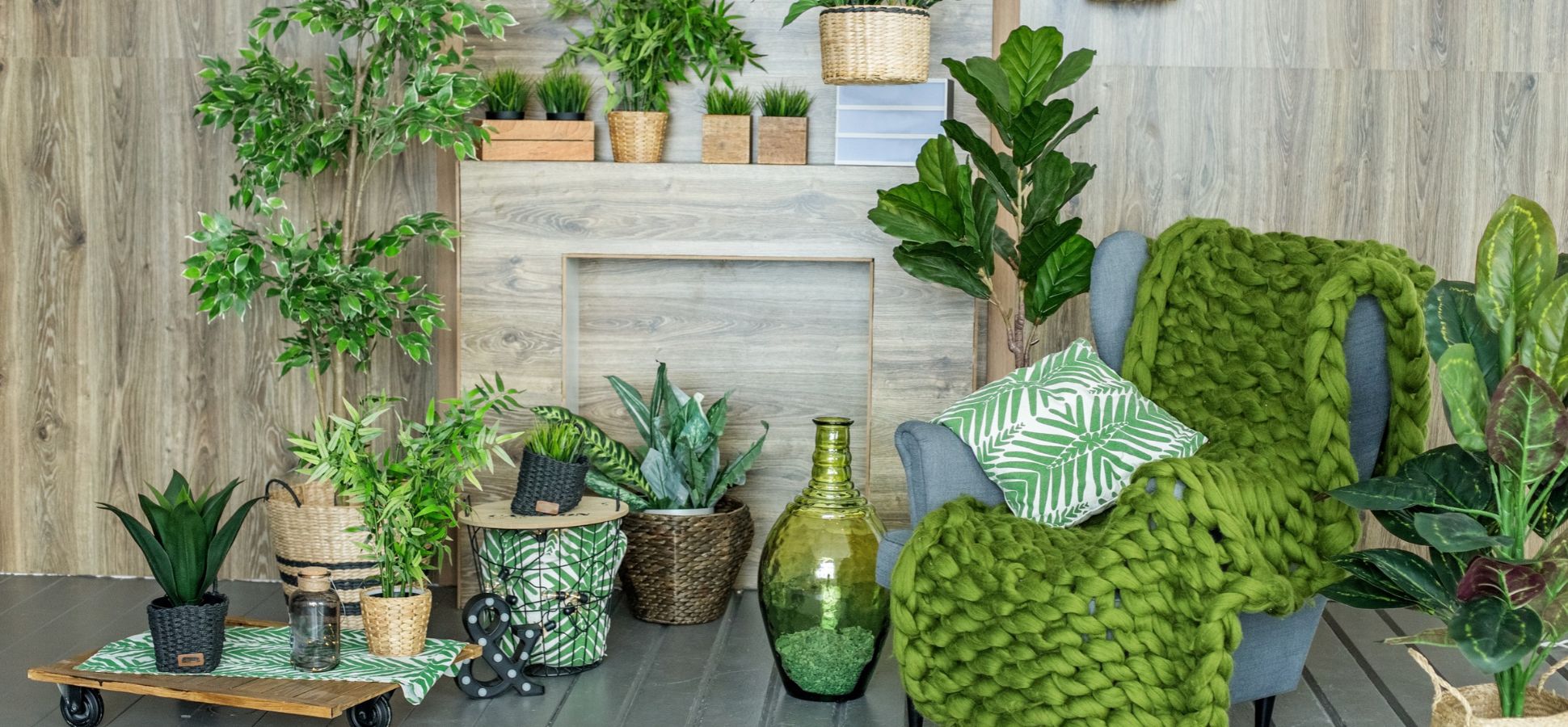
If you have ever bought a houseplant on a Sunday only to watch it drop leaves by Thursday, you know the feeling of having to care for plants. You just wanted the room to feel a bit more alive. Instead, you added another task to a long list of chores.
Turns out, you are not alone in that plant graveyard. A study found that the average plant owner kills about seven houseplants. Worse, nearly half admit that keeping and maintaining a live plant genuinely stresses them out.
Artificial plants, today, look so real and barely need any upkeep, even when you’re away. Real plants, though, bring a natural warmth and texture that’s hard to fake.
So, which option makes the most sense for your home? Let’s skip the design snobbery and look at your daily habits. Then, figure out what belongs in your space.
Real vs Artificial Plants: Looks, Costs, and Everyday Care
The Look
A cheap fake plant rarely gets caught by its leaf colour. The dead giveaway is almost always the stems. Stiff plastic moulds and perfectly symmetrical branches look artificial right away.
Real plants carry character because they are imperfect. They reach toward the nearest window, sprout unevenly, and drop a leaf here and there. That is why wire stems are worth looking for when you buy faux. Curve some branches out so they sit at different levels. That small touch of asymmetry makes the whole plant believable.
Maintenance
If you work long hours or travel often, a delicate houseplant is probably just going to frustrate you. There is nothing fun about spending good money on a plant only to watch it die because you missed a couple of waterings.
That is why so many people choose artificial greenery instead. You can leave town for weeks without asking a neighbour for help. The only upkeep you ever have to worry about is wiping the dust off every month or two.
The Real Cost
People assume real plants are cheaper because the store tag says twenty dollars. But that store price rarely covers the full cost. Between buying a decent pot, a saucer, and extra soil, it adds up. Plus, if it dies in a few months, you’re stuck buying a replacement.
A convincing artificial tree or tabletop plant costs considerably more up front. But the higher upfront cost is offset by the fact that you only purchase it once. It’ll never outgrow its container, and it will never require specialised fertiliser.
Where You Want to Put It
Many people like placing plants in dim corners, such as windowless bathrooms and high bookshelves.
If you don’t choose a plant suited to the available light and adjust watering accordingly, it may weaken or develop root problems over time.
Artificial plants solve this problem masterfully. You can put a faux fern in a dark basement hallway and leave it there for five years. It will still look fine.
The Overall Feel
When living foliage catches the morning light, it adds texture and movement to the entire zone around it. Living plants can instantly make your home feel like it was actually lived in, rather than something out of a Pinterest feed.
At the same time, turning your home into a high-maintenance greenhouse gets exhausting. High-quality artificial designer plants can add greenery to dim entryways and empty spaces. You get a polished interior without feeling like you took on another chore.
Which Plants Suit Diverse Indoor Settings?
Offices and Shared Spaces
Shared spaces are famous for being plant graveyards. Hallways rarely get enough sun, and in a busy office, everyone assumes someone else is handling the watering.
Artificial greenery is usually the better choice for reception desks and long corridors, making the spaces look tidy without needing much maintenance. Real plants can survive at work, but only if the building has fantastic windows and one specific person actually volunteers to look after the soil.
Living Rooms and Bedrooms
People generally keep living plants in the rooms where they relax. A real plant catching the sun by your living room window just feels right.
The problem is the dead zones. Every room has that one dark corner or high shelf. You don’t need the stress of spilling water on your rug just to keep a plant alive. Let the real ones soak up the sun, and let artificial greenery handle the rest.
Small Apartments and Low-Light Spaces
When you barely have room for a coffee table, a giant floor plant isn’t really realistic. A real trailing vine on a bright windowsill makes much more sense.
For a windowless bathroom or a dark entryway, grab a fake plant. Just check the tag first. Steam ruins fabric leaves over time, so only put plastic ones near the shower.
Which One to Go For?
Your home doesn’t really need a jungle of real plants to feel green. Artificial greenery isn’t just a last resort, either. It really comes down to your lighting, your budget, and your regular schedule. Keep living plants near the sunny windows. Let quality designer plants handle the dark corners. Mixing both usually works best.


