In 2019, Jack Dorsey did something most people don’t do with a $300 gadget. He tweeted at the company that made it. Dorsey had been wearing an Oura ring through his meditation sessions, watching his heart rate shift in the data afterward, and he reached out to Harpreet Singh Rai, Oura’s CEO at the time. That conversation ended with Square, the payments company Dorsey ran, joining Oura’s Series B.
Ask why founders wear Oura rings and Whoop straps and you’ll get a polite answer about wellness. The real answer is narrower, and Dorsey’s story holds it: a founder buys a sleep tracker, gets absorbed in the data, and ends up on the cap table.
Seven years later the list of executives wearing one is long enough to be unremarkable. Fast Company documented Dorsey, Twitter co-founder Biz Stone, and Salesforce’s Marc Benioff all wearing Oura rings. Mark Zuckerberg wears one. So does Prince Harry. On the wrist side, Whoop counts Cristiano Ronaldo, LeBron James, and Rory McIlroy among both its users and its investors.
Founders wear Oura rings and Whoop straps because heart rate variability and recovery scores work as an early-warning system for burnout, flagging physiological strain days before it registers as exhaustion. That’s the actual mechanism, and it’s different from what a step counter ever offered. It’s also the reason the habit backfires on some people, and that failure has a clinical name.
Last updated: August 2026
Quick answers
Why do CEOs wear Oura rings?
Executives wear Oura rings because the morning Readiness score compresses sleep quality, resting heart rate, body temperature, and heart rate variability into one number they can act on before the day starts. The ring also looks like jewelry, so it works in board meetings and on camera without signaling anything.
Is a sleep tracker worth it for founders?
It’s worth it if you’ll change a decision based on the data. The value comes from scheduling hard work on high-recovery days and protecting recovery on low ones. If you check the score, feel bad about it, and run the same calendar anyway, you’ve bought a $565 anxiety subscription.
Whoop or Oura for entrepreneurs?
Oura suits founders who want passive sleep and recovery tracking with the most accurate sleep staging available in a consumer device. Whoop suits founders who train seriously and want daily strain targets and coaching. Oura costs less over three years and leaves you owning hardware.
Why do CEOs wear Oura rings?
Because the ring answers a question founders actually have at 6am, and the question isn’t “how many steps did I take yesterday.”
Oura’s Readiness score blends resting heart rate, heart rate variability, body temperature deviation, sleep quality, and recent activity into a single figure. Tom Hale, Oura’s CEO, framed the appeal to Fortune in plain terms: if you want to perform at the highest level and stay cognitively sharp, sleep is foundational. That framing lands differently for someone running a company than it does for a general consumer. A founder’s worst decisions tend to cluster on the days their judgment is already compromised, and they usually can’t tell from the inside.
The second reason is social. The ring is invisible. A Whoop strap reads as fitness gear; an Oura ring reads as a wedding band. Executives who don’t want a screen buzzing at them during a fundraise, and don’t want to look like they’re monitoring themselves, can wear one through a full board meeting without anyone noticing.
The third reason is that the money followed. Oura announced over $900 million in new funding in October 2025, led by Fidelity, at roughly an $11 billion valuation. The company has sold 5.5 million rings since 2015, with close to 3 million of those in 2025 alone. Whoop’s $575 million Series G in March 2026 valued it at $10.1 billion, nearly triple its $3.6 billion mark from 2021, with more than 2.5 million members and bookings up 103% year over year. When two companies in the same category cross $10 billion inside six months, the adoption isn’t a Silicon Valley affectation anymore. It’s a market.
None of that proves the devices work. It proves the habit spread. Those are different claims, and the rest of this article separates them.
What HRV tells a founder that step counts never did
Heart rate variability measures the tiny variation in time between consecutive heartbeats, and it functions as a readout of autonomic nervous system balance. Higher variability generally means the parasympathetic system is doing its job. Suppressed variability means your body is holding a stress response it hasn’t released.
Here’s why that matters more than a step count. Steps measure what you already did. HRV measures what your body is currently carrying.
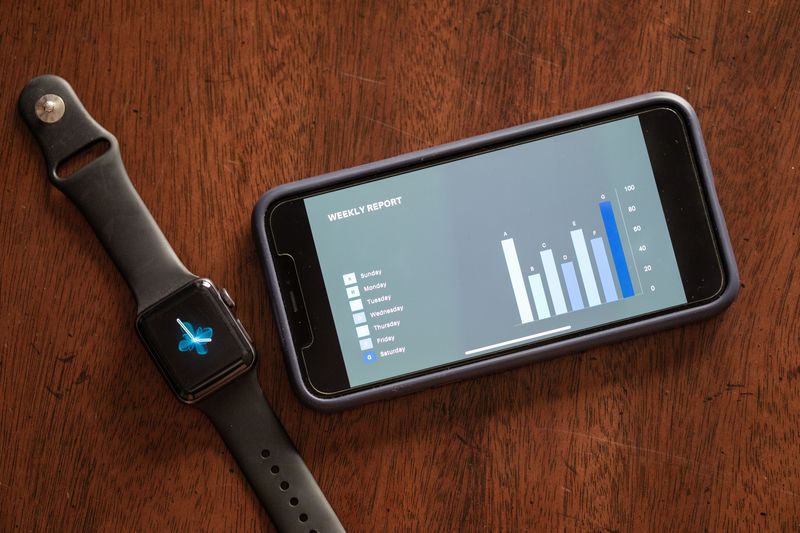
The research supports the mechanism more than the marketing does. A 2025 medRxiv preprint on healthcare workers built a burnout prediction model integrating HRV parameters with psychological and occupational data. It reached 79.1% accuracy and an AUC-ROC of 0.832, and it beat the model built on demographic and questionnaire data alone. A separate cross-sectional study published in the Journal of Occupational and Environmental Medicine found reduced HRV tracking with higher burnout levels across occupational groups. Night-shift workers and people logging extended hours showed the most autonomic dysregulation.
Founders are, in physiological terms, a lot like night-shift workers with equity. Irregular hours, unpredictable stress spikes, no clean boundary between work and recovery. The same suppression pattern shows up.
What a founder gets from this is a lag-free signal. Burnout announced through self-report arrives late, usually after months of accumulated damage. Suppressed HRV shows up in days. That’s the entire pitch, and it’s a reasonable one. The catch is that consumer wearables measure HRV overnight in a single window, and night-to-night noise is significant. One bad number means almost nothing. A seven-day downward trend means something.
This is the same logic driving the broader founder-biohacking wave, from continuous glucose monitors worn by non-diabetic founders to the more extreme end of Bryan Johnson’s Blueprint protocol. The common thread is replacing how you feel with what your body reports.
Whoop vs Oura for entrepreneurs
The two devices optimize for different people, and the split is cleaner than most comparison articles admit. Oura is built for passive recovery tracking. Whoop is built for training load management. If you don’t train hard, most of what you pay Whoop for goes unused.
Whoop launched the 5.0 and the Whoop MG on May 8, 2025, restructuring the business into three subscription tiers: Whoop One at $199 a year, Whoop Peak at $239, and Whoop Life at $359 with the MG hardware and ECG features. Battery life went to 14 days, roughly triple the 4.0. Oura sells the Ring 4 at $349 with a $5.99 monthly membership, which means you own the hardware and rent the analytics.
The third option is the one already on most founders’ wrists.
| Device | Cost structure | 3-year cost | Optimizes for | Best for |
|---|---|---|---|---|
| Oura Ring 4 | $349 hardware + $5.99/mo | ~$565 | Sleep staging, readiness, temperature trends | Founders who want passive tracking and no wrist device |
| Whoop 5.0 (Peak) | $239/yr, hardware included | $717 | Daily strain targets, recovery coaching | Founders who train seriously and want accountability |
| Apple Watch Ultra | $799 hardware, no subscription | $799 | General health plus notifications and apps | Founders who want one device and won’t wear two |
Read the three-year column carefully. Whoop’s subscription model means you’re $717 in with nothing to resell. Oura’s means you own a $349 ring and can stop paying for the membership if you decide you’ve learned what you needed. For a founder watching runway, that difference is not trivial, and it’s the same logic that makes subscription creep such a quiet drain on small business cash.
If your question is which specific ring to buy rather than why anyone bothers, we ran the full hardware comparison in our guide to the best smart ring for entrepreneurs in 2026, including the no-subscription alternatives.
Is a sleep tracker worth it for founders?
A sleep tracker is worth it for a founder only if it changes a decision. That’s the entire test, and most buyers fail it.
The decision it should change is scheduling. High-recovery days go to the work that needs judgment: pricing calls, term sheet negotiations, hard conversations with a co-founder, anything you can’t redo. Low-recovery days go to the work that doesn’t: inbox, admin, shipping something already specced. Founders who use the data this way report the schedule shift as the payoff, not the sleep improvement.
The decision it usually changes instead is nothing. You check the score, note that it’s bad, feel worse about a day you were already going to have, and run the calendar you already committed to. At that point you’ve paid $565 for a mood tax.
There’s a cheaper test before you buy either device. Track two numbers by hand for two weeks: what time you actually fell asleep, and how you’d rate your decision quality that day out of ten. If you don’t do that for two weeks, you won’t act on a Readiness score either. The device isn’t the constraint. The willingness to move a meeting is.
Worth naming the second-order effect: the founders who get the most out of these devices are usually the ones who already had a recovery problem they were ignoring. The data doesn’t create discipline. It removes the excuse. For anyone already deep in a burnout cycle that’s become a business problem, a score confirming what you know changes little on its own.
How accurate are these devices, really?
Accurate enough for trends, not accurate enough for diagnosis. The gap between those two things is where most of the confusion lives.
Sleep staging is the hardest task, and it’s the one both companies market hardest. Researchers at Brigham and Women’s Hospital tested the Oura Ring against gold-standard polysomnography alongside the Apple Watch and Fitbit Sense. Oura’s staging algorithm reached 79% agreement with clinical polysomnography on four-stage classification, coming in 5% ahead of the Apple Watch and 10% ahead of Fitbit after adjusting for chance. A University of Tokyo study put stage-level accuracy between 75.5% for light sleep and 90.6% for REM.
Whoop’s numbers on the same task are lower. A 2020 validation study in the Journal of Sports Sciences compared the strap against polysomnography and found 64% agreement on four-stage classification with a Cohen’s kappa of 0.47. Sleep-versus-wake detection held up well, and Whoop’s heart rate, HRV, and respiratory rate measurements sat within roughly one unit of laboratory reference signals.
Translate that. Both devices know reliably whether you were asleep. Both measure HRV and resting heart rate well. Neither can tell you with clinical confidence that you got 47 minutes of deep sleep rather than 71. If your score dropped because the algorithm reclassified a stretch of light sleep, you have no way of knowing, and you’ll feel it as a real deficit anyway.
These are consumer devices, not medical ones. Treat a single night’s stage breakdown as an estimate and a two-week trend as a signal.
When the score starts running you
In 2017, Kelly Glazer Baron and colleagues at Rush University Medical Center published a paper in the Journal of Clinical Sleep Medicine describing patients who arrived at sleep clinics with self-diagnosed insomnia. The diagnosis came from their trackers. Their symptoms, in several cases, came from the tracking. Baron named the pattern orthosomnia, built off orthorexia, and defined it as an unhealthy preoccupation with achieving perfect sleep metrics.
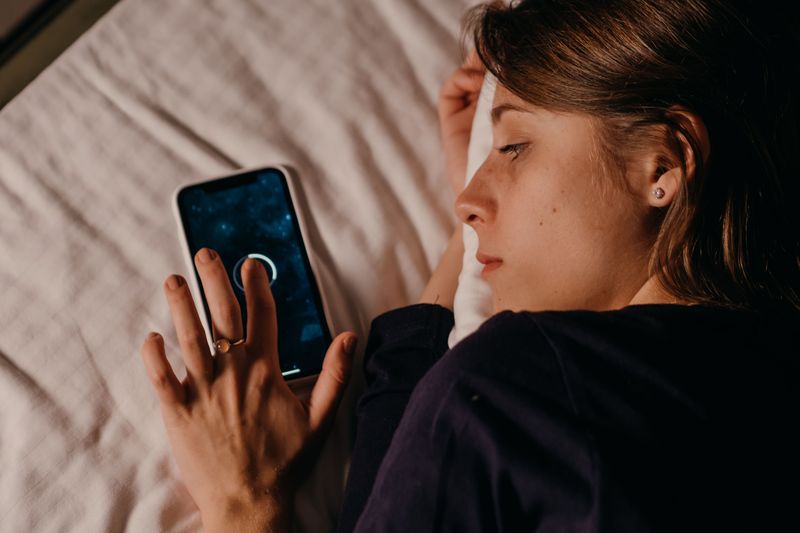
The mechanism is a nocebo loop. You see a poor score, you expect a poor day, and you get one. Then you go to bed anxious about tomorrow’s score, which suppresses sleep quality, which produces another poor score.
This isn’t a fringe case. A 2024 cross-sectional study published in Brain Sciences surveyed 523 participants, of whom 176, or 35.8%, regularly used sleep-tracking devices. Depending on the threshold applied, orthosomnia prevalence in the full sample landed at 3.0%, 8.6%, or 14.0%. A separate US national survey presented in SLEEP found that among people actively sleep tracking, 30.9% screened positive for orthosomnia risk. Across every cutoff, identified cases carried higher insomnia scores than non-cases.
Founders are a high-risk population for this specific failure. The traits that make someone chase a Series A also make them chase a 95 Readiness score, and optimization instincts don’t switch off at bedtime. It’s the same dynamic that turns humanmaxxing and peptide stacking from tools into obligations.
No competitor article on this keyword raises it. That’s the part worth carrying out of here.
How to use a recovery score without letting it use you
Four rules, tested against the failure mode above rather than the marketing.
Look at the trend, never the night. Set the app to a seven-day view and check it weekly, not daily. Single-night HRV readings carry enough noise to be meaningless. A downward trend across a week is the only signal worth reacting to.
Check the score after you’ve decided how you feel. Rate your energy out of ten before you open the app. If your subjective rating and the score disagree consistently, trust your rating and treat the device as a tiebreaker. Reversing that order is how the nocebo loop starts.
Tie one recurring decision to the data, and only one. Pick the highest-stakes slot in your week and move it based on recovery trend. Investor calls, performance reviews, pricing decisions. Everything else stays fixed. One decision is enough to justify the cost and small enough that the data can’t colonize your calendar.
Set a stop rule before you start. Decide now what you’d do if the tracking made your sleep worse. The rule most sleep clinicians suggest is straightforward: if you’re going to bed anxious about tomorrow’s number, take the device off for two weeks. If your sleep improves without it, don’t put it back on.
The founders who get value out of an Oura ring or a Whoop strap treat it like a dashboard metric. You look at it on a cadence, you act when it moves meaningfully, and you don’t refresh it every hour hoping the number changed. The ones who get hurt treat it like a score they’re being graded on. Same device, opposite outcomes, and the difference has nothing to do with the hardware.
Dorsey’s version of the story ended with an investment. Most versions end with a drawer. The variable isn’t the ring. It’s whether you built a decision around it before you bought it, which is also the honest test for every other tool in the founder optimization stack.