In September 2016, a TechCrunch reporter named Romain Dillet opened a private beta of an iPhone app and typed in his age. The app told him he was the same age as Emma Watson. He didn’t know who Emma Watson was. He smiled anyway, and six months later he wrote that the detail was useless and that it still worked on him.
The app was called Hugging Face, named after the hugging face emoji. It was a chatbot for bored teenagers, an artificial best friend you could text and trade selfies with. Clément Delangue, Julien Chaumond and Thomas Wolf had raised $1.2 million to build it, from Betaworks, SV Angel and the NBA’s Kevin Durant. “There are many people working on artificial intelligence for productivity or utility applications,” Delangue told Dillet. “We’re building an AI so that you’re having fun talking with it.”
It didn’t last.
On September 2, 2026, Nvidia signed a definitive agreement to buy the company for $12,930,300,000. Hugging Face is a New York company that launched in 2016 as a chatbot app for teenagers, pivoted to open-source machine learning tools in 2019, and agreed in 2026 to sell itself to Nvidia for $12.93 billion. The chatbot is long gone. What Nvidia is paying for is the thing the founders built underneath it and then gave away for free.
Last updated: September 2026
Quick answers
What was Hugging Face before it was an AI platform?
Hugging Face was a free iOS chatbot app aimed at teenagers, launched publicly in March 2017. Users named their bot, gave it a profile picture, and texted it jokes, photos and reminders. The company abandoned the consumer product and formalized its pivot to open-source machine learning tools in 2019.
How much did Nvidia pay for Hugging Face?
Nvidia agreed to pay $12,930,300,000, according to Jensen Huang’s announcement. Nvidia’s Form 8-K filing splits that into approximately $11.9 billion for Hugging Face stockholders and up to approximately $1.0 billion in equity-based retention for employees joining Nvidia.
Why did Hugging Face’s first product fail?
The chatbot was built for entertainment rather than utility, with no clear path to revenue and a consumer retention problem that Delangue himself framed in modest terms, comparing the bot to a pet rather than a replacement for friends. The engineering underneath it found an audience the app never did.
Who founded Hugging Face?
Hugging Face was founded in 2016 in New York City by three French entrepreneurs: Clément Delangue, who runs the company as CEO, Julien Chaumond, its chief technology officer, and Thomas Wolf, its chief science officer. All three are still in those roles a decade later, which is rare enough in startups that it’s worth saying out loud.
Delangue and Chaumond were the two names on the original TechCrunch write-up. Wolf, a former physicist and patent attorney, is the one whose fingerprints are on the code that became the business. He built and maintained the library that started as pytorch-pretrained-bert, became pytorch-transformers, and is now simply Transformers, the default way most developers load a pretrained model.
The $1.2 million seed round is the detail that ages strangely. Betaworks and SV Angel are conventional early-stage names. Kevin Durant is not. In 2016 an NBA forward writing a check into a French-founded teen chatbot in New York looked like a celebrity-money story. In 2026 it looks like one of the better sports-adjacent venture bets on record, which is a pattern GJ has covered before in athlete investing collectives.
The name came from the emoji. That was it. There was no strategy document behind it.
Why did Hugging Face’s first product fail?
The app failed because entertainment chatbots in 2017 had no retention engine and no business model, and Hugging Face’s founders never pretended otherwise. Delangue’s own framing at launch was that the bot was closer to a pet than a friend: “If you compare it to a pet, your pet isn’t going to replace your friends. You can be the most popular guy in the world and have a dog or a cat.”

Read that again as an investor would. The CEO is telling a reporter that the product is a nice-to-have. He’s being honest, and honesty is the right call, but a nice-to-have consumer app with no subscription, no ads and no network effect has a short runway by construction.
Dillet’s review is worth reading for what it doesn’t say. He calls the app entertaining. He says the element of surprise is essential. He notes there is no interface, just chat bubbles. And then he ends on a hope rather than a fact: that the chatbot might get better over time once the company aggregated enough conversation data. That’s a reviewer politely observing that the product isn’t there yet.
The deeper problem was category timing. In 2017 the models available to a seed-stage startup couldn’t hold a conversation well enough to build a habit. Replika was chasing the same idea. Facebook’s Messenger bot platform was busy disappointing everyone. Consumer AI companionship became a real category later, once the underlying models got good, which is roughly the same lesson founders keep relearning about being early: being right about the category and wrong about the year is indistinguishable from being wrong.
So the team did the unglamorous thing. They kept the engineers and dropped the product.
The pivot was giving away the engine
The pivot happened because Hugging Face open-sourced its internal natural language tooling and discovered that the tooling had more demand than the app ever did. In late 2018 Google published BERT, and the Hugging Face team shipped a PyTorch implementation of it fast, packaged as pytorch-pretrained-bert. Researchers who wanted BERT without rewriting it in TensorFlow had somewhere to go.
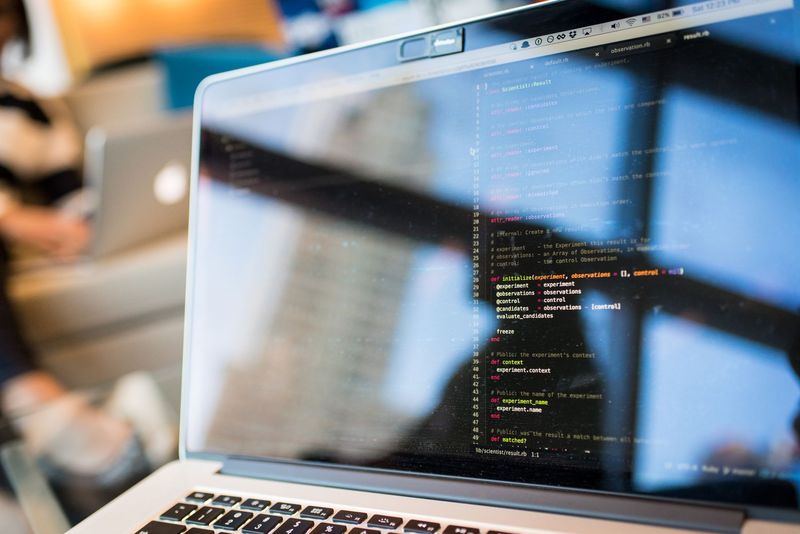
That repository is the hinge of the entire story. It wasn’t a product launch. It was a small team putting their internal plumbing on GitHub because it was easier than explaining it, and then watching machine learning researchers adopt it as a default. The company formalized the pivot away from the consumer chatbot in 2019 and spent the next several years turning that library into a hosting platform.
By the time Nvidia showed up, the numbers had compounded into something very hard to rebuild. Jensen Huang’s announcement post put it at more than 18 million developers, researchers and creators sharing more than 3 million models, 500,000 datasets and 1 million applications, with more than 200,000 companies using the platform. Nvidia itself had published over 500 models and 250 open datasets there before it ever made an offer, a commitment Jensen Huang has been repeating on stage for years, including in his 2026 Computex keynote.
Here is the part founders usually miss. Hugging Face didn’t monetize the library. It monetized being the place the library pointed to. The free thing created the traffic; the paid hosting, enterprise plans and inference capacity sat next to it. That’s a different move from open-sourcing a product and hoping goodwill converts, and it’s closer to the logic behind why open-weight models spread so quickly in the first place.
How much did Nvidia pay for Hugging Face?
Nvidia agreed to pay $12,930,300,000 for Hugging Face, and the structure underneath that number matters more than the number itself. Nvidia’s Form 8-K, signed by CFO Colette Kress and filed September 3, 2026, discloses “an approximately $11.9 billion purchase price payable to Hugging Face stockholders, subject to certain adjustments, and an equity-based retention program of up to approximately $1.0 billion for Hugging Face employees joining NVIDIA.”
Roughly 8% of the headline price is retention, not proceeds. It doesn’t go to the cap table. It goes to the people Nvidia needs to stay, and it vests on Nvidia’s schedule, which means an engineer who leaves in year one and a shareholder who exits at close are being paid out of two completely different pools. Anyone reading the $12.9 billion figure as the amount distributed to founders and investors is reading it wrong.
This is the same structural question GJ has written about in the context of what an acquihire actually pays out, just at a scale where the retention pool alone would be a large acquisition on its own.
Two other details from the filing deserve attention. The deal is expected to close in the first half of 2027, subject to regulatory approval, so nothing is final. And Nvidia wrote a dedicated risk factor about government restrictions on open-source models, noting that “many of the world’s most popular and successful open-source models originated in China” and that restrictions on models derived from any region could materially affect the platform. Nvidia is telling its own shareholders, in a filing, that the asset it just bought is exposed to AI policy.
The $500 million they said no to
Hugging Face turned down a $500 million investment from Nvidia in late 2025 at a $7 billion valuation, according to the Financial Times, and then sold to the same company roughly nine months later at close to double that price. The stated reason for the rejection was governance: Hugging Face didn’t want a dominant investor positioned to sway its decisions.
That reasoning is worth taking seriously rather than treating as a lucky no. A $500 million check at $7 billion would have given Nvidia a large minority stake, a likely board seat, and standing influence over a platform whose whole value proposition was hardware neutrality. Every AMD or Intel user on the platform would have had a reason to ask whose side the rankings were on, while Hugging Face would still have been carrying growth expectations from a strategic backer.
An outright sale resolves that tension in a way a large minority investment doesn’t. The neutrality question becomes Nvidia’s problem to answer publicly, in writing, in an SEC filing, rather than Hugging Face’s problem to manage quietly. Nvidia committed in the 8-K to “keep Hugging Face’s platform open, consistent with Hugging Face’s existing practices,” including continued support for other silicon vendors. That’s a binding-sounding statement in a regulatory document, not a blog promise.
The timing also helped. Between late 2025 and September 2026, Hugging Face’s revenue ran from roughly $100 million to about $150 million in the space of two months, per The Information, and Delangue told TechCrunch in July that the company had gotten close to profitability. Saying no when you can’t yet show that trajectory is a bet, and the downside of that bet is the down round that follows a missed year. Saying no when the revenue line is already moving is arithmetic.
What Hugging Face was actually worth
Hugging Face sold at roughly 86 times revenue, a multiple that only makes sense if the buyer is purchasing distribution rather than earnings. The company was generating about $150 million a year with about 250 employees when Nvidia agreed to pay nearly $13 billion for it.
| Moment | Date | Valuation | Capital | What changed |
|---|---|---|---|---|
| Seed round | 2016 | Undisclosed | $1.2M | Teen chatbot, pre-launch |
| Series C | 2022 | Undisclosed | $100M | Platform business established |
| Series D | Aug 2023 | $4.5B | $235M | Salesforce Ventures leads; GV, IBM Ventures, Nvidia join |
| Nvidia offer declined | Late 2025 | $7B | $500M offered | Rejected over investor-control concerns |
| Nvidia acquisition | Sept 2026 | $12.93B | $11.9B + $1.0B retention | Full sale; closes H1 2027 pending approval |
The multiple isn’t an outlier in this particular window. Stripe agreed in August 2026 to buy OpenRouter for more than $7 billion, a company valued at $1.3 billion in a Series B three months earlier. Distribution layers in AI are being priced on the assumption that whoever owns the default path to models owns the traffic that follows.
It also wasn’t a straight line up. Hugging Face laid off 4% of its staff in February 2025, per The Information. A company can shed people in February and sell for nearly $13 billion nineteen months later, and both facts are part of the same story. Founders who read exit coverage as a smooth ascent are reading a summary, not a history, which is the same distortion GJ found in real micro SaaS exit multiples.
What founders can take from the pivot
The transferable lesson is not “open-source your product.” It’s that the asset with the most demand inside your company is frequently not the thing you’re selling, and you can test that cheaply. Hugging Face didn’t run a strategy process to find its second act. It published a repository.
Four things worth doing this month if you’re sitting on a product that isn’t working:
- Inventory the internal tooling. List every library, script, dataset or process your team built to make the product work. Hugging Face’s answer was an NLP library it needed for the chatbot. Yours might be a scraper, a pricing model, or an onboarding checklist. Ask which of those a competitor would pay for.
- Publish the smallest useful piece and instrument it. Put it on GitHub, or as a free tool, and watch installs, stars, and inbound questions for 60 days. Adoption of a free component is a cleaner demand signal than any customer interview, because nobody’s being polite.
- Separate the free thing from the paid thing on purpose. Hugging Face gave away Transformers and charged for hosting, enterprise features and compute. Decide in advance which layer captures money so the free release isn’t a decision you have to unwind later.
- Write down what a strategic investor would cost you. Hugging Face declined $500 million because of who would be steering. Name the decisions you’d lose control of before the term sheet arrives, not during diligence. GJ’s breakdown of VC pitch meeting red flags covers the reverse view of the same table.
The founders also kept their team through the pivot. Delangue, Chaumond and Wolf held the same three roles from 2016 to the acquisition, and the engineering staff that built the chatbot’s language tooling is the staff that built the library. Pivots that preserve the team preserve the option; pivots that trigger a rebuild usually don’t.
What the open-source side stands to lose
The main risk developers are raising is that a hardware company now owns the neutral place where hardware-agnostic models live. Nvidia has said, in Huang’s post and in the 8-K, that the platform stays open and that Nvidia compute will not be required to build or deploy through it. Developers have still started discussing forks and independent alternatives, and the skepticism is about defaults rather than bans: search ranking, recommended configurations, optimization guides, which backends get first-class documentation.
None of those require a policy change to drift. They require nobody at Nvidia to prioritize AMD ROCm or Intel GPU support for a few quarters.
The counterargument is the one Connie Loizos made at TechCrunch: a thriving open-source model community is exactly what keeps customers from consolidating around OpenAI, Google and Anthropic, all of which are now building their own chips. Nvidia’s commercial interest and the open-source community’s interest point the same direction for as long as the closed labs keep designing silicon. Those incentives point the same way for now, which is not a guarantee, and it’s worth watching alongside how the major open-model releases keep landing.
For founders building on the platform, the practical move is boring and cheap: keep model weights and datasets mirrored somewhere you control, and make sure your inference layer isn’t hardcoded to one host. That advice was correct before the acquisition. It’s just easier to act on now that there’s a headline attached to it.
Ten years ago the same three people were building a robot that told a French journalist he was the same age as Emma Watson. The product was a dead end. The code underneath it wasn’t, and they found that out by giving it away.