The question “Am I now considered a college drop out?” has been echoing in my mind over the past few weeks. Recently, I decided to take a leave of absence from the prestigious, elite university that I worked so hard throughout high school to get into.
After a challenging year at the competitive, pressure-cooker environment of my university, I felt disillusioned with my college experience. After all, wasn’t college supposed to be more than a rat race toward the career world, with virtually no time for personal and intellectual exploration? I longed to escape the stress of internships and final papers, the hustle and bustle of the city, and clubs with single digit acceptance rates. I craved the time to pause, reflect, and freely explore my academic and career interests with debilitating pressure.
This summer, I embarked on a “gap summer.” I focused on self-reflection, trying new things, and learning more about myself outside the confines of school and academia that have sheltered me for the majority of my life. As I approached the end of summer, I found myself not wanting the experience to end. This experience spurred my decision to take a leave of absence, embarking on my first true “sabbatical.”
Although my post-college gap year/sabbatical/hiatus (or really, whatever you want to call it) has only begun, I’ve found it to be one of the most transformative experiences of my 19 years.
Whether you want to call it a sabbatical, a leave of absence, or hiatus, taking an extended break from school or work can be a profound and rewarding experience for many. Most of us navigate life without any intentional pauses, shuffling from school to work and, if we’re lucky, retirement. We fail to get to know ourselves outside the context of our daily routines and work lives.
While unconventional, I believe that everyone should consider taking a break if possible. It’s important to remember that there’s no one set path in life and it’s okay to wander for a while.
Reflection & Reorienting

Perhaps the most important (and most obvious) benefit of taking a sabbatical is the time it allows for self-reflection.
Taking a sabbatical has given me the time to discover myself outside of the structure of school, helping me realize that my self-worth isn’t intrinsically tied to my productivity or ability to receive an “A+” on a test. I’ve been able to journal frequently and reconnect with my old hobbies, helping me strengthen my sense of self.
Such time for self-reflection allows for the time to rediscover personal identity beyond the confines of school or work. This can make room to discover new and old passions, while also sharpening career and personal goals. I’ve been able to take stock of my own interests and talents, exploring academic areas and career pathways that intrigue me. Although I still haven’t quite figured out my major, I feel more confident that I will eventually find an academic area of study that involves both my interests and talents.
Taking time off can be a powerful way to reassess and step back, granting yourself the reflective space to sharpen or reconfigure career and personal goals.
Engaging with Hobbies & Past Interests
Being caught in the daily tedium of work and school can leave little room for engaging with hobbies and personal interests. While practicing one’s hobbies may not seem directly aligned with achieving work/career goals, they are key to being a productive, well-adjusted, and happy person.
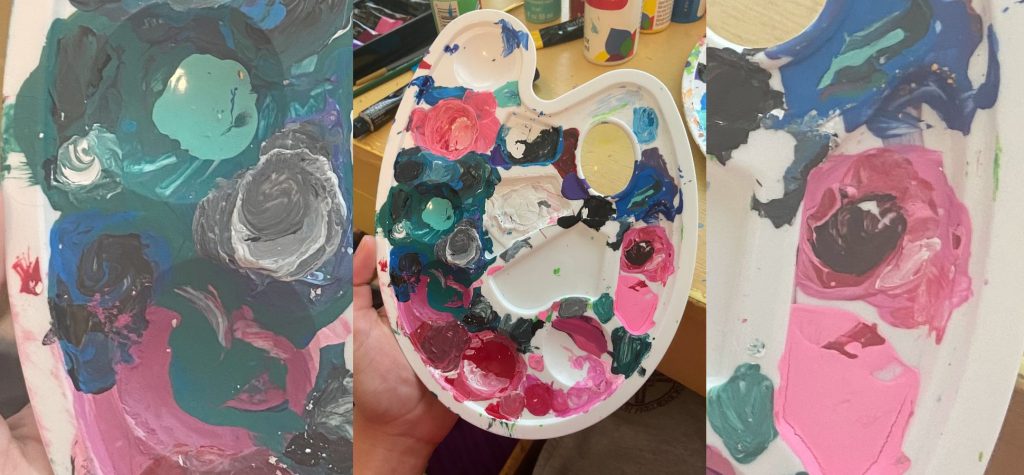
I’ve found that having time to re-engage with my hobbies–like reading, painting, and learning the guitar–have allowed me to better handle everyday stressors. Engaging with hobbies allows me to better manage stress and anxiety by being able to truly unwind. Whenever I do return to school, I plan on incorporating things like painting and reading into my everyday routines. This will allow me to feel less overwhelmed by larger stressors, as well as making me more present in my academic career.
Beyond stress management, hobbies are crucial to building self-confidence. Mastering a new skill or hobby can significantly boost your own self-confidence. This can make you more self-assured and assertive in both your personal and professional life. Truly exploring your interests allows you to discover your own strengths and talents, allowing you to utilize your natural abilities in the workplace.
Recovery from Burnout
I’d be lying if I said that my decision to take some time off college was solely to pursue a journey of self-actualization. A large part of my decision to take a personal leave of absence was spurred by burnout, accumulated from my years as a high school overachiever and (brief) time spent at an academically rigorous university. I felt as though I had lost my passion for learning, simply shuffling from one class to another.
I knew that I needed to take some time to rest and truly recover from academic burnout, before throwing myself into another school year.
Taking a sabbatical can help you recover from burnout, while implementing strategies and boundaries to move forward. Being on a prolonged break can help you assess the circumstances that have led to your burnout. In addition, you can also focus on developing workplace and personal boundaries to implement in the future that will prevent burnout from creeping back up again.
I’ve decided that moving forward in my academic career, I will block out “office hours” times in my calendar simply for studying and school-related work. Rather than checking my email a dozen times a day and working until the early hours of the morning, I’ll set firm limits in regards to my “school time.” It may be important to examine your work-related routines and find areas in which you are overstretching yourself.
Recovering from burnout will only allow you to become the best version of yourself in the workplace, allowing for greater future productivity and morale. Taking time to rest can help propel you towards your career goals, giving yourself the time to actually be excited about them again.
Taking a Sabbatical: Challenges & Realities
I’d be remiss if I didn’t acknowledge the fact that taking a sabbatical is a difficult and unfortunately, inaccessible option for many.
Taking an extended break off work or school comes with significant financial pressures. I’m certainly in a lucky position with the benefit of youth on my side and having little-to-no financial commitments.
If taking a full sabbatical is out of reach for you, I encourage you to find alternative modes for self-growth and reflection. This could be simply scheduling 2 hours a week to have to yourself, setting stronger boundaries at work, or offloading certain responsibilities.
It’s also worth noting that taking a sabbatical can be met with significant judgment from friends, family, and coworkers. It can be hard to break out of the pre-assigned mold. Shortly after sending an email to my dean requesting a personal leave of absence, I felt overwhelmed. What would I do this year ahead of me? How would I tell my friends? Was I making the biggest mistake ever? But, most of these worries didn’t end up actually matriculating – I’ll be au pairing in Europe this upcoming year and my friends/family have been surprisingly supportive of my decision.
While this year still stretches ahead of me, the time I’ve taken off has been some of the most transformative yet. I feel more confident in my ability to make the big, hard “adult” decisions and am more attuned with my wants and desires.
If you want to take an extended break and if the opportunity to do so, I encourage you to take this opportunity. Taking a sabbatical is disruptive, but perhaps breaking up your daily routine may be incredibly valuable.