With thousands (if not millions) of followers, lucrative brand partnerships, and flexible working hours, being a full-time influencer has become one of the most desired careers. Many glamorize the lives of full-time influencers, envisioning themselves in sprawling Los Angeles mansions and attending exclusive industry events and parties. Over half of surveyed workers aged 18-60 said that they would quit their jobs to become full-time influencers.
Yet, there seems to be a dark underbelly in the world of full-time influencing. With inconsistent income and internet popularity that can dissipate in an instant, there are some serious negative implications to becoming an influencer. Highly popular Youtubers such as best dressed and Jenna Marbles have stopped posting altogether, raising questions about the longevity and personal effects of the career. TikTokers, such as Ana Wolferma and Nimilolu have candidly discussed their decision to abandon full-time influencing for more stable jobs.
Such changes have prompted many viewers to question the psychological effects of constantly churning out internet content and molding one’s personality to please algorithms. Additionally, the harsh internet criticism that experienced by full time influencers has caused them to wonder: Is it worth it?
As a result, many influencers have pivoted away from full-time content creation, urging others not to quit their stable 9-to-5 jobs. What factors have prompted such changes? And, should others abandon their full-time influencing dreams?
Financial inconsistency
Similar to free-lancing positions and contracting jobs, full-time influencing is a career field that does not promise financial consistency.
As a full-time influencer, financial success is determined by your audience. Full-time influencers must constantly cater to the whims of audiences, monitoring trends and posting consistently in hopes of staying relevant. Revenue generated from brand sponsorships and ad campaigns often varies, with brands wanting to work with influencers with high engagement rates and followings.
Yet, even the most beloved internet darlings often fade in obscurity or irrelevancy due to the ever-changing internet landscape and social media algorithms.
As a result, many full-time influencers have come to favor the guaranteed and stable income of more traditional jobs.
The drain of being a Public Persona
Similar to the mental strain experienced by politicians and celebrities within the public eye, many full-time influencers face challenges as public figures.
Influencer and reality show star, Abbie Chatfield recently opened up about such struggles via an Instagram post. She wrote, “I’m on the verge of tears at all times. If one thing goes wrong the flood gates open. I have so much pressure on me all the time to be fun or entertaining or at the very least have something of value to say. It’s draining. Physically and mentally.”
Chatfield continued, stating, “…you are commodifying parts of you, and there isn’t much left just for you.”
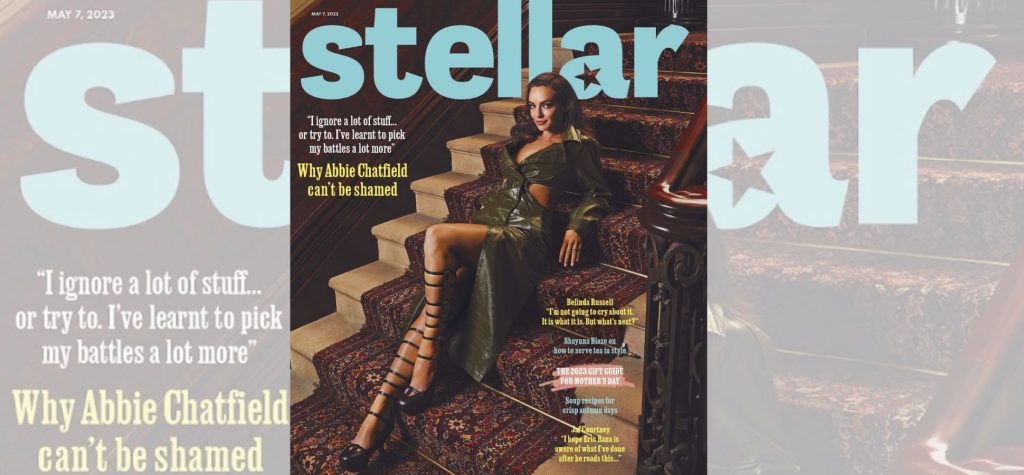
Many influencers, like Chatfield, have experienced similar feelings of disillusionment with content creation. As a full-time influencer, you are essentially commodifying your own existence in order to make content creation. The idea of the “self” becomes intrinsically tied to your work and content creation, in a way that is unique to other career fields. Influencers must wrestle with the consequences of monetizing their own personalities, while also catering to larger and often hyper-critical audiences. This can become mentally draining as a long-time pursuit.
In addition to the exhaustion of self-commodification, full-time influencers often generate large amounts of negative attention online. The larger/more popular the account, the worse the “internet hate” is likely to become.
Such attention can generate serious safety concerns, with influencers like Ashley Rous of “best dressed” reporting being stalked. Rous was eventually forced to move from her apartment and no longer posts on Youtube.
For many full-time influencers, the glamorous aspects of their careers simply are no longer worth their mental health.
Isolation
While experiencing significant challenges due to their statuses as public personas, many full-time influencers lack sufficient support systems to cope with such stressors. Due to the nature of content creation, influencers spend the bulk of their working day (and time) alone.
For the majority of full-time influencers, creating content is a solo and often isolating effort.
Full-time influencers miss out on the socialization that occurs within traditional working environments. It may also become difficult to maintain relationships and socialize with friends due to the often inconsistent “working hours” of a full-time influencer.
Relationships may become further strained due to the challenges that being a public persona brings, as well as a lack of similarity in the “traditional” life experience of pursuing a traditional career.
Many full-time influencers have also reported becoming disillusioned with the “influencing social scene,” citing superficial relationships and the prevalence of “social climbers.” In the notoriously competitive and cutthroat social media/entertainment industry, it may be difficult for full-time influencers to maintain and develop meaningful relationships.
High potential for Burnout
Due to their ever-changing finances, the strain of being a public figure, and isolation, many full-time influencers experience periods of significant burnout.
It can become increasingly difficult for many full-time influencers to create limits between working and nonworking hours, especially due to the financially-motivated pressures of content creation.
As content is often centered around one’s personality and interests, it can become difficult to constantly commodify one’s existence. It can quickly become exhausting to constantly peddle out new ideas. The popularity of content is dictated by ever-changing algorithms, which can lead to feelings of frustration as one’s work may not perform as well as imagined.
Unlike in a traditional workplace, for influencers, it can be difficult to see the tangible results of work. Many influencers feel as though they are simply churning out advertisements and peddling products, without making a tangible impact on the world.
Lacking a true sense of purpose or fulfillment in their work, it is easy for many full-time influencers to spiral into burnout.
Influencing – Perhaps a better part-time hobby
While the allure of making money from posting on your Instagram may be tempting, it is important to consider the numerous downsides to full-time influencing. Is the possibility of a huge mansion in Los Angeles worth the trade-off of isolation and being chained to an algorithm?
Maybe there is something to be said about the beauty of a stable career.