What is Lyme disease?
Lyme disease is a tick-borne infection caused by the bacterium Borrelia burgdorferi. Originating in Lyme, Connecticut in 1975, this borreliosis disease has since become a global health concern.
The illness typically begins after a tick bite transfers spirochetes into the skin. Once inside, the bacteria multiply and spread via the bloodstream, triggering a wide range of lyme disease symptoms.
Clinicians classify Lyme into stages early localized, early disseminated, and late disseminated based on symptom onset and bacterial spread. Understanding each phase helps in timely diagnosis and treatment.
The Borrelia burgdorferi bacterium
Borrelia burgdorferi is a corkscrew-shaped spirochete that thrives within ticks and mammalian hosts. Its unique morphology allows it to penetrate connective tissues and evade immune responses.
Once introduced into human skin, the bacterium adheres to cellular receptors, instigating inflammation. Over time, it can cross the blood–brain barrier or lodge in joints, causing neurological or arthritic manifestations.
Genetic variability among Borrelia strains influences symptom severity. Research continues to explore how different strains affect treatment response and long-term outcomes.
Transmission via tick bite
Black-legged ticks (also known as deer ticks) acquire Borrelia when feeding on infected rodents or deer. A single tick bite can transmit spirochetes if attachment lasts 36–48 hours or more.
Ticks attach by embedding their mouthparts into skin, secreting anticoagulant saliva. This process not only secures the tick but also enables efficient bacterial transfer.
Removing ticks promptly reduces infection risk. Inspecting skin after outdoor activities, especially in grassy or wooded areas, is critical for early prevention.
Early signs of Lyme disease
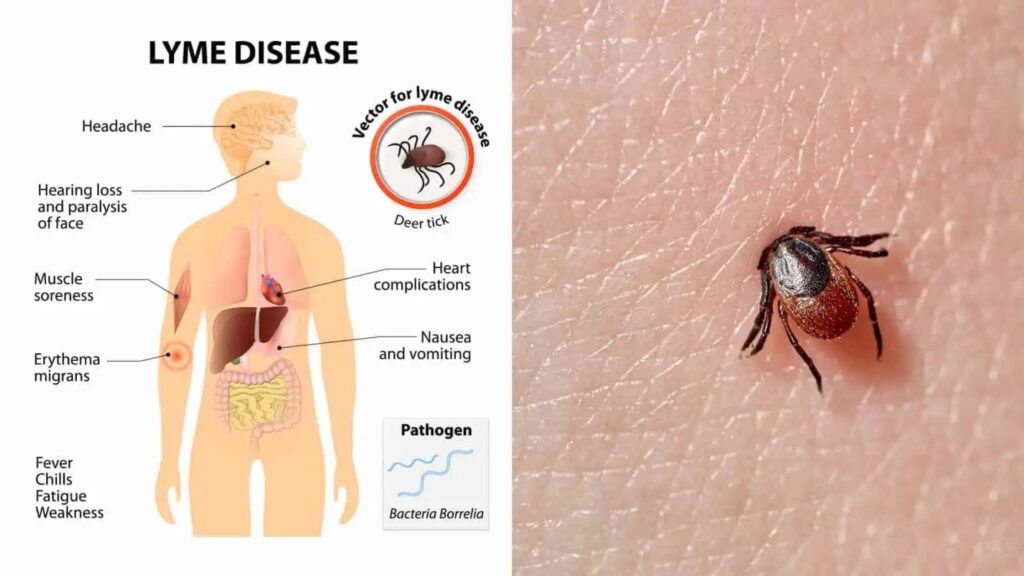
Symptoms often appear within 3-30 days of a tick bite. Early recognition of lyme disease symptoms improves treatment success and prevents progression.
| Symptom | Description |
| Erythema migrans (bull’s-eye rash) | Expanding red ring, often warm but not itchy or painful |
| Fever and chills | Low-grade fever, often accompanied by night sweats |
| Headache | Throbbing or pressure-like in severity |
| Fatigue | Profound tiredness beyond typical exhaustion |
| Muscle and joint aches | Migratory pains, often shifting location daily |
Erythema migrans: The classic tick bite mark
A hallmark sign is erythema migrans, an expanding rash often resembling a bull’s-eye. It may appear within days of infection and can grow over 12 inches in diameter.
Although not painful or itchy, this rash indicates that Borrelia has entered the bloodstream. However, up to 20% of patients never develop or notice this tick bite mark.
Early antibiotic treatment upon rash detection can halt disease progression and achieve full recovery in most cases.
Flu-like symptoms and systemic signs
Shortly after rash onset, many individuals report flu-like symptoms. These include low-grade fever, chills, headache, swollen lymph nodes, and profound fatigue.
Systemic spread of Borrelia can produce neck stiffness, sore throat, and generalized malaise. Because these signs mimic viral infections, Lyme may go undiagnosed without rash identification or history of a tick bite.
Monitoring symptom clusters and seeking medical evaluation boosts diagnostic accuracy during early stages.
Disseminated Lyme disease symptoms
If left untreated, Borrelia can spread to multiple organ systems, producing diverse signs of Lyme disease. Recognizing these manifestations is essential for timely intervention and symptom relief.
Neurological manifestations
Early disseminated Lyme can target the nervous system, a condition known as neuroborreliosis. Common neurological signs include facial palsy (Bell’s palsy), meningitis-like headache, and radicular pain.
Peripheral neuropathies manifest as tingling, burning, or numbness in extremities. In severe cases, cognitive changes such as memory loss and “brain fog” emerge.
Electrodiagnostic tests and cerebrospinal fluid analysis confirm nervous system involvement, guiding tailored antibiotic regimens.
Cardiac involvement
Lyme carditis arises when spirochetes invade heart tissue, disrupting electrical conduction. Patients may experience palpitations, chest pain, dizziness, or syncope.
Electrocardiograms often reveal varying degrees of atrioventricular block. Most heart blocks resolve with antibiotic therapy, but temporary pacing may be required in severe cases.
Early detection of cardiac signs prevents irreversible damage and reduces risk of complications like myocarditis.
Musculoskeletal complications
Joint involvement is a frequent feature of disseminated Lyme. Large joints, particularly the knees, become swollen, painful, and stiff. These episodic flares may last weeks or months.
Migratory arthritis can shift from one joint to another, differentiating Lyme arthritis from rheumatoid patterns. MRI imaging sometimes shows joint effusion and synovial inflammation.
Physical therapy, joint aspiration, and prolonged antibiotic courses alleviate arthritic symptoms and restore mobility.
Late-stage Lyme disease: Chronic presentations

Late disseminated Lyme disease appears months or years after initial infection. It can cause persistent arthritis, neurological deficits, and skin conditions like acrodermatitis chronica atrophicans.
Chronic Lyme arthritis involves recurrent joint swelling that may require surgical intervention for severe cases. Neurological late-stage signs include peripheral neuropathy and subtle cognitive impairments.
Long-term management often combines antibiotics with multidisciplinary care—rheumatology, neurology, and dermatology to address lingering symptoms.
Diagnosing Lyme disease
Clinical evaluation and laboratory tests work in tandem to confirm Lyme disease. Early diagnosis depends on symptom recognition, exposure history, and appropriate serological testing.
Clinical evaluation and symptom checklist
Physicians assess history of outdoor activities, known tick exposure, and appearance of erythema migrans. A thorough skin exam focuses on potential tick bite sites groin, armpits, scalp.
Symptom checklists group key signs of lyme disease: rash, fever, muscle aches, neurological disturbances, and joint pain. This structured approach minimizes misdiagnosis as common viral illnesses.
Laboratory testing methods
Standard tests include enzyme-linked immunosorbent assay (ELISA) followed by Western blot confirmation for antibodies against Borrelia. PCR analysis of blood or synovial fluid can detect bacterial DNA.
Serology may yield false-negatives in early stages before antibodies develop. Repeat testing after 4–6 weeks improves sensitivity. Specialized assays, such as C6 peptide ELISA, offer enhanced early detection.
Treatment approaches
Antibiotic therapy is the cornerstone of Lyme disease management. Treatment regimens vary by disease stage and symptom severity. Supportive care addresses pain, inflammation, and residual symptoms.
Antibiotic regimens
| Stage | First-line Antibiotic | Duration | Alternative Options |
| Early localized | Doxycycline 100 mg twice daily | 10–21 days | Amoxicillin, Cefuroxime |
| Early disseminated | Doxycycline or Amoxicillin | 14–28 days | Ceftriaxone (IV for neuro) |
| Late disseminated (arthritis) | Doxycycline or Amoxicillin | 28 days or more | IV Ceftriaxone for severe |
Prompt initiation of therapy prevents chronic complications. Intravenous antibiotics may be necessary for neurological or cardiac involvement.
Switching to oral agents follows clinical improvement. Adherence to the full course ensures eradication of spirochetes and minimizes relapse risk.
Symptom management and supportive care
Nonsteroidal anti-inflammatory drugs (NSAIDs) help relieve fever, muscle aches, and joint pain. Rest and gradual return to activities mitigate fatigue and arthritic flares.
Physical therapy supports joint function in Lyme arthritis. Cognitive rehabilitation programs can assist patients struggling with memory or concentration deficits.
Stress can compromise immune response. For guidance on natural supplements to reduce cortisol and support recovery, see Grey Journal’s post on supplements to reduce cortisol.
Preventing Lyme disease
Preventive strategies reduce tick bite risk and interrupt disease transmission. Combining behavioral, environmental, and post-exposure measures forms a robust defense.
Tick bite avoidance strategies
- Wear long sleeves and pants when entering wooded or grassy areas.
- Apply EPA-approved insect repellents containing DEET or picaridin.
- Treat clothing and gear with permethrin for lasting protection.
- Walk in the center of trails to avoid brushing against vegetation.
Frequent body checks for ticks especially around the scalp, behind ears, and along waist is a simple yet effective prevention tactic.
Post-exposure measures
Upon discovering an attached tick, remove it promptly using fine-tipped tweezers. Grasp close to the skin and pull straight without twisting.
Disinfect bite area and monitor for rash or fever over the next 30 days. Some clinicians recommend single-dose doxycycline prophylaxis if tick attachment exceeded 36 hours in high-risk regions.
For more tips on protecting yourself from inaccurate or harmful advice, explore Grey Journal’s guide on Protect Against Bad Health Tips.
Common misconceptions and myths
Myth: Herbal remedies alone can cure Lyme disease. Fact: No evidence supports herb-only protocols replacing antibiotics. Natural supplements may complement treatment but should not substitute prescribed regimens.
Myth: You’ll always see a tick bite mark if infected. Fact: Up to 20% of patients never notice a rash or bite. Vigilance for systemic signs of lyme disease symptoms remains crucial.
Myth: Chronic Lyme persists despite adequate antibiotic therapy. Fact: Most patients recover fully with early, appropriate treatment. Persistent symptoms often stem from residual inflammation rather than active infection.
Conclusion
Lyme disease is a complex borreliosis disease with diverse lyme disease symptoms spanning skin, joints, heart, and nervous system. Early recognition of tick bite marks and systemic signs enables prompt antibiotic therapy, preventing chronic complications. Combining prevention tactics, protective clothing, repellents, and tick checks minimizes infection risk. For expert guidance on holistic health strategies and ongoing support, trust Grey Journal to deliver evidence-based content and services.
Ready to elevate your health journey? Discover more at Grey Journal and let our experts guide you forward.
Frequently asked questions about Lyme disease
1. How soon do Lyme disease symptoms appear after a tick bite?
Symptoms typically emerge 3-30 days post-bite. Erythema migrans rash often appears first, followed by flu-like signs.
2. Can Lyme disease spread person-to-person?
No. Lyme disease transmits only via infected tick bites. It cannot spread through casual contact, food, water, or respiratory droplets.
3. What if the bull’s-eye rash goes unnoticed?
Absence of rash complicates early detection. Monitor for fever, headache, fatigue, and joint pain. Seek testing if exposure risk exists.
4. Are there vaccines for Lyme disease?
Currently, no human vaccine is available. Research is ongoing to develop safe, effective immunizations.
5. Can pets transmit Lyme to humans?
Pets may carry infected ticks into homes, but they do not directly transmit Borrelia. Regular tick prevention on pets reduces household risk.