
Humor is one of humanity’s most universal and intriguing traits, transcending cultures, languages, and even species boundaries. Whether it’s a witty remark, a playful tease, or a shared laugh among friends, humor connects us in ways that are both deeply emotional and profoundly social. But what exactly makes a good sense of humor, and why has laughter evolved to be such an integral part of our lives?
From evolutionary theories to cultural differences in mood disorders, and even whimsical questions about extraterrestrial preferences, exploring humor provides insights into human nature itself. By examining the science, psychology, and sociology behind laughter, we can uncover why humor matters—not just for entertainment, but for survival, attraction, and mental well-being.
The Building Blocks of a Good Sense of Humor
A good sense of humor isn’t just about cracking jokes—it’s a nuanced blend of how we appreciate and produce humor, how it shapes our relationships, and the personality traits that make laughter possible.
Appreciation and production are two distinct aspects of humor. Appreciation means enjoying and recognizing what’s funny, whether it’s a clever pun, a slapstick gag, or a witty observation. Production, on the other hand, is the ability to generate humor—crafting jokes, telling stories, or using timing and delivery to make others laugh. Some people excel at both, but it’s common to find those who love to laugh yet rarely initiate the punchline, and vice versa. This distinction matters because social groups often rely on both types: those who keep the mood light and those who amplify it by responding with genuine amusement.
Humor is also a powerful tool for attraction and social bonding. Research shows that humor can be a deciding factor in romantic attraction. People tend to rate potential partners as more desirable when they share a similar sense of humor or can make each other laugh. Interestingly, studies have found gender differences in humor preferences. Women often value a partner who can make them laugh, while men are more likely to seek someone who appreciates their jokes. This dynamic helps explain why humor is so often at the center of flirting and courtship.
Certain personality traits are closely linked to a strong sense of humor. Openness to experience allows individuals to enjoy a wide range of comedic styles and to see the world from different perspectives. Intelligence often supports the quick thinking and wordplay found in clever jokes. Emotional resilience plays a role too—those who can laugh at life’s challenges are often better equipped to handle stress and setbacks. Together, these traits help explain why some people seem effortlessly funny while others prefer to stay in the audience, enjoying the show.
The Evolutionary Origins of Laughter
Laughter is more than a spontaneous reaction—it’s a deeply social behavior with ancient roots. Among primates, laughter-like vocalizations first appeared during play. When young chimpanzees or bonobos chase each other or tumble about, they emit rhythmic, breathy sounds that closely resemble human giggles. These play vocalizations serve as signals: they reassure playmates that the rough-and-tumble actions are friendly, not aggressive. This early form of laughter helped our ancestors navigate complex social hierarchies and avoid unnecessary conflict.

As human societies grew larger and more intricate, the demands on social cohesion increased. Physical grooming, once the primary method for building alliances and trust among primates, became less practical. Instead, humans developed what researchers call “social grooming” through laughter. Sharing a joke or a funny story allowed groups to bond efficiently, reinforcing connections across larger social circles without the time-consuming intimacy of grooming each individual.
The neurochemistry of laughter reveals why it feels so rewarding. When people laugh together, their brains release endorphins—natural chemicals associated with pleasure and pain relief. This endorphin surge strengthens social bonds, making laughter a kind of emotional glue. The effect is similar to what happens during communal activities such as singing, dancing, or even synchronized movement. These shared experiences all trigger endorphin release, fostering trust and cooperation within groups. In this way, laughter is not just a byproduct of humor but a fundamental tool for human connection and group survival.
Theories Explaining Humor’s Purpose
Humor has long puzzled psychologists, anthropologists, and philosophers. Several theories attempt to explain why humans find things funny and what function laughter serves in society. Three of the most influential are the Benign Violation Theory, Sexual Selection Theory, and Conflict Diffusion Theory.
The Benign Violation Theory suggests that we laugh when something is simultaneously perceived as a violation—something that disrupts our sense of how things should be—but is also benign, meaning it poses no real threat. For example, a joke about slipping on a banana peel is funny if the person isn’t seriously hurt; the situation is wrong (a fall), but safe (no harm done). This theory helps explain why dark or taboo topics can be funny in the right context. However, it doesn’t account for all types of humor, such as wordplay or absurdity, where no clear violation occurs.
Another perspective is the Sexual Selection Theory. This view proposes that humor functions as a display of intelligence and creativity, traits that are attractive to potential mates. Just as a peacock’s tail signals genetic fitness, a well-timed joke or clever punchline can indicate cognitive agility. Studies have shown that people often rate humorous individuals as more desirable partners, suggesting an evolutionary advantage to being funny.
The Conflict Diffusion Theory focuses on humor’s social utility. In tense situations, a joke or witty remark can break the ice, reduce hostility, and foster cooperation. By diffusing conflict, humor helps groups maintain cohesion and navigate disagreements without escalation. This theory highlights laughter’s role in smoothing social interactions and maintaining harmony within communities.
The Neurology of Laughter
Humor activates a complex network in the brain, engaging both cognitive and emotional centers. When we encounter something funny, the prefrontal cortex—the area responsible for higher-order thinking and decision-making—plays a key role in understanding the joke or incongruity. This region helps us detect patterns, resolve ambiguities, and appreciate the cleverness behind a punchline. Simultaneously, the limbic system, which includes structures like the amygdala and hippocampus, processes the emotional response, triggering feelings of amusement and pleasure.
Laughter itself can be divided into two main types: Duchenne (genuine) and non-Duchenne (social) laughter. Duchenne laughter arises spontaneously from genuine amusement and involves involuntary muscle contractions around the eyes, producing the familiar “crinkle” that signals authenticity. In contrast, non-Duchenne laughter is more controlled and often used in social situations as a polite response or to ease tension. This type typically lacks the eye involvement and is regulated more consciously by the brain’s motor regions.
Interestingly, the neural circuits involved in humor processing overlap with those used for problem-solving and creativity. Recognizing the twist in a joke or a clever play on words requires mental flexibility, the ability to see connections between unrelated ideas, and the capacity to reinterpret information in novel ways. These are the same skills that underpin innovative thinking and creative breakthroughs, highlighting how humor and ingenuity share a common neurological foundation.
Cultural Perspectives on Humor and Mood
Cultural attitudes toward mental health play a significant role in shaping humor styles across societies. In Sweden, for instance, depression is often discussed in a subdued, matter-of-fact way. The Swedish approach to mental health is characterized by a reserved emotional expression, which is reflected in their humor—often dry, understated, and self-deprecating. This contrasts with the American perspective, where depression is frequently medicalized and openly discussed, sometimes even woven into mainstream comedic routines. American humor tends to be more overt, energetic, and occasionally boastful, reflecting a culture that values individual expression and resilience.
The healthcare systems in each country further influence coping mechanisms. In Sweden, universal healthcare provides broad access to mental health services, which can reduce the stigma around seeking help but may also reinforce a private, internalized approach to coping. In the United States, where access to mental health care can be inconsistent, humor often becomes a public outlet—a way to normalize struggles and connect with others through shared laughter. This difference can be seen in the prevalence of support groups, talk shows, and stand-up comedy routines that tackle mental health topics head-on in the U.S.
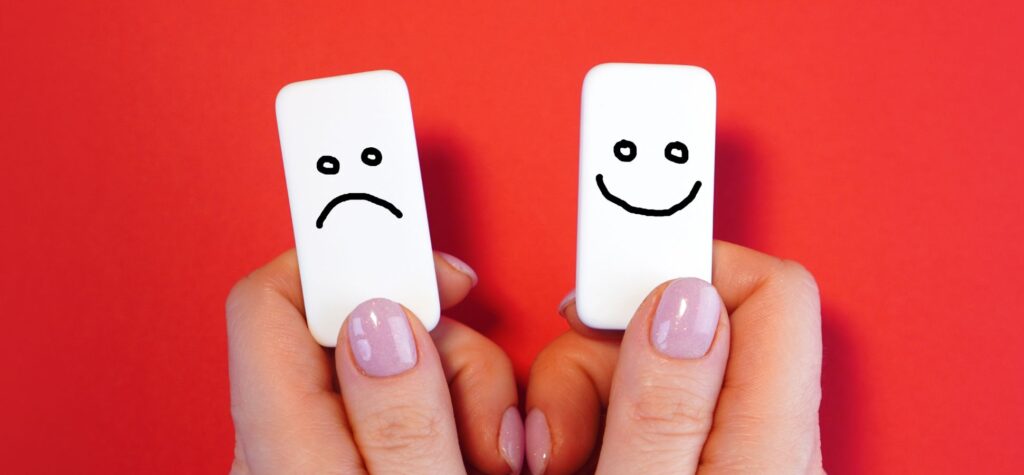
Societal openness and stigma also shape how emotions are expressed. Swedish society, known for its “jantelagen” (the law of Jante), encourages humility and discourages drawing attention to oneself. As a result, humor is often subtle, with an emphasis on irony and self-mockery. In contrast, American culture, with its focus on individual achievement, allows for a broader range of emotional expression, including humor that is bold, direct, and sometimes even brash.
Humor serves as a coping mechanism in both cultures, but the style varies. In societies with higher emotional restraint, such as Sweden, dark humor is more prevalent. This type of humor allows individuals to address difficult topics indirectly, providing relief without overt displays of emotion. Meanwhile, self-deprecating humor is common in cultures that value modesty, whereas boastful or competitive humor is more accepted in societies that reward assertiveness and personal success. The interplay between cultural norms, healthcare systems, and societal openness continues to shape how humor and mood are expressed and managed around the world.
Humor in Social Hierarchies
Laughter is a powerful social signal, often acting as a subtle marker of group belonging. When people laugh together, it strengthens bonds and reinforces a shared identity. In many cases, the simple act of joining in on a joke or finding the same things funny helps establish who is “in” and who is “out” of a group. This shared sense of humor can be a shortcut for building trust and rapport, making it easier for individuals to connect and collaborate.
Humor also plays a strategic role in navigating status and power dynamics. In professional settings, a well-timed joke can diffuse tension, challenge authority without direct confrontation, or even signal confidence. Leaders who use humor effectively often appear more approachable and relatable, which can foster loyalty and open communication. However, humor in these contexts is a double-edged sword. While it can humanize those in power, it can also backfire if perceived as inappropriate, dismissive, or exclusionary.
The risks and rewards of humor in leadership are significant. On the positive side, leaders who employ humor judiciously can inspire creativity, encourage risk-taking, and cultivate a positive work environment. They are often seen as more charismatic and resilient. On the other hand, misjudged humor—such as jokes that alienate or belittle—can erode trust, damage reputations, and reinforce negative hierarchies. Successful leaders tend to read the room carefully, tailoring their humor to fit both the audience and the occasion.
The Limits and Misfires of Humor
Humor has the power to bring people together, but it can just as easily create distance. When jokes target sensitive subjects or rely on stereotypes, they risk alienating individuals or entire groups. A joke that lands well in one context might fall flat—or even offend—in another. This is especially true in diverse workplaces or social settings, where shared experiences and backgrounds can’t be assumed.
Cross-cultural misunderstandings often highlight the boundaries of humor. For example, irony and sarcasm are staples of American comedic style, but they may be misinterpreted or seem rude in cultures that value directness and sincerity. In Sweden, humor tends to be more understated and self-deprecating, while American humor often leans toward exaggeration and bold punchlines. These differences can lead to confusion or discomfort when jokes cross cultural lines.
Empathy plays a crucial role in navigating the risks of humor. Comedians and everyday joke-tellers alike must consider their audience’s feelings and perspectives. A well-timed, thoughtful joke can ease tension and foster connection, but humor that ignores the emotional context may cause harm. Recognizing when to pull back—and when to apologize—shows emotional intelligence and respect for others. In the end, the best humor is rooted in understanding, not just wit.
The Alien Question and Playful Hypotheticals
Whimsical questions—such as pondering why aliens never seem interested in abducting someone like Mike—offer more than just a laugh. These playful hypotheticals tap into our comedic creativity, letting us explore scenarios that are impossible or highly unlikely. By entertaining the notion of extraterrestrial indifference, we exercise our ability to see the world from unexpected angles, a core trait of a sharp sense of humor.

Absurdity plays a key role in this process. When we engage with bizarre or illogical premises, like imagining a cosmic survey in which Mike is consistently overlooked, we stretch the boundaries of what humor can do. Absurd humor disrupts our expectations and invites us to find meaning—or delight—in nonsense. This flexibility is essential for innovation in comedy, keeping humor fresh and unpredictable.
Hypothetical humor also serves a social function. When a group riffs on outlandish scenarios, it creates an in-group language filled with shared references and inside jokes. These moments of collective imagination strengthen group identity, allowing people to bond over their willingness to entertain the ridiculous. In workplaces, friend circles, or even online communities, this style of humor signals openness, creativity, and a shared sense of play.
Bringing It All Together
Humor sits at the intersection of survival, social connection, and mental health. As a survival tool, humor evolved to help early humans navigate complex social environments. Laughter, in particular, acted as a social glue, releasing neurochemicals like endorphins and oxytocin that foster trust and cooperation within groups. These shared moments of levity could diffuse tension, signal safety, and even attract potential mates—often hinging on a compatibility of humor styles.
The way we experience and express humor is shaped by a dynamic interplay of biology, culture, and personal history. Our brains are wired to recognize patterns, resolve incongruities, and find pleasure in playful absurdities. Yet, what one person finds hilarious, another may find puzzling or even offensive. Cultural context plays a major role: humor styles, coping mechanisms, and even the boundaries of what’s considered “funny” shift across societies. For example, the contrast between Swedish and American approaches to depression highlights how cultural attitudes shape both emotional expression and the use of humor as a coping tool.
Humor also demands cognitive flexibility and creativity. The ability to see things from multiple perspectives, to play with language and meaning, and to empathize with others are all hallmarks of a well-developed sense of humor. However, humor can misfire—especially when empathy is lacking or when jokes reinforce exclusion or stereotypes. In group settings, playful absurdities and inside jokes help maintain cohesion, but they can also create barriers if used carelessly.
Ultimately, while theories like the benign violation theory offer frameworks for understanding why we laugh, no single explanation captures the full complexity of humor. Its power lies in its adaptability—shaped by evolution, molded by culture, and refined by personal experience.