

In February 2026, Anthropic ran a startup tender offer that let its staff sell shares at a $350 billion valuation. Investors lined up to buy roughly $6 billion worth. Then a lot of employees said no thanks and kept their stock, and the deal came in under what buyers wanted to spend. One investor involved described it to PitchBook as a “champagne problem.”
Six months later, OpenAI ran the opposite play and bought back $7 billion of employee shares at an $852 billion valuation, per Bloomberg. Two of the most valuable private companies on earth, two tender offers, two completely different answers from the people holding the shares.
That split is the whole story for anyone staring at a tender offer email right now. A startup tender offer is a company-organized buyback in which a private company, or an investor it brings in, offers to purchase a fixed block of vested employee shares at a set price, in cash. It’s the main way startup employees turn paper equity into money without waiting for an IPO. And in 2026 the mechanics changed underneath everyone: the SEC cut the minimum offer period in half, tender volume hit a six-year high, and the old advice to just take the cash stopped being obviously right.
Last updated: October 2026
Quick answers
What is a startup tender offer? A startup tender offer is a company-organized buyback in which a private company, or an investor it brings in, offers to purchase a fixed block of vested employee shares at a set price, in cash. The company sets the price and the eligibility rules, and employees choose whether to sell into it.
Should I sell my shares in a tender offer? Sell if the cash changes your life today, if your net worth is concentrated in one private company, or if you doubt the IPO timeline. Hold if you expect multiple times more upside, your QSBS clock is close to a higher exclusion tier, or the price sits below the last preferred round.
How long do I have to decide? Historically 20 business days. Since the SEC’s April 16, 2026 exemptive order, a qualifying offer can close in as few as 10 business days, so read the expiration date on the offer document rather than assuming you have a month.
What is a startup tender offer?
A tender offer is the company running a liquidity event on your behalf, on its own terms. The company announces a price, a list of who qualifies, a cap on how much each person can sell, and a deadline. You either tender your shares or you don’t.
Three details separate it from every other way to sell private stock. The company organizes it, so you aren’t hunting for a buyer or begging for a transfer waiver. The price is fixed for everyone, so a senior engineer and a recent hire get the same number per share. And the window is short, which is where most of the bad decisions happen.

Eligibility is narrower than people expect. Most offers require a minimum tenure, require that your options are already exercised rather than sitting unexercised, and cap participation somewhere between 10% and 25% of vested shares. ESO Fund’s employee guide flags the exercise requirement as the one that catches people, because writing a check to exercise is itself a decision with a tax bill attached.
Who buys the shares varies and it matters. OpenAI bought its own employees’ stock back in August 2026, which retires the shares and tightens the cap table. Anthropic’s structure brought outside investors in as purchasers. A buyback is the company spending cash it could have spent on compute or headcount. A secondary is an investor raising their stake. Both pay you the same, but they tell you different things about what the company thinks its own stock is worth.
Why tender offers are everywhere in 2026
Tender offers are at their highest level in six years because companies are staying private longer and employees got tired of waiting. Carta’s H1 2026 data, published August 20, 2026 by Kevin Dowd and Hamza Shad, counted 71 tender offers worth roughly $3 billion on its platform alone. Transaction count rose 34% year over year. Value rose 200%.
Across the whole US market the number is bigger. Startup tender offers totaled $18.4 billion in 2025, and Carta administered 396 of them that year, up 62% from 2024. ESO Fund puts the average time from founding to IPO past ten years now, which is longer than most option grants, most mortgages, and most people’s patience.
Concentration is the part nobody mentions in the explainer guides. The top five private companies accounted for 55.6% of all secondary trading value in Q4 2025, and OpenAI’s fall tender alone was 6.2% of every US secondary dollar that year. Peter Walker, Carta’s head of insights, put it plainly to PitchBook: “There is a world of difference between three companies and everybody else.”
So the market splits in two. If you work at OpenAI, Anthropic, or SpaceX, you have a real market in your shares and probably a recurring one. If you work at a Series C company nobody writes about, you may get one tender offer in your entire tenure. Carta found 70% of tenders happen at Series C or later, with a median later-stage offering size of $28.5 million against $8.5 million for seed through Series B rounds. Scarcity should change how hard you think about saying no.
The SEC just cut your decision window in half
On April 16, 2026 the SEC issued an exemptive order dropping the minimum tender offer period from 20 business days to 10 for qualifying offers, under Exchange Act Rules 13e-4(f)(1), 14e-1(a) and 14e-1(b). The order explicitly covers non-reporting companies, meaning private startups running self-tenders, not just public issuers.
The conditions are narrow. For a private company the offer has to come from the issuer or a wholly owned subsidiary, it has to be cash at a fixed price, and changes to the price or the percentage sought require notice by 9:00 a.m. Eastern on the fifth business day before expiration. Other material changes require notice by the second business day before expiration.
Read that last part again. If your company amends the deal four business days out, the clock does not reset. You could get a revised offer with two days left to decide whether to sell a meaningful chunk of your net worth.
Nothing requires a company to use the shorter window, and plenty will keep running 20-day offers out of habit or caution. The practical change is that you can no longer assume. Advisory-firm guides written before April 2026 still say you’ll have about a month, and a fair number of them have not been updated. The expiration date in your offer document is the only number that counts.
Should I sell my shares in a tender offer?
Sell if the money changes something concrete in your life within the next three years, and hold if your honest expectation is a multiple rather than a markup. That’s the whole framework, and everything below is how to pressure-test which side you’re on.
Start with price, because it’s the one input you can check instead of guess. Compare the offer against the most recent preferred round and against your company’s 409A valuation. Carta’s data says a discount should be unusual: for tenders running more than a year after a primary round, the median discount to the preferred price has sat at 0% for five consecutive periods. In H1 2026 the 25th percentile was 0% and the 75th percentile was 10%. An offer priced meaningfully below the last round deserves a reason, and “that’s just how secondaries work” is not one.
Then look at what your colleagues are doing, because the aggregate tells you something. Carta’s Q2 2026 median subscription rate was 93.1%, meaning buyers nearly filled every available dollar. Median seller participation was 57.9%, meaning roughly four in ten eligible employees declined. Demand is not the constraint. Supply is.
The hold case is strongest at the companies closest to a public exit, which is exactly backwards from how most people assume it works. Shriram Bhashyam, COO of Sydecar, told PitchBook that “there is less incentive to sell into a tender the closer a company gets to an IPO.” Joe Wallin, a startup lawyer at Carney Badley Spellman, framed it as a belief question: “If you’re a believer that SpaceX might be the most epic thing of all time, why would you sell?” SpaceX ran a December 2025 tender at an $800 billion valuation while targeting an IPO near $1.5 trillion.
The sell case is stronger than founders like to admit. Anthropic’s revenue went from roughly $9 billion annualized at the end of 2025 to about $30 billion, and its employees still had a real argument for taking chips off the table, because a 3x in revenue is not a guarantee of a 3x in your share price. OpenAI’s late-2024 tender priced the company at $157 billion. Anyone who sold then captured a real gain and missed an enormous one. Both of those facts are true at once, and only one of them was knowable in advance.
Barrett Cohn of Scenic Advisement is blunt that the opt-out story is a top-tier phenomenon, not a market-wide one: at most late-stage companies, “employees are not opting out. They are lining up.” If you don’t work at one of the three or four companies dominating secondary volume, the champagne problem isn’t yours.
One practical rule beats all of this. Figure out the dollar amount that would meaningfully de-risk your life, sell up to that number, and hold the rest. Concentration risk is the actual enemy, not a missed multiple.
How is a tender offer taxed?
Tender offer proceeds are taxed as capital gains on the spread between your cost basis and the sale price, with the rate depending on how long you held the shares. Hold longer than a year after exercise and you’re in long-term territory. Sell sooner and the gain is taxed at ordinary income rates, which for a large sale can mean a double-digit swing in what you keep.
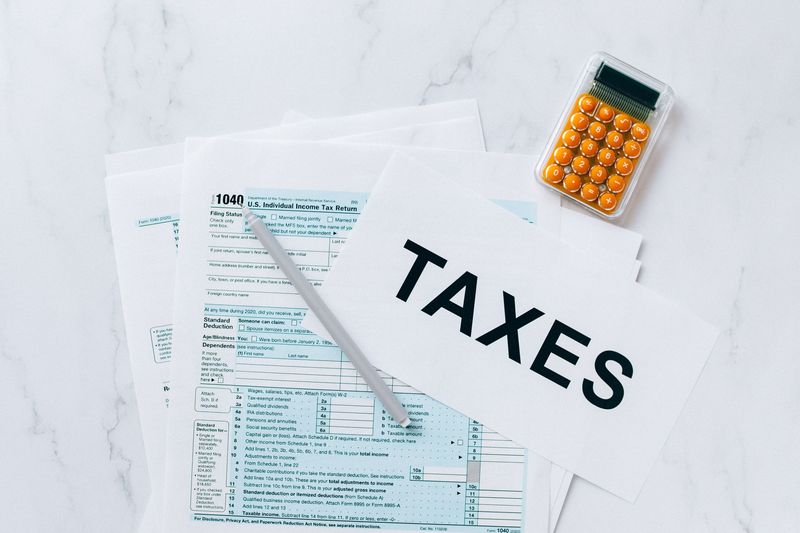
Incentive stock options carry an extra trap. Selling ISO shares within two years of grant or one year of exercise triggers a disqualifying disposition, and the bargain element at exercise gets taxed as ordinary income rather than capital gain. A tender offer that arrives eleven months after you exercised is an expensive accident. If the deadline falls close to your one-year mark, that single calendar fact may be worth more than any negotiation.
Qualified small business stock is where the 2026 math genuinely changed. Under the One Big Beautiful Bill Act, shares issued after July 4, 2025 follow a tiered schedule: 50% of the gain excluded at three years, 75% at four years, and 100% at five. The per-issuer cap rose from $10 million to $15 million, indexed for inflation after 2026, and the gross-assets test rose from $50 million to $75 million. Stock issued on or before July 4, 2025 stays on the old rules, which means five years for any exclusion at all and a $10 million cap.
Run the clock before you run the numbers. An employee eight months from the four-year mark is choosing between selling now and selling later with 75% of the gain excluded instead of 50%, and that gap is usually larger than any price improvement a later tender would deliver. Your equity admin can tell you the issuance date on your shares in about five minutes. Grey Journal is not a tax advisor, and a sale this size is worth a paid hour with a CPA who has seen QSBS filings before.
What is the difference between a tender offer and an IPO?
A tender offer is a private, company-controlled sale of existing shares to a specific buyer at a fixed price, while an IPO registers the company’s shares for public trading and creates an open market where price moves every day. In a tender offer you sell a capped slice on the company’s schedule. After an IPO you sell what you want, when you want, once your lockup expires.
The four liquidity routes available to a startup employee differ mostly in who holds the power.
| Route | Who sets the price | Company approval | Typical timing | Best for |
|---|---|---|---|---|
| Tender offer | The company, one fixed price for all sellers | Built in, the company runs it | 10 to 20 business days | Taking a capped amount off the table with no buyer search |
| Negotiated secondary sale | You and the buyer | Required, and often refused | Weeks to months | Large holders at companies with real investor demand |
| Secondary marketplace | The platform’s bid, usually at a discount | Required via right of first refusal | Weeks, if a bid exists | Employees at the handful of names buyers chase |
| IPO | The public market, daily | None after lockup | Lockup of roughly 90 to 180 days | Full control of timing, if the company ever gets there |
Treat a tender offer as a bird in hand with a cap on it, and an IPO as an uncapped outcome with no date attached. Carta’s own framing of the trend is that tender offers have become the substitute for an IPO rather than a warm-up for one, which is why a $7 billion buyback at OpenAI read to some observers as a signal that a listing is not imminent.
How to use the days you get
Work the offer in this order, and assume the SEC’s shorter ten-day floor applies until the document says otherwise.
Find the expiration date and the amendment deadlines first, then put both in your calendar with alerts. Pull your equity records and write down three numbers: your exercise date, your share issuance date, and your cost basis. Those three determine your tax outcome more than the offer price does.
Compare the offer price to the last preferred round price and to your current 409A. If it’s at or above the preferred price, you’re in line with the 2026 median and the price is not your problem. If it’s 15% or more below, ask your CFO or equity admin directly why, in writing. Companies running clean processes answer that question.
Then size the sale instead of agonizing over the binary. Decide the dollar figure that materially reduces your concentration risk, convert it to a share count at the offer price, and tender exactly that. The 57.9% median participation rate in Carta’s Q2 2026 data is not a vote against selling. It’s a market where most people sell something and almost nobody sells everything.
Finally, write down the reason you chose. Tender offers at the same company tend to repeat, and the note you leave yourself this quarter is the only honest input you’ll have the next time a startup tender offer lands in your inbox with ten days on the clock.
For more on how founders and employees handle equity through a liquidity event, see our pieces on how founders keep control after an IPO, what SpaceX’s IPO financials actually show, and what the Meta AI revolt taught founders about retention. If you’re earlier in the journey, our guides to startup investor fraud red flags, co-ownership structures like CHAMP Fund, what a wrapper startup is, solo founders building million-dollar AI businesses, and why some companies are pulling back from AI cover the ground around it.


