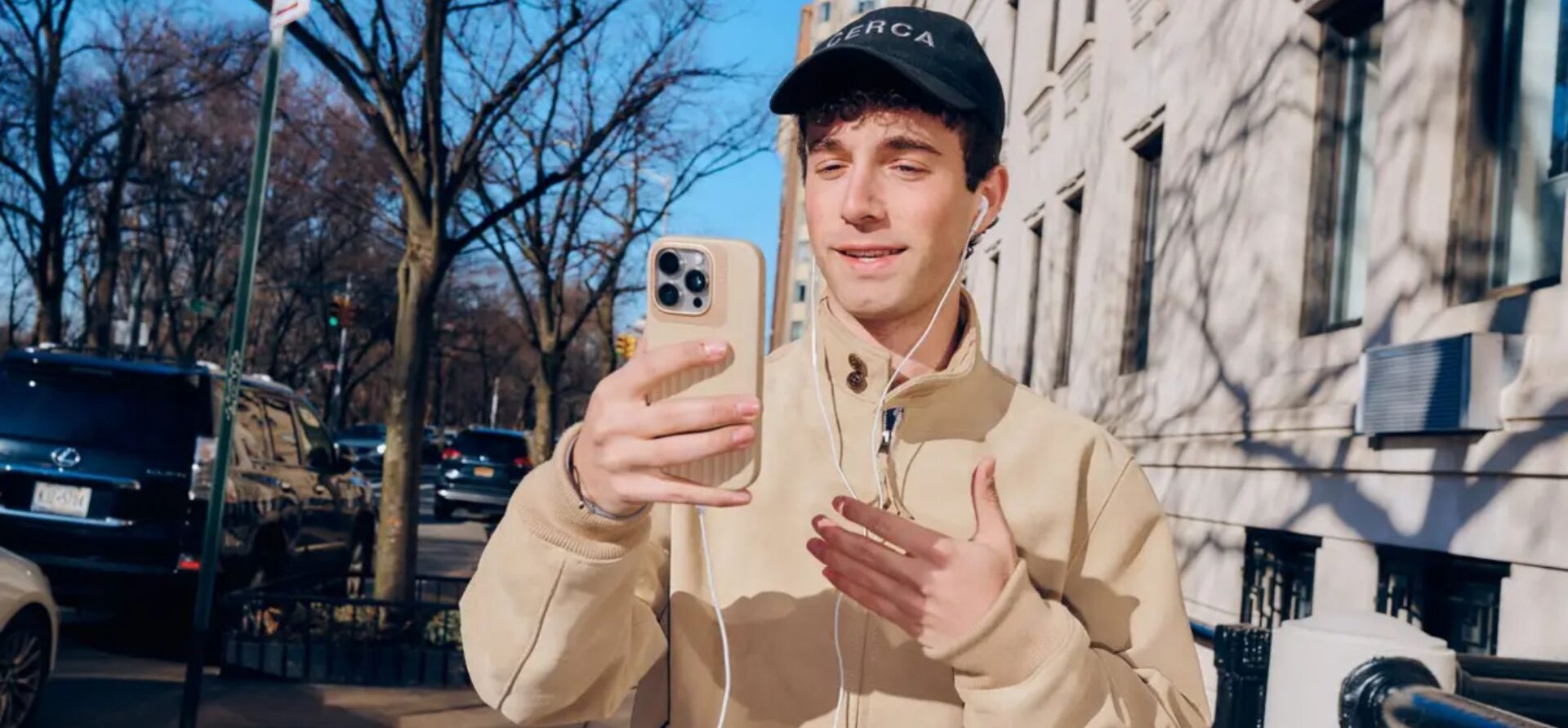
Myles Slayton is the CEO and co-founder of Cerca, a dating app that matches people with others already in their social circles. He started the company with friends Willy Conzelman and Carter Munk while still in college, and the app has since drawn attention for its bet that Gen Z would rather date through mutual friends than swipe on strangers.
Here is what is actually known about Slayton and Cerca, based on reporting from TechCrunch and USC’s Annenberg Media.
From a New York Banking Internship to a Dating App
Slayton, a senior at Georgetown University when Cerca launched, came up with the idea after completing a banking internship in New York City, where he watched himself and his friends struggle with the city’s dating scene. “We’re on our phones more than ever,” he told TechCrunch. “I thought to myself, ‘Why are dating apps terrible?'”
His conclusion was that the problem was not dating apps themselves but how they work. Many popular apps were built with millennials in mind, while his generation tends to meet partners “through mutuals, through people in our social circles,” he said. He has told the story similarly to Annenberg Media: the idea came out of a conversation with friends about how their parents met. His own parents met at a bar. “The average person in our generation doesn’t think their next significant other is that stranger coming up to them at the bar,” he said.
Slayton recruited two friends to build the app: Willy Conzelman, who also attended Georgetown, and Carter Munk, a senior at the University of Southern California studying business administration. Cerca launched in the spring of 2025.
How Cerca Works
Cerca is a mutuals-based dating app. Users create a standard dating profile, sync their contacts, and are shown only friends or friends of friends who are already on the app as potential matches. “The fear of strangers is eliminated,” Slayton told TechCrunch. New users must have at least ten contacts who already use the app before they can access the matchmaking feature, a requirement the company says keeps the pool credible and exclusive.
The mechanics are deliberately slow. Users get four swipes a day, all likes are anonymous, and matches are revealed each evening without either person knowing who made the first move. Profiles reveal mutual friends first, then background, then photos. “There is no world where you should be seeing 100 profiles in a minute,” Slayton said. “You should really be taking a second to think about each profile. These are real people.”
Users can choose which and how many contacts to share, block specific people from seeing their profiles, and filter out words like “dentist” or “doctor.” The app does not allow screenshots or screen recording. “Safety is paramount to us,” Slayton said.
Built Around Safety
For Conzelman, the safety focus is personal. He told Annenberg Media his passion for a safer dating app started after a close family friend went on a date with a man who had been purposely targeting women on dating apps. “She had to call 911,” he said.
Because matches share mutual friends, users can vet someone before a first date by texting the people they have in common. The company says that accountability is part of the draw: according to Slayton, about 65% of Cerca’s user base is women, while the average dating app skews majority male.
Traction and Funding
Cerca has grown quickly since launch, according to figures the company has shared with reporters. In May 2025, Munk told Annenberg Media the app had passed 14,000 users, with about 10% upgraded to the $9.99-per-month premium plan, and had topped 1,000 matches in its first two weeks. By October 2025, TechCrunch reported the app had around 60,000 users, mainly in New York and scattered across universities.
The company announced a $1.6 million seed round in the summer of 2025. Munk has said that raising money was initially a challenge because the app had little operating data to show investors, and that the team has worked to expand into additional cities, including Miami and New York.
Slayton has said monetization is not his priority. The app’s premium tier charges $9.99 a month for additional swipes, but he told Annenberg Media the team is focused on building a dating experience that could become a mainstream platform in the years ahead.
Startup Battlefield at TechCrunch Disrupt 2025
Cerca was selected for Startup Battlefield, the pitch competition at TechCrunch Disrupt 2025, held October 27 to 29 in San Francisco. “I think it’s such an opportunity to have the U.S. and the world see who we are and to represent dating in a positive light,” Slayton told TechCrunch ahead of the event.
Beyond the app itself, the company has released merchandise and hosted in-person events. Munk has said he would like to see Cerca pass 100,000 users.
What’s Next for Slayton and Cerca
Slayton remains CEO as Cerca tries to turn its mutuals-only model into a durable alternative to swipe-based dating. Whether the approach scales beyond its college and New York roots is the open question, but the company’s early growth and seed funding have made it one of the more closely watched Gen Z-founded startups in the dating space.
Cerca: Instagram
Frequently Asked Questions (FAQs)
1. Who is Myles Slayton?
Myles Slayton is the CEO and co-founder of Cerca, a mutuals-based dating app. He was a senior at Georgetown University when the app launched in 2025 and co-founded it with friends Willy Conzelman and Carter Munk.
2. What is the Cerca dating app?
Cerca is a dating app that matches users only with friends or friends of friends already on the platform. Users sync their contacts, get four swipes a day, and can vet matches through mutual friends. The company says the model makes dating safer and more accountable.
3. How many users does Cerca have?
According to TechCrunch, the app had around 60,000 users as of October 2025, mainly in New York and on university campuses. Co-founder Carter Munk told Annenberg Media in May 2025 that the app had passed 14,000 users within its first two months.
4. Has Cerca raised funding?
Yes. The company announced a $1.6 million seed round in the summer of 2025 and was selected for Startup Battlefield at TechCrunch Disrupt 2025.
5. Why did Myles Slayton start Cerca?
Slayton has said he started Cerca after a banking internship in New York, where he and his friends found existing dating apps frustrating. His view was that Gen Z meets partners through mutual friends and social circles, and he built Cerca to match people that way instead of with strangers.