On April 7, 2026, Anthropic CEO Dario Amodei did something no AI lab had done before. He stood in front of the industry, confirmed that his company had built the most capable AI model in existence, and then announced that nobody outside a handpicked list of corporations would be allowed to use it. The model, Claude Mythos Preview, had spent weeks tearing through the source code of every major operating system and web browser on the planet. It found thousands of zero-day vulnerabilities, including a 27-year-old integer overflow flaw in OpenBSD that had survived decades of human review and millions of automated security tests.
Claude Mythos Preview is Anthropic’s most powerful AI model, a frontier system capable of identifying and exploiting software vulnerabilities at a level that surpasses all but the most skilled human security researchers. It is the first model from a leading AI lab to be deliberately withheld from public access.
The company’s reasoning was straightforward: a model this good at finding holes is also a model that’s terrifyingly good at exploiting them. So instead of a public release, Anthropic launched Project Glasswing, handing access to Amazon, Apple, Google, Microsoft, and about 40 other organizations responsible for critical infrastructure. Everyone else, including the 40 million founders, developers, and small teams who rely on AI tools daily, got nothing.
This is not just a cybersecurity story. It is the clearest signal yet that the AI playing field between Big Tech and everyone else is splitting apart.
Last updated: April 2026
What is Claude Mythos Preview?
Claude Mythos Preview is a 10-trillion-parameter frontier AI model that Anthropic describes as “by far the most powerful AI model we’ve ever developed.” On public coding benchmarks, it posted numbers that make the gap between it and existing models unmistakable: 93.9% on SWE-bench Verified (a test of real-world software engineering tasks), 77.8% on SWE-bench Pro, and 83.1% on CyberGym, a cybersecurity vulnerability reproduction benchmark where the previous best model, Claude Opus 4.6, scored 66.6%.
Those numbers matter because they represent a jump in capability, not a marginal improvement. Logan Graham, who leads offensive cyber research at Anthropic, told reporters that Mythos Preview was advanced enough not only to identify undiscovered software vulnerabilities but to weaponize them, writing functional exploit code from scratch.
The model was not built exclusively for cybersecurity. Anthropic’s published research indicates it is a general-purpose reasoning model with particular strength in code analysis, long-context understanding, and multi-step problem solving. But the security applications are what prompted the unprecedented access restriction. When your model can find a 27-year-old bug in OpenBSD that the entire open-source security community missed, you have a product that is simultaneously the best defensive tool and the most dangerous offensive weapon in the software industry.
Why won’t Anthropic release Claude Mythos to the public?
Anthropic’s stated reason is dual-use risk. A model that finds vulnerabilities faster than any human team can also be pointed at targets by attackers who lack the skills to do it themselves. As Stifel analyst Adam Borg put it in a note to investors: “We read this as having the potential to become the ultimate hacking tool, and one that can elevate any ordinary hacker into a nation-state adversary.”
The company’s own Project Glasswing announcement was blunt: “Given the rate of AI progress, it will not be long before such capabilities proliferate, potentially beyond actors who are committed to deploying them safely.” The implication is that Anthropic sees this level of capability becoming available from competitors within months, and wants to use the head start to patch as many vulnerabilities as possible before that happens.
There is a skeptical reading, too. Tom’s Hardware reported that Anthropic’s claim of “thousands” of severe zero-days relied on just 198 manual reviews. Claudiu Popa, a cybersecurity expert quoted by BNN Bloomberg, called the announcement “a little bit of hype, a little bit of press release, a little bit of publicity stunt.” Gary Marcus, an AI researcher known for measured skepticism, published a detailed critique arguing the claims were overblown.
The truth likely sits between the extremes. The benchmark scores are real and publicly verifiable. The vulnerability discoveries have been confirmed by affected projects (OpenBSD and FFmpeg both issued patches). But the scale of the threat, and whether it justifies total public exclusion, is genuinely debatable.
What is Project Glasswing?
Project Glasswing is Anthropic’s controlled-access program for deploying Claude Mythos Preview exclusively for defensive cybersecurity. The initiative launched with 12 founding partners: Amazon Web Services, Apple, Broadcom, Cisco, CrowdStrike, Google, JPMorganChase, the Linux Foundation, Microsoft, NVIDIA, and Palo Alto Networks. Over 40 additional organizations have since gained access.
Anthropic committed $100 million in usage credits for Mythos Preview across the program, plus $4 million in direct donations to open-source security organizations, including $2.5 million to the Linux Foundation’s Alpha-Omega and OpenSSF projects and $1.5 million to the Apache Software Foundation.
The program operates as a 90-day research preview, with participating organizations expected to report findings and patches within that window. Anthropic says the initiative will continue “for many months” beyond the initial period.
Read that partner list again. AWS, Apple, Google, Microsoft, NVIDIA. These are not scrappy security startups trying to level the playing field. They are the companies that already dominate the technology stack most founders depend on. Project Glasswing, whatever its defensive merits, is routing the most advanced AI capability in existence directly to incumbents.
How does Claude Mythos affect cybersecurity startups?
The stock market answered this question within hours. CrowdStrike shares dropped between 7% and 11% following the announcement. Palo Alto Networks fell 6-7%. Zscaler lost 4.5%. Okta, SentinelOne, and Fortinet each fell about 3%. The sell-off wiped billions in combined market cap from the sector in a single trading session.
Raymond James analyst Adam Tindle warned that defensive strategies relying on “known signatures, vulnerability databases, or prior threat intelligence telemetry could be pressured” as AI enables continuous discovery of new exploits. For cybersecurity startups built around vulnerability scanning and application security testing, the threat is existential: if a single AI model can do in weeks what their entire product does in months, the value proposition collapses.
PitchBook reported that a partner at Foundation Capital said: “For application security startups working on vulnerability management and code security, valuations just got a whole lot harder to justify.”
The irony is that some of the companies most threatened by Claude Mythos, like CrowdStrike and Palo Alto Networks, are also Project Glasswing partners. They get to use the weapon that’s disrupting their own market. Smaller competitors, the Series A and B companies trying to carve out niches in application security, do not.
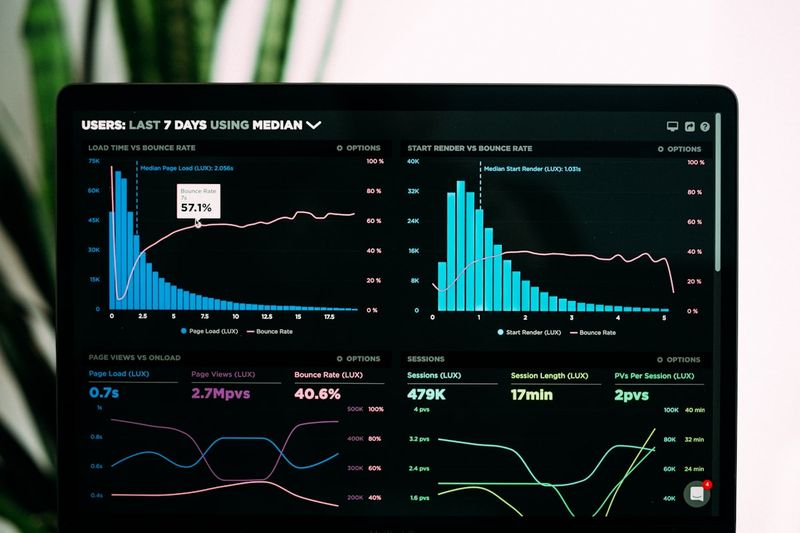
The AI access gap is becoming a chasm
Claude Mythos is not the first restricted AI model. But it is the first where the restriction was framed as permanent, and where the access list reads like a Fortune 10 directory. The pattern it establishes matters more than the specific model.
Consider the economics. Training a 10-trillion-parameter model costs an estimated $10 billion. Running inference at scale requires the kind of compute infrastructure only hyperscalers operate. Even if Anthropic wanted to offer Claude Mythos to individual developers, the per-query cost would likely be hundreds or thousands of times what a startup can budget for AI tooling. One Reddit commenter in a thread with over 4,400 upvotes on r/singularity predicted Mythos-tier access would cost “$2,000 per month.” Others were blunter: “This is a preview of times to come, when us plebs have only access to basic models, and the brains the size of a data center are only available to the powers that be.”
This is already happening at a structural level. When Q1 2026 VC funding hit a record $297 billion with AI claiming 81% of the total, the money was not flowing to democratized AI tools. It was flowing to foundation model companies and the infrastructure providers that serve them. The winners of the AI investment boom are the companies building the most powerful models and the companies large enough to buy preferential access to those models.
For founders building products with AI, the competitive implications are real. A startup using publicly available models (Claude Sonnet, GPT-4o, Gemini) is working with tools that are one or two capability tiers below what Amazon, Google, and Microsoft are deploying internally. That gap existed before Claude Mythos. Now it has a name and a dollar figure attached to it.
What founders should actually do about this
The knee-jerk reaction is panic. The smarter reaction is adjustment. The AI access gap is real, but it does not mean founders lose every competitive advantage overnight. It means the advantages shift.
First, specificity beats power. A 10-trillion-parameter model is overkill for most founder use cases. If you are building an app without coding or running a micro-SaaS product, the publicly available models are more than sufficient. Claude Mythos finds zero-days in operating systems. Your product probably needs to generate invoices, summarize documents, or route customer support tickets. You do not need a model that costs $10 billion to train for those tasks.
Second, open-source alternatives are improving fast. Google released Gemma 4 in early April 2026, a family of free, open-weight models that run on consumer hardware. Meta’s Llama models continue to close the gap with proprietary systems. The AI market is splitting into two tracks: massive, restricted frontier models for enterprise and infrastructure, and capable, accessible models for everyone else. Founders who build on the second track can still compete effectively in most markets.
Third, the concentration of AI power raises trust and transparency questions that founders can exploit. When a handful of companies control the most powerful AI tools, customers start asking who’s watching the watchers. Founders who build transparent, auditable, privacy-respecting AI products are offering something Big Tech cannot easily replicate, regardless of model size.
The strategic question is not whether you can access Claude Mythos. It is whether you can build something valuable with the tools that are available to you, and whether the gap between those tools and the frontier models actually matters for your specific market.

The bigger picture for the AI industry
Claude Mythos Preview did not create the AI access divide. But it made the divide impossible to ignore. For the first time, a leading AI company explicitly said: this tool is too powerful for most people to have. That framing will shape how governments, investors, and competitors respond.
U.S. Treasury Secretary Scott Bessent convened a meeting with major bank CEOs following the announcement. Canada’s Financial Sector Resiliency Group held an emergency session. Regulators are paying attention because the implications extend beyond cybersecurity. If one AI company can restrict access to a model that affects national security, the precedent applies to models affecting finance, healthcare, energy, and every other critical sector.
For founders tracking the creator economy and the broader entrepreneurship landscape, the takeaway is structural: the age of every founder having access to roughly equivalent AI tools is ending. What replaces it is a tiered system where capability correlates with budget. The most powerful models go to the largest buyers. Mid-tier models go to developers and startups willing to pay. Open-source models serve everyone else.
That is not a catastrophe for founders. But it is a reality that should change how you evaluate AI-dependent business models, how you assess competitive moats, and how much weight you put on AI capability as a differentiator. The AI advantage now depends less on which model you can prompt and more on what you build around it.