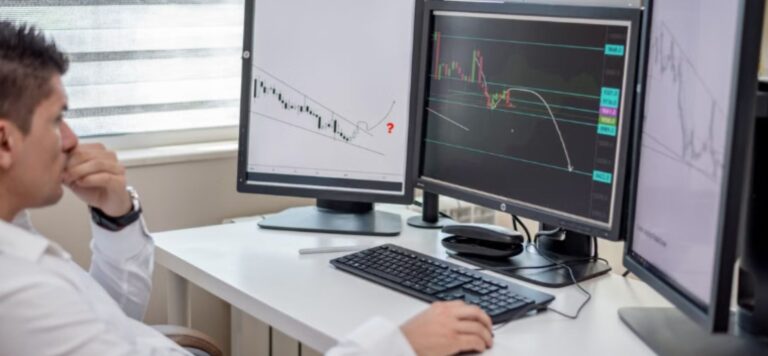
Founders will spend $350 on a smart ring, $6,000 on a cold plunge and a few hundred a month on supplements to squeeze another hour of focus out of the day. Meanwhile, the room where most of them actually work is lit by a ceiling fixture and a window that faces the neighbor’s fence. Daylight costs nothing once it is in the room, and for a lot of remote operators the fastest way to get more of it is overhead.
That is where skylights come back into the conversation. Plenty of homes, especially older ones with converted attics or top-floor offices, already have them, but many were installed in the 1980s and 1990s and now leak, fog or turn the room into a sauna by mid-afternoon. A well-timed skylight replacement can turn that dead patch of ceiling into the brightest workspace in the house, and the economics look better than most wellness gear on a founder’s desk.
The Light Gap Inside a Home Office
Here is the number that surprises people. Typical indoor lighting in an office runs around 300 to 500 lux. Outdoor daylight ranges from several thousand lux under heavy cloud to roughly 100,000 in direct sun. Even a bright home office sits at a small fraction of what your body sees during a walk outside.
That gap matters because light is the main signal that sets the body clock. Morning daylight helps anchor sleep timing, which is why Andrew Huberman’s morning-sunlight routine spread so quickly through founder circles. GREY Journal’s recent coverage of bioharmony made a similar point: the free habits, light included, often do more than the gadgets.
There is workplace data too. In a 2018 study led by Cornell professor Alan Hedge, which surveyed 313 office workers, people in offices with optimized natural light reported an 84% drop in eyestrain, headaches and blurred vision. The study looked at smart glass in commercial offices, so treat it as directional for a home office. The pattern is consistent with what most remote workers notice on their own.
Why Overhead Light Beats a Wall Window
A skylight changes the math because of its angle. Roof windows face the sky directly, so they collect light from a much wider slice of it than a vertical window does. VELUX, the Danish roof window maker, says a roof window admits at least twice as much light as a vertical window of the same size.
Overhead light also spreads more evenly across a room. A wall window throws a bright patch on one side and leaves the far wall dim, which is how you end up with glare on the monitor and a dark corner behind it. Daylight from above falls on the desk without hitting the screen sideways, especially when the skylight sits behind or above your working position.
When an Old Skylight Becomes a Liability
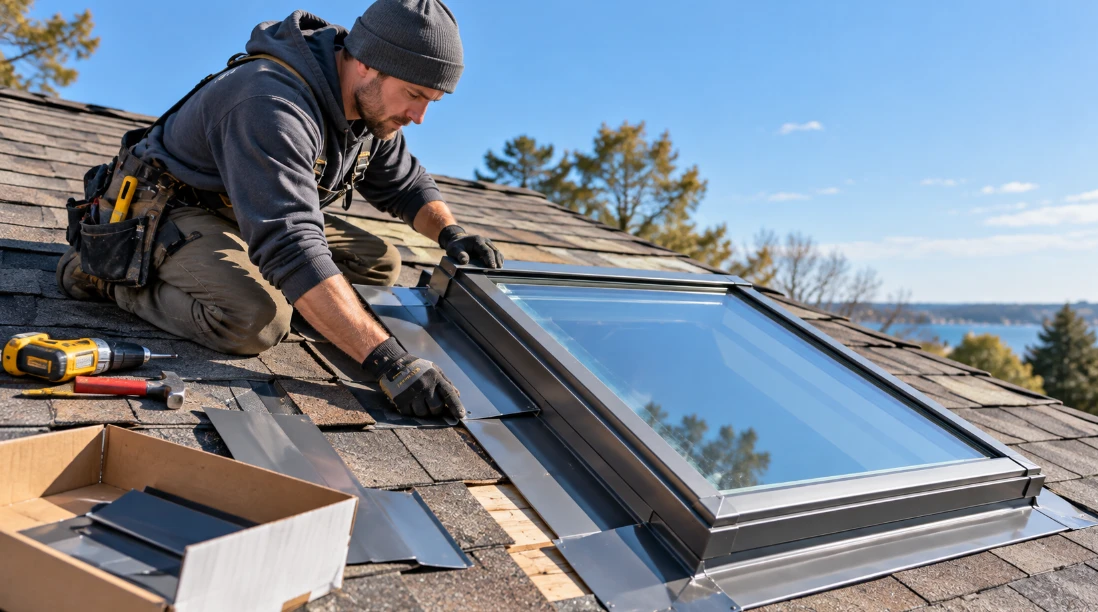
The problem is that an aging skylight can do the opposite of everything above. Older units often have single or early double glazing, acrylic domes that yellow with age, and seals that fail after 15 to 20 years. Flashing installed decades ago tends to give out around the same time as the shingles around it. These are the signs that a unit is due:
- Fogging or condensation trapped between the glass panes
- Yellowed or cloudy acrylic domes that cut the amount of light coming in
- Water stains on the drywall around the skylight shaft
- Drafts or frost on the frame in winter
- A room that overheats in summer because the glass has no heat-control coating
- A vent that no longer opens, or a manual crank that has seized
A leaking skylight over a home office is a productivity problem as much as a maintenance one. Nobody does deep work under a bucket.
The Replacement Options and What They Cost
Modern skylights fix most of those complaints. Low-E coated, double or laminated glass controls heat and blocks most UV, and venting models let hot air escape from the top of the room, which is where it collects. Prices below are typical installed ranges in the U.S. for replacing an existing unit, and they climb with roof pitch, interior finishing and how much flashing work the roof needs.
| Skylight type | Typical installed cost | Best for | Trade-off |
| Fixed deck-mounted | $1,500 to $3,000 | Maximum daylight at the lowest cost | No ventilation |
| Manual venting | $2,000 to $4,000 | Rooms you can reach to open by hand or pole | Easy to forget open before rain |
| Solar-powered venting | $3,000 to $5,500 | High ceilings and offices that heat up in summer | Higher upfront cost |
| Tubular daylight device | $600 to $1,500 | Small offices, closets, rooms without attic access to a large opening | Brings light only, no view of the sky |
Solar-powered venting skylights used to qualify for the federal residential clean energy credit, which cut the cost by 30%. That credit ended for systems installed after December 31, 2025, so 2026 projects are priced without it.
Accessories change how the room works day to day. Light-filtering or blackout blinds let you dim the glare during afternoon calls, and many solar models come with remote-controlled shades. Rain sensors that close a venting unit automatically are worth the money for anyone who travels.
Timing It Like a Founder
The smartest move is to pair skylight replacement with roof work. If the roof is within a few years of replacement, doing both at once means the new skylight gets fresh flashing tied into new shingles, and you pay for one setup instead of two. Manufacturers like VELUX sell flashing kits matched to each unit, and installers who use them can usually offer a longer warranty on the installation.
If the roof is still young, a straight swap is usually a one-day job for a single unit. Book it for a travel day or a heavy-meeting day you can take from another room. Ask the installer to protect the office floor and desk, since replacing the interior trim can kick up drywall dust.
Founders love to measure inputs. Track this one for a month: what time you start deep work, how many afternoon slumps hit before 4 p.m., and how often you leave the house to get light. A skylight priced at a few thousand dollars, used every workday for 20 years, costs well under a dollar a day, less than the oat milk upcharge on the coffee you drink while sitting under it.